
Krampus: Alpine Christmas Figure, Origins, Traditions and Modern Revival
Krampus is a horned, anthropomorphic companion of Saint Nicholas in parts of central Europe, known for punishing misbehaving children. Traditions, appearance, history, and contemporary customs are explained.
Overview
Krampus is a horned, anthropomorphic figure from central European folklore associated with the Christmas season. Traditionally portrayed as a half-goat, half-demonic creature, Krampus contrasts with the benevolent gift-giver Saint Nicholas. Accounts and descriptions appear in many regional folk traditions and scholarly summaries on folklore.
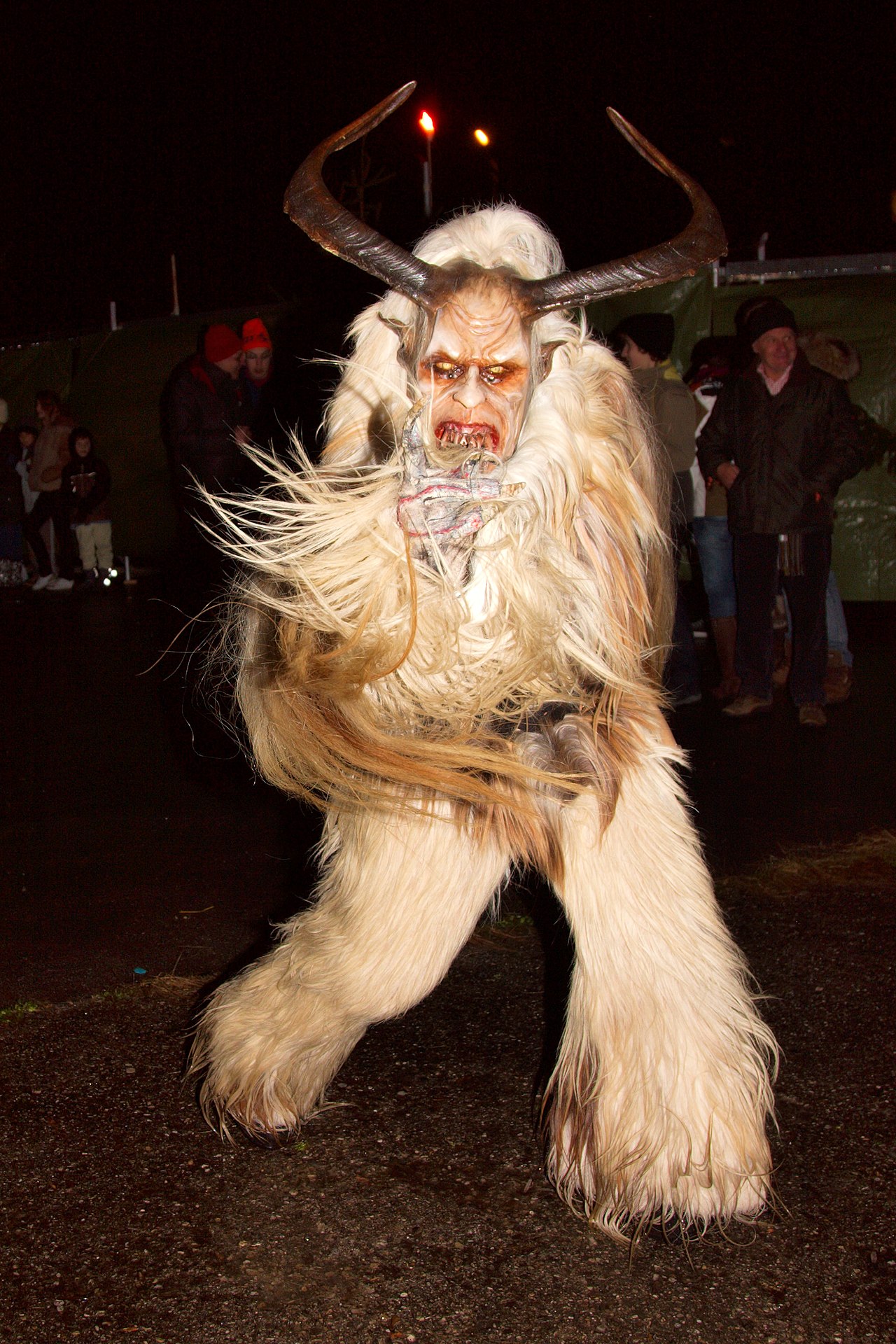
Appearance and role. In popular descriptions Krampus has horns, shaggy fur, cloven hooves, and a long tongue; he may carry chains, bells, a bundle of birch branches and a sack or basket. In seasonal rituals Krampus is said to punish or scare children who have misbehaved, while Saint Nicholas rewards well-behaved children with treats and small presents during the Christmas season. The two figures are commonly presented as complementary roles in winter observances with Saint Nicholas.
Image gallery
6 Images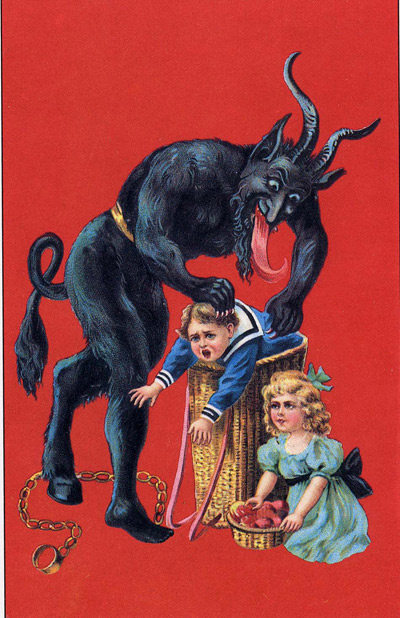




Regions and practices
Krampus traditions are strongest in parts of the Alpine and adjacent regions. Local customs vary: some communities stage costumed processions, others perform door-to-door visits, and still others limit Krampus to parades.
Typical events. Two commonly noted customs are Krampusnacht (Krampus night), often held on or around December 5, and Krampuslauf (Krampus run), when costumed figures parade through town streets. Participants sometimes wear hand-carved masks and elaborate costumes; bells and chains are used to create a dramatic, loud effect intended to frighten but not harm.
Origins and scholarship. The precise origin of Krampus is uncertain. Some scholars suggest elements of the figure may pre-date Christianity and draw on older Alpine or pagan motifs, while other research emphasizes medieval and early modern Christian-era expressions of local customs. Folklorists and anthropologists generally treat Krampus as a syncretic phenomenon that developed over centuries rather than a single fixed source on origin theories.
Contemporary relevance and distinctions. In recent decades Krampus has experienced a revival beyond its historic regions: tourism, popular culture, festivals, and social media have amplified interest. The figure often appears in literature, film, and seasonal markets, but practices have prompted debates over safety, commercialization, and community standards. Local traditions remain diverse, and modern portrayals range from playful and theatrical to deliberately frightening.
For further regional details and event listings consult local cultural resources and community pages.
Selected references and community guides: folklore surveys, seasonal descriptions, and regional heritage pages for Austria and neighboring areas.
Questions and answers
Q: Who or what is Krampus in folklore?
A: Krampus is a horned, anthropomorphic figure described as being half-goat and half-demon.
Q: What is the purpose of Krampus during the Christmas season?
A: Krampus punishes children who have misbehaved.
Q: Who is the counterpart of Krampus in Christmas folklore?
A: Saint Nicholas is the counterpart of Krampus in Christmas folklore.
Q: In what regions is Krampus one of the companions of Saint Nicholas?
A: Krampus is one of the companions of Saint Nicholas in regions including Austria, Bavaria, Croatia, Czech Republic, Hungary, Slovenia, South Tyrol, and parts of Northern Italy.
Q: Is Saint Nicholas a figure who rewards well-behaved children with gifts?
A: Yes, Saint Nicholas is a figure who rewards the well-behaved with gifts.
Q: What is the possible origin of Krampus?
A: The origin of Krampus is not known but some folklorists and anthropologists believe it may have pre-Christian origins.
Q: What does Krampus look like according to Krampus folklore?
A: Krampus folklore describes Krampus as a half-goat and half-demon figure who is horned and anthropomorphic.
Related articles
Author
AlegsaOnline.com Krampus: Alpine Christmas Figure, Origins, Traditions and Modern Revival Leandro Alegsa
URL: https://en.alegsaonline.com/art/54412