
Kratos (Greek mythology)
Kratos is the ancient Greek personification of strength and power, an attendant of Zeus who appears in Hesiod and Aeschylus; his name survives in modern words ending in -cracy and he is distinct from the video game character.
Overview
Kratos is the personification of strength and sovereign power in ancient Greek poetry and drama. He appears as an attendant of Zeus and as one who enforces the will of the gods rather than as an independent heroic figure. Classical sources treat Kratos as an embodiment of brute force—an idea or daimon that helps maintain cosmic order in moments that require coercion.
Image gallery
4 Images


Name and etymology
The name Kratos derives from the Greek κράτος (krátos), meaning "strength" or "rule by force." This root survives in many modern political and descriptive terms formed with the suffix -cracy, such as democracy, theocracy, plutocracy, and aristocracy. The word also appears in classical compounds and rhetorical contexts to signify authority or dominance. Although often associated with coercion, krat- words can indicate legitimate power as well as raw strength.
Family and associations
In Hesiod's Theogony Kratos is described as one of the children of the Titan Pallas and the river-goddess Styx, not as a son of Zeus. His siblings are personifications who complement different aspects of power and competition: Nike (victory), Zelus (zeal or rivalry), and Bia (force). Together they serve as companions or enforcers for Zeus, functioning more like abstract attendants or daimons than like full gods with extensive cults.
Myth and literary appearances
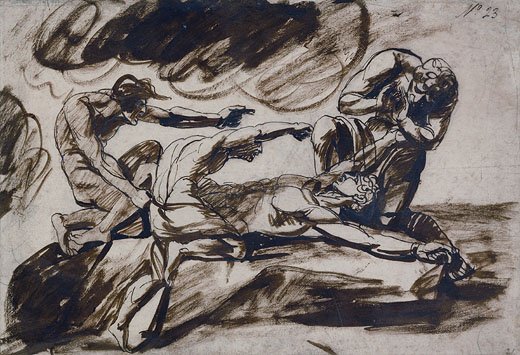
Kratos figures most prominently in the tragic drama Prometheus Bound, traditionally attributed to Aeschylus, where he joins Prometheus's captors and compels Hephaestus to bind the Titan for giving fire to humanity. Hesiod lists Kratos among the offspring of Styx who stood by Zeus during the Titanomachy and received honors from him. Outside these texts Kratos rarely receives independent worship; he is mainly a dramatic or poetic personification invoked to explain the presence of force in divine decisions.
Cultural influence and modern distinctions
Because Kratos represents the abstract idea of power, his name informs modern vocabulary about systems of rule and authority. References to kratos appear in discussions of governance, political theory and rhetoric. It is important to distinguish the mythic Kratos from modern popular culture uses of the name: for example, the central character of the video game series God of War borrows the name but is an invented Spartan warrior with a distinct fictional biography and narrative arc. Readers should also note that terms like dictator do not derive from the same Greek root, even if they describe concentrated authority.
Key points and further reading
- Kratos personifies strength and the enforcement of divine will rather than serving as a household deity.
- He is traditionally a child of Pallas and Styx and a companion to Zeus.
- His most famous role is in the binding of Prometheus, where he acts with Bia to carry out Zeus's sentence.
- Modern words containing -cracy reflect the same root, connecting ancient conceptions of power with contemporary political vocabulary.
For general reference on classical sources and dramatizations, consult translations and commentaries that discuss Hesiod and Aeschylus; for reception in modern culture, see discussions of myth in literature, art and popular media. Additional context on Greek daimons and theogony can clarify how personified concepts like Kratos functioned in ancient religion and thought. Kratos (entry), divine attendant, and the notion of a daimon are useful starting points for further study.
Related articles
Author
AlegsaOnline.com Kratos (Greek mythology) Leandro Alegsa
URL: https://en.alegsaonline.com/art/54422
Sources
- gogreece.about.com : "Kratos - Is Kratos the Greek God of War -"
- rjgeib.com : ""Prometheus Bound" by Aeschylus"
- theartofgoodgovernment.org : "What IS Democracy?"
- bible-history.com : "THEOCRACY in the Bible Encyclopedia - ISBE (Bible History Online)"
- www1.curriculum.edu.au : "DD Units - Lower Sec. - Should the People Rule?"