
Komodo dragon (Varanus komodoensis): overview, biology, and conservation
The Komodo dragon is the world's largest living lizard, native to a few Indonesian islands. This article summarizes its appearance, behavior, reproduction (including parthenogenesis), venom research, range, and conservation.
The Komodo dragon (Varanus komodoensis) is a large monitor lizard native to a small group of Indonesian islands. It is recognized as the largest living lizard species, and occurs naturally on Komodo Island, Rinca (Rincah), Flores Island, and the smaller islands of Gili Motang and Gili Dasami. These islands lie within the broader Indonesian archipelago region, where the animals occupy open woodland, savanna, and lowland forest habitats. Local people have long known the species; Western scientists first described it to the wider scientific community in the early 20th century around 1910.
Image gallery
10 Images



Taxonomy and identification
The Komodo dragon belongs to the genus Varanus, the group commonly known as monitor lizards (monitors). Adults have a muscular body, powerful limbs, and a long, laterally compressed tail. Skin is covered in small, armored scales with coloration ranging from gray to reddish-brown; juveniles are often patterned and spend more time in trees. Size and body mass vary among individuals and islands, and males tend to be larger than females.
Physiology and venom research
Komodo dragons have strong jaws and serrated teeth adapted for cutting flesh. Research into their oral secretions indicates the presence of specialized glands and compounds that can affect blood clotting and blood pressure; current scientific understanding favors a role for venom-like substances alongside mechanical damage and possible bacterial infection in the effects of a bite. Bites can therefore be medically significant and require prompt attention.
Feeding and behavior
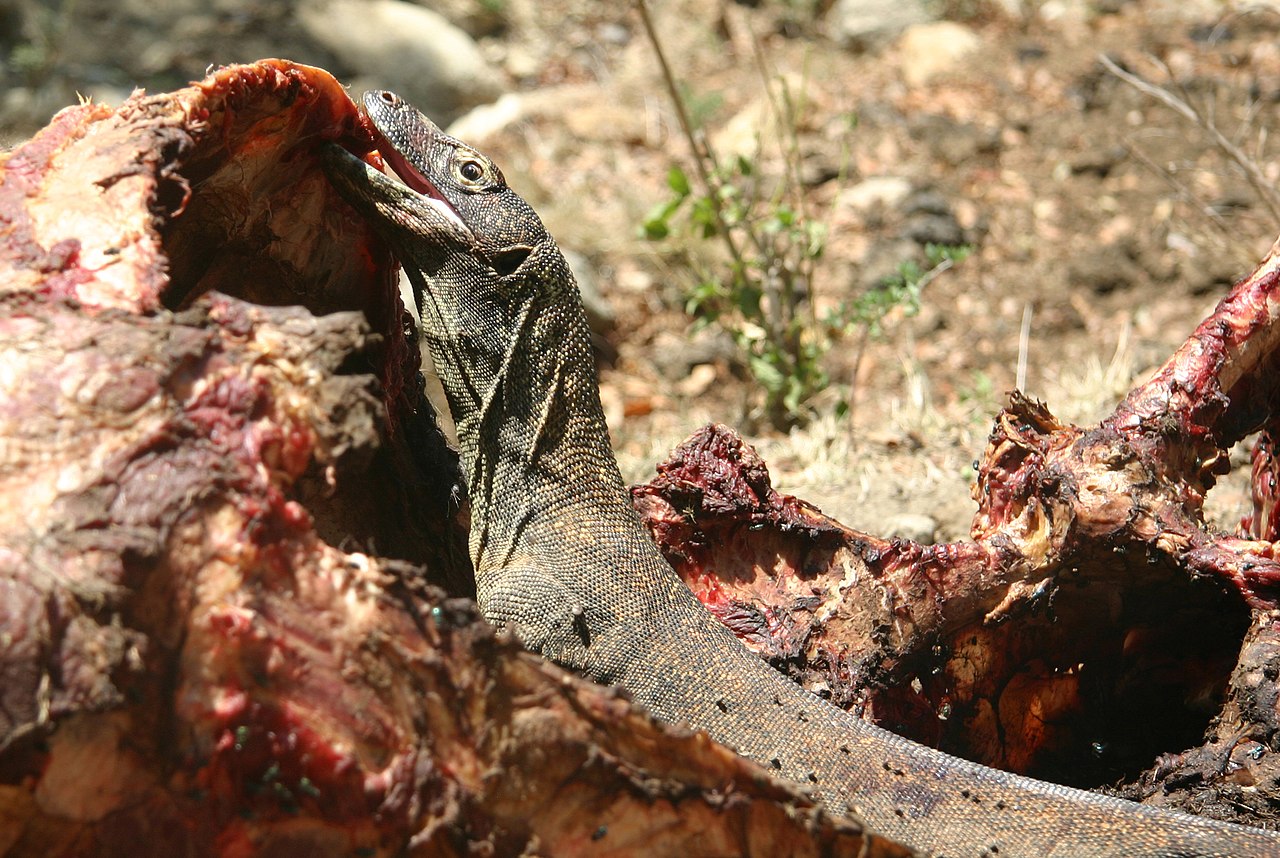
These lizards are opportunistic carnivores and scavengers. Their diet includes deer, wild pigs, smaller reptiles, ground-nesting birds, and carrion. Komodos hunt by ambush and stalking, using stealth and sudden bursts of speed to overpower prey. They are capable of consuming large portions of a carcass and may follow scent trails to find carrion. Juveniles are more arboreal and feed on smaller prey until they grow large enough to dominate terrestrial food resources.
Reproduction and lifecycle
Komodo dragons are oviparous; females lay eggs in nests or mound vegetation and may use abandoned megapode nests. Hatchlings emerge fully formed and are vulnerable to predation; many reach maturity only after several years. Notably, isolated females can reproduce by parthenogenesis, a form of asexual reproduction documented in both captive and wild individuals, which can produce viable offspring though genetic diversity is lower than with sexual reproduction.
Range, habitat threats and conservation
Because their natural range is limited to a few islands, Komodo dragon populations are sensitive to habitat change, human pressure, and stochastic events such as wildfires or volcanic activity. The species is protected under Indonesian law and benefits from habitat protection and management within Komodo National Park here. International conservation organizations recognize the species' vulnerability, and efforts include habitat protection, anti-poaching measures, population monitoring, and community engagement. Zoos worldwide hold Komodo dragons in accredited collections for education and breeding, supporting research and public awareness.
Human interactions and cultural role
Encounters between Komodo dragons and people are uncommon but can be dangerous; documented attacks have led to human injury and, rarely, fatalities. Local communities have traditional names for the animal such as "ora" or Indonesian terms like biawak raksasa (giant monitor) or colloquial references to a "land crocodile". Conservation strategies often involve working with local residents to balance livelihoods with protection of the species and its habitat.
Further resources
- Species profiles and taxonomic notes are available from specialist natural history sources here.
- Regional biodiversity information and field guides for eastern Indonesia can provide context on habitat and coexisting species here.
- Island-specific conservation and visitor information is available for Rinca here, Komodo here, and Flores here.
- Historical and archival material on early sightings and scientific descriptions is summarized here.
- Management and park resources describing conservation actions are provided by park authorities here.
For further reading consult academic reviews, accredited zoo husbandry pages here, and international conservation assessments here. General overviews and specialist literature on monitor lizards can be found via taxonomic and herpetological references here and here.
Questions and answers
Q: What is the scientific name of the Komodo dragon?
A: The scientific name of the Komodo dragon is Varanus komodoensis.
Q: How long do Komodo dragons typically grow to be?
A: On average, Komodo dragons grow to be 2-3 meters (approximately 6.5-10 ft) in length.
Q: Are Komodo dragon bites dangerous?
A: Yes, Komodo dragon bites can be very dangerous and they sometimes attack people.
Q: When were Western scientists first introduced to the species?
A: Western scientists first saw Komodo dragons in 1910.
Q: Why are these lizards popular in zoos?
A: These lizards are popular in zoos because they are very big and look scary.
Q: Is there a danger that these lizards will become extinct on their home islands?
A: Yes, there is a danger that these lizards will become extinct on their home islands as there are only a few still alive today.
Q: What other names does the species go by?
A: The species also goes by the names "Komodo monitor" or "Komodo Island monitor". Additionally, local people living on Komodo Island call them "ora", "buaja durat" (land crocodile), or "biawak raksasa" (giant monitor).
Related articles
Author
AlegsaOnline.com Komodo dragon (Varanus komodoensis): overview, biology, and conservation Leandro Alegsa
URL: https://en.alegsaonline.com/art/54187
Sources
- commons.wikimedia.org : Varanus komodoensis
- species.wikimedia.org : Varanus komodoensis