
Arctic willow (Salix arctica)
A compact, cold-adapted willow of the tundra. Salix arctica is a dwarf woody plant with hairy leaves and low, creeping growth, important ecologically and used historically for medicinal and nutritional purposes.
The arctic willow, Salix arctica, is a small, cold-tolerant member of the willow family often described as one of the northernmost woody plants. Unlike the taller willows familiar from temperate wetlands, this species remains close to the ground, forming mats or low cushions that hug the tundra surface. It is commonly called the arctic willow or dwarf willow.
Image gallery
3 Images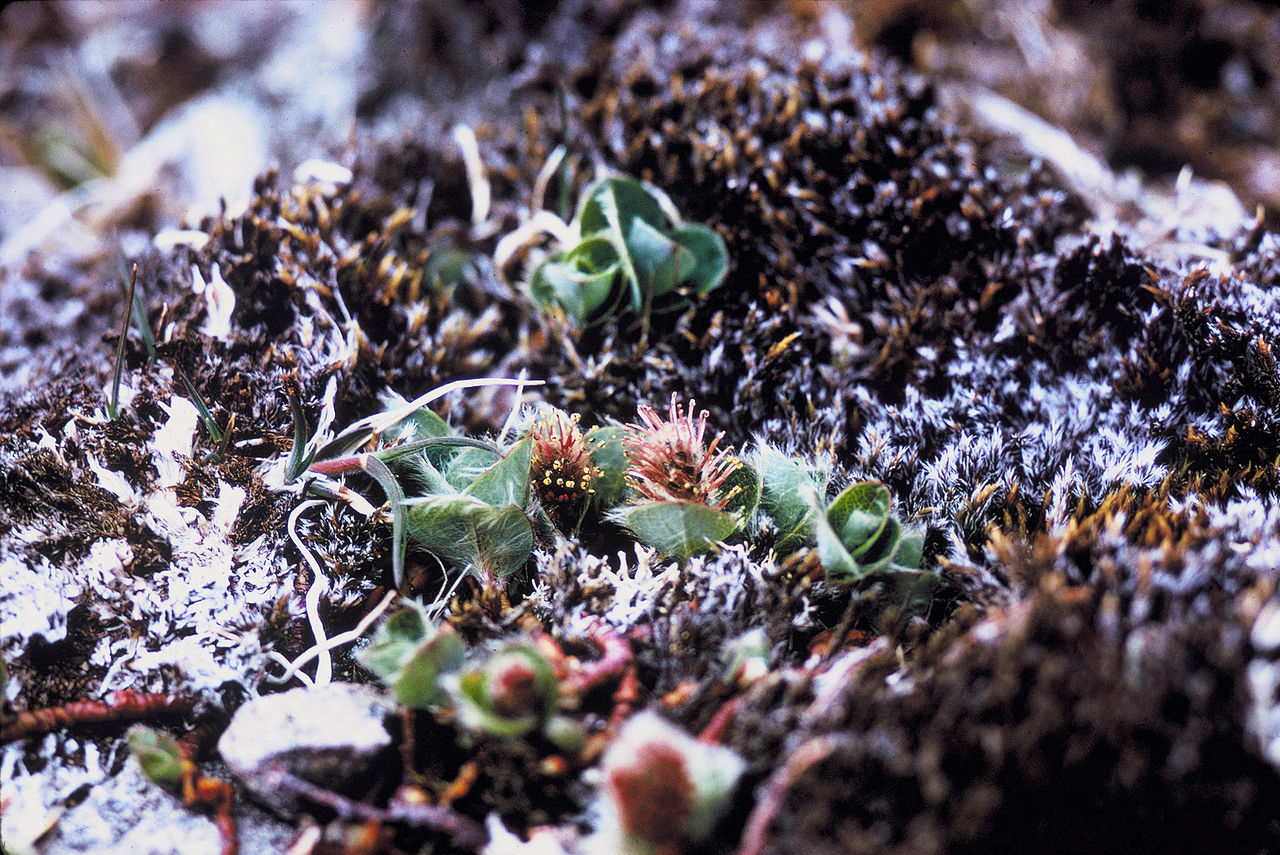


Description and adaptations
Plants are usually only a few centimetres tall, though height can vary with local conditions. Leaves are small, pale green and often covered with fine hairs or a silvery coating that reduces water loss and insulates against chill. Stems are typically prostrate or creeping, and the woody tissues allow survival through long, cold winters. Like other willows, Salix arctica produces catkins in spring and is dioecious (male and female flowers on separate plants).
Habitat and range
Arctic willow has a circumpolar distribution, occurring across Arctic and alpine tundra regions in North America, Eurasia and Greenland. It survives on exposed ridges, gravelly soils and snowbeds where few other woody plants can persist. Its shallow root systems and low stature are adaptations to permafrost and severe winds.
Ecological role and uses
As a pioneer shrub, it helps stabilize soils and supports tundra food webs, providing browse for small mammals and birds. Indigenous peoples have traditionally used twigs and leaves as a mild medicinal tea and source of vitamin C; willow species are also known for containing salicylates, compounds related to aspirin.
Notable facts and distinctions
Salix arctica is notable for its dwarf habit compared with larger willows. It is studied as an indicator of climate change because warming and longer growing seasons can allow shrubs to become more abundant in tundra landscapes. For more on willow biology and related species see willow.
- Small, prostrate woody shrub adapted to cold
- Hairy leaves and early-season catkins
- Important in tundra ecology and traditional uses
Related articles
Author
AlegsaOnline.com Arctic willow (Salix arctica) Leandro Alegsa
URL: https://en.alegsaonline.com/art/5351