
Artichoke (Cynara scolymus): description, cultivation, culinary uses, and history
Artichoke (Cynara scolymus) is a perennial thistle of the daisy family grown for its edible immature flower buds. This article explains its form, origins, cultivation, culinary uses, and notable distinctions.
Overview
The artichoke (Cynara scolymus) is a perennial plant in the Asteraceae (daisy) family, cultivated for the edible bud of its flowering head. Commonly called the globe artichoke, the harvestable portion consists of layered bracts (scales) and the fleshy base known as the heart. When allowed to bloom the plant produces a large purple thistle-like flower.
Image gallery
10 Images



Structure and characteristics
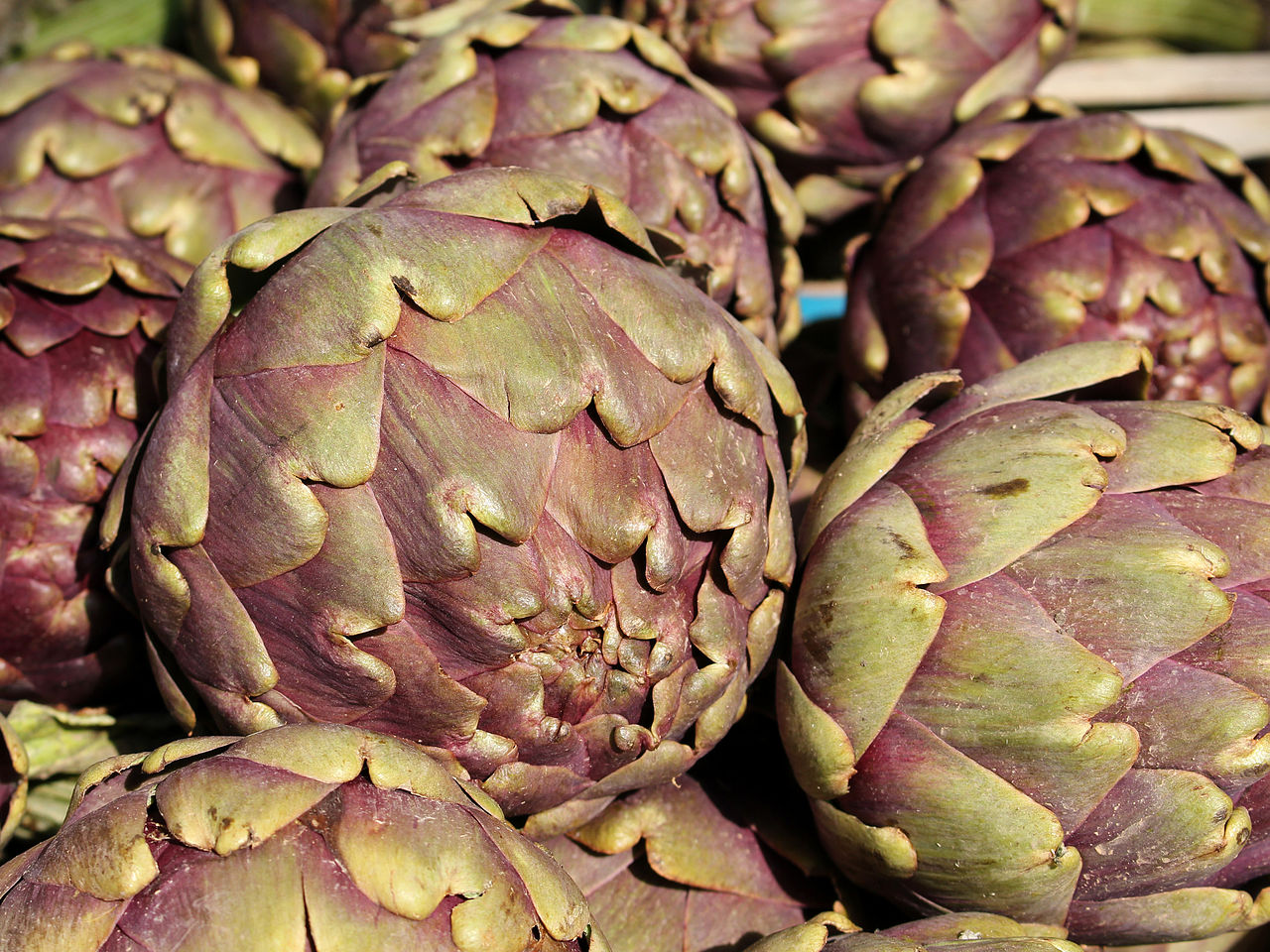
Artichokes form a basal rosette of deeply divided leaves and a tall stalk that bears the terminal flower bud. The bud includes outer bracts, an inner fuzzy inedible portion called the choke, and the heart beneath the choke. Leaves are silvery-green and can be spiny. Mature plants reach roughly one to two meters in favorable climates and are hardy perennials in Mediterranean-type conditions.
Origins and history
Originating around the Mediterranean, the cultivated artichoke is believed to have been selected from wild relatives such as the cardoon (Cynara cardunculus) in antiquity. It was known to classical civilizations and later spread across Europe. In modern times it became a specialty crop in several regions with mild winters and warm summers.
Cultivation and harvest
Artichokes are propagated by seed or division and prefer well-drained soil with regular moisture. Commercial and garden plants are harvested when buds are tight and before the flower opens; if allowed to flower the buds become inedible. They can be grown in coastal and temperate areas and are also processed industrially into canned, jarred, or frozen forms for wider distribution.
Culinary uses and preparation
The edible parts are the tender base (heart) and the lower portions of the bracts. Common preparations include steaming, boiling, braising, grilling, and stuffing. Preservation methods include canning, marinating in oil or vinegar, and freezing. To prepare a fresh artichoke cooks typically trim the stem, remove tough outer leaves, and cut away the choke before serving the heart and inner leaves. Nutritionally they are a low-calorie source of fiber and contain various antioxidants; extracts have also been used traditionally to support digestion and liver function.
Notable distinctions and uses
Artichokes are distinct from the so-called Jerusalem artichoke (a sunflower relative, Helianthus tuberosus) and are closely related to the cardoon. Besides culinary value, the plants are grown as ornamentals and for specialty markets. Care must be taken with the choke and any spiny bracts when preparing fresh buds.
Further reading
For more on classification and botany see Taxonomy and botanical details. For growing tips consult cultivation guides, and for historical context review historical sources. For recipes and preparation techniques try culinary resources.
Related articles
Author
AlegsaOnline.com Artichoke (Cynara scolymus): description, cultivation, culinary uses, and history Leandro Alegsa
URL: https://en.alegsaonline.com/art/6330