
Dung beetle: ecology, behavior, taxonomy and human significance
Dung beetles are scarab beetles that feed on mammal feces. They play key ecological roles—recycling nutrients, reducing pests, and aerating soil—and show diverse behaviors and remarkable navigation.
Overview
Dung beetles are a group of beetles that obtain part or all of their nutrition from animal feces, especially the dung produced by large mammals. Most species belong to the superfamily Scarabaeoidea, and many are members of the family Scarabaeidae; the subfamily Scarabaeinae alone contains more than 5,000 described species. Related families such as the Geotrupidae include additional dung-feeding forms. These insects occur on every continent except Antarctica and occupy a wide range of habitats from grasslands to forests.
Image gallery
10 Images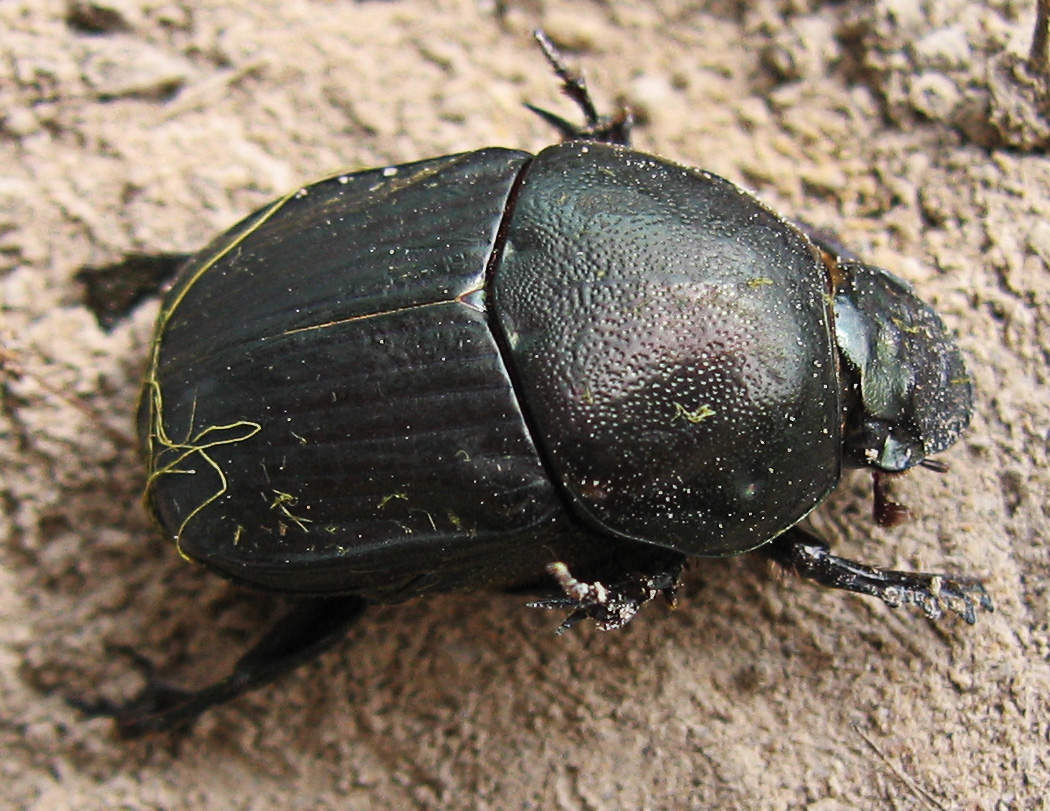





Behavioral groups and key characteristics
Dung beetles are often grouped by how they use dung. Broadly speaking there are three behavioral strategies:
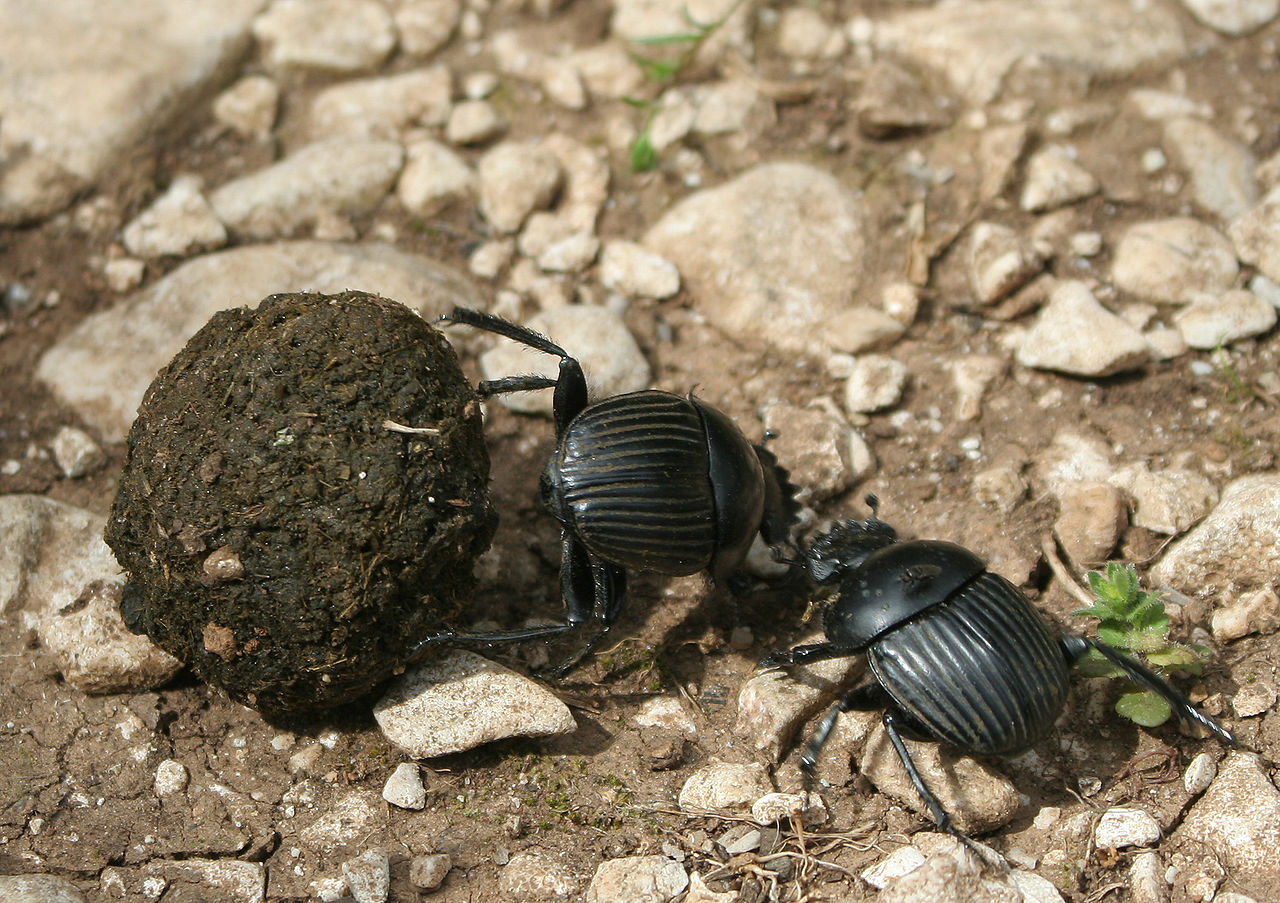
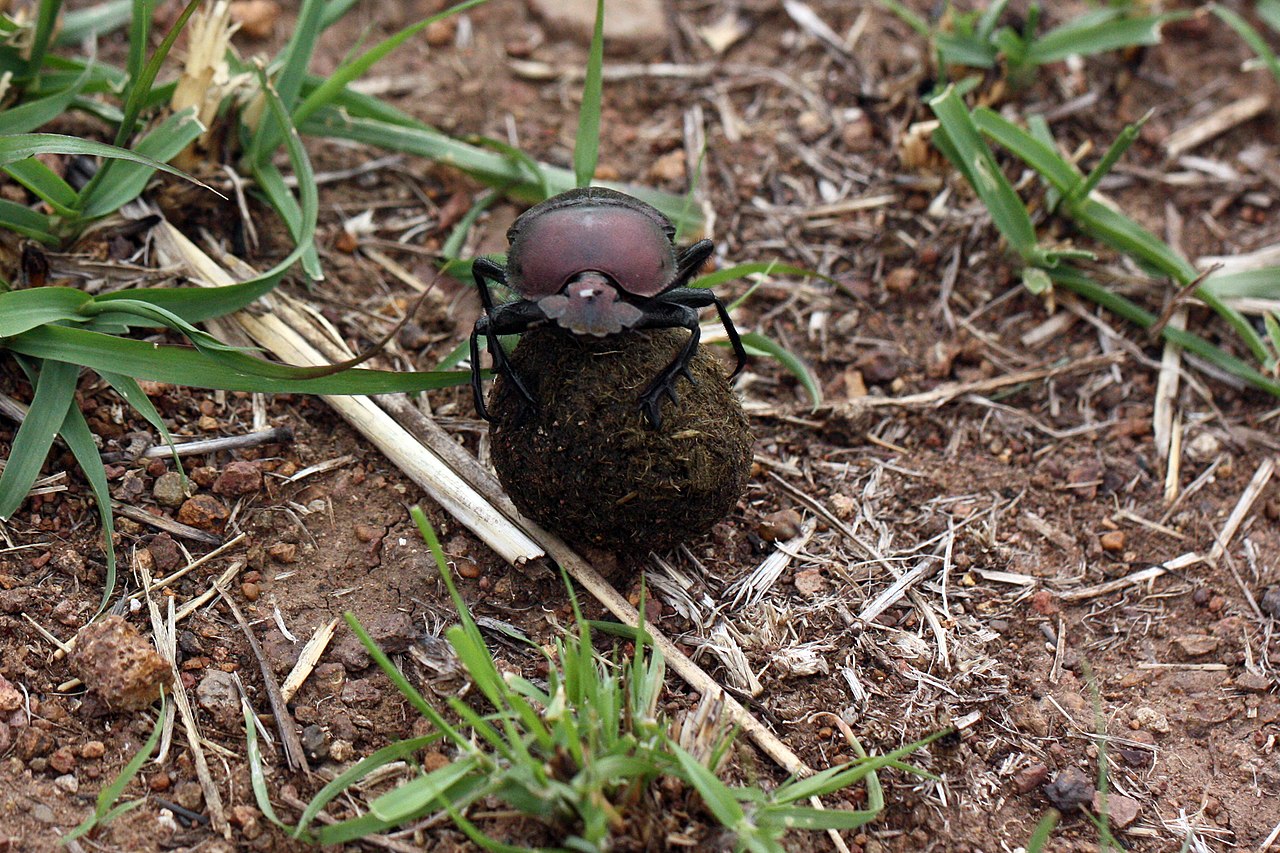
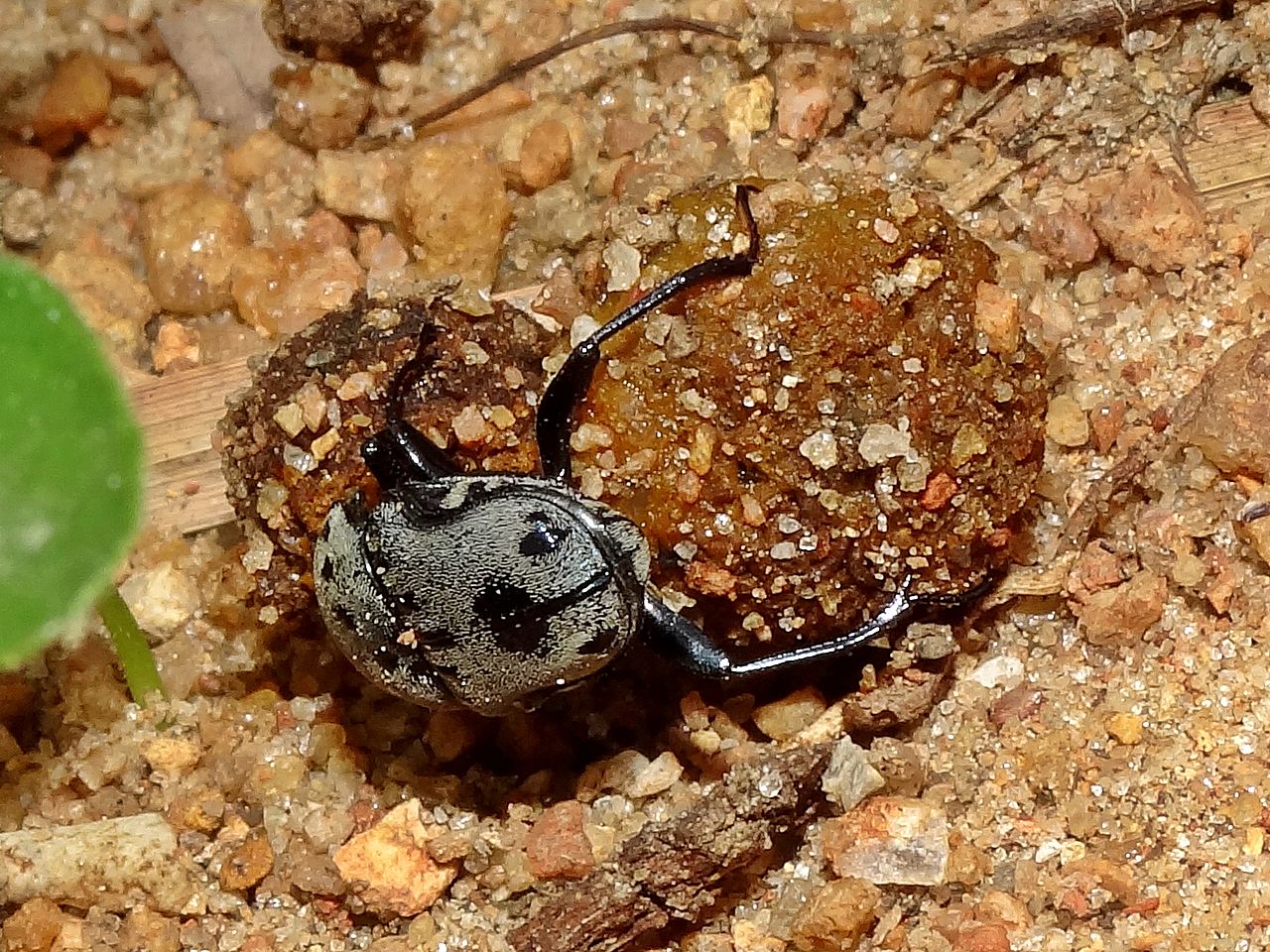
- Rollers — shape portions of dung into spherical balls and roll them away to bury and consume or use as brood chambers.
- Tunnelers — dig beneath a dung pat and bury portions in tunnels for feeding or nesting.
- Dwellers — live and reproduce within the dung itself without making balls or deep burrows.
The morphology of dung beetles varies with their lifestyle: rollers tend to have compact, strong legs for pushing and shaping balls; tunnelers have robust forelegs adapted for digging; dwellers are often less specialized. Many species are dark and compact with a hard exoskeleton, though coloration and size vary widely across taxa.
Life cycle and reproduction
Reproduction typically involves creating a nest or brood ball in which a female lays a single egg. Larvae hatch and feed on the provisioned dung, passing through several growth stages before pupating and emerging as adults. In some species males and females cooperate in forming and burying brood balls; in others, competition is intense and males may fight or guard resources. The brood ball strategy concentrates food for offspring and reduces exposure to predators and parasites.
Ecological roles and importance
Dung beetles perform several important ecosystem services that affect soil, plants and other animals. Their activities include:
- Rapid removal and burial of dung, which reduces breeding sites for nuisance flies and breaks parasite life cycles.
- Redistribution of nutrients into the soil, improving fertility and promoting plant growth.
- Soil aeration and mixing through tunneling and burying, which enhances water infiltration and root development.
- Secondary dispersal of seeds present in dung, aiding plant regeneration.
Because of these functions, dung beetles are valued in pasture management and biodiversity conservation, and their presence is often used as an indicator of ecosystem health.
Taxonomy, history and notable facts
All true dung beetles fall within Scarabaeoidea, with many in the scarab family and others in related families; see more on classification via scarab beetles. Fossil evidence and biogeographic patterns suggest dung-feeding habits evolved repeatedly in association with the rise of large herbivores. Dung beetles also appear in human culture: the scarab was a prominent symbol in ancient Egypt and appears in art and religion.
A few remarkable natural-history notes: some dung beetles use celestial cues to orient while rolling, making use of the sun, polarized skylight and—even in some species—the Milky Way to move in a straight line away from competing dung; others exhibit intricate parental care. Conservation concerns include habitat loss, pesticide exposure and declines in native large mammals, which all reduce available dung and associated beetle populations. In some regions, people have introduced dung beetles to improve pasture sanitation and reduce fly populations; such interventions are carefully managed to avoid unintended ecological effects.
Questions and answers
Q: What are dung beetles?
A: Dung beetles are beetles that feed partly or only on the dung of mammals.
Q: What is the superfamily to which all the dung beetle species belong?
A: All the dung beetle species belong to the superfamily Scarabaeoidea.
Q: How many species does the subfamily Scarabaeinae have?
A: The subfamily Scarabaeinae alone has more than 5,000 species.
Q: What kind of beetles are there in families related to Scarabaeidae?
A: There are dung-feeding beetles in other related families, such as the Geotrupidae (the 'earth-boring dung beetles').
Q: What are the three groups of dung beetles?
A: The three groups of dung beetles are rollers, tunnelers, and dwellers.
Q: What do rollers do with dung?
A: Rollers roll dung into balls, which are used as a food source or brooding chambers.
Q: What do dwellers do with dung?
A: Dwellers simply live in dung and are often attracted by the dung burrowing owls collect.
Tags
Related articles
Author
AlegsaOnline.com Dung beetle: ecology, behavior, taxonomy and human significance Leandro Alegsa
URL: https://en.alegsaonline.com/art/29237
Sources
- zin.ru : Subfamily Scarabaeinae: atlas of representatives of the tribes (Scarabaeidae)
- umsl.edu : umsl.edu
- kerbtier.de : "Geotrupidae (earth-boring dung beetles)"
- scarabaeinae.lifedesks.org : "Scarabaeinae dung beetles"
- museum.unl.edu : Aphodiinae.
- guardian.co.uk : guardian.co.uk/environment/2010/mar/24/dung-beetles
- sciencenews.org : "Moonlighting: beetles navigate by lunar polarity"
- news.nationalgeographic.com : "Dung beetles navigate by the moon, study says"