
Kashmir stag (Hangul) — endangered elk of the western Himalaya
The Kashmir stag or hangul (Cervus canadensis hanglu) is a range‑restricted elk subspecies of the western Himalaya, native to the Kashmir Valley and parts of Himachal Pradesh, threatened by habitat loss, grazing and poaching.
Overview
The Kashmir stag, commonly called the hangul, is a large cervid known scientifically as Cervus canadensis hanglu. Treated by many taxonomic authorities as a subspecies of elk, the hangul is notable for its restricted range in the western Himalaya and for its conservation importance. It is native to parts of India and occupies riparian woodlands, sheltered valleys and adjoining montane meadows.
Image gallery
2 Images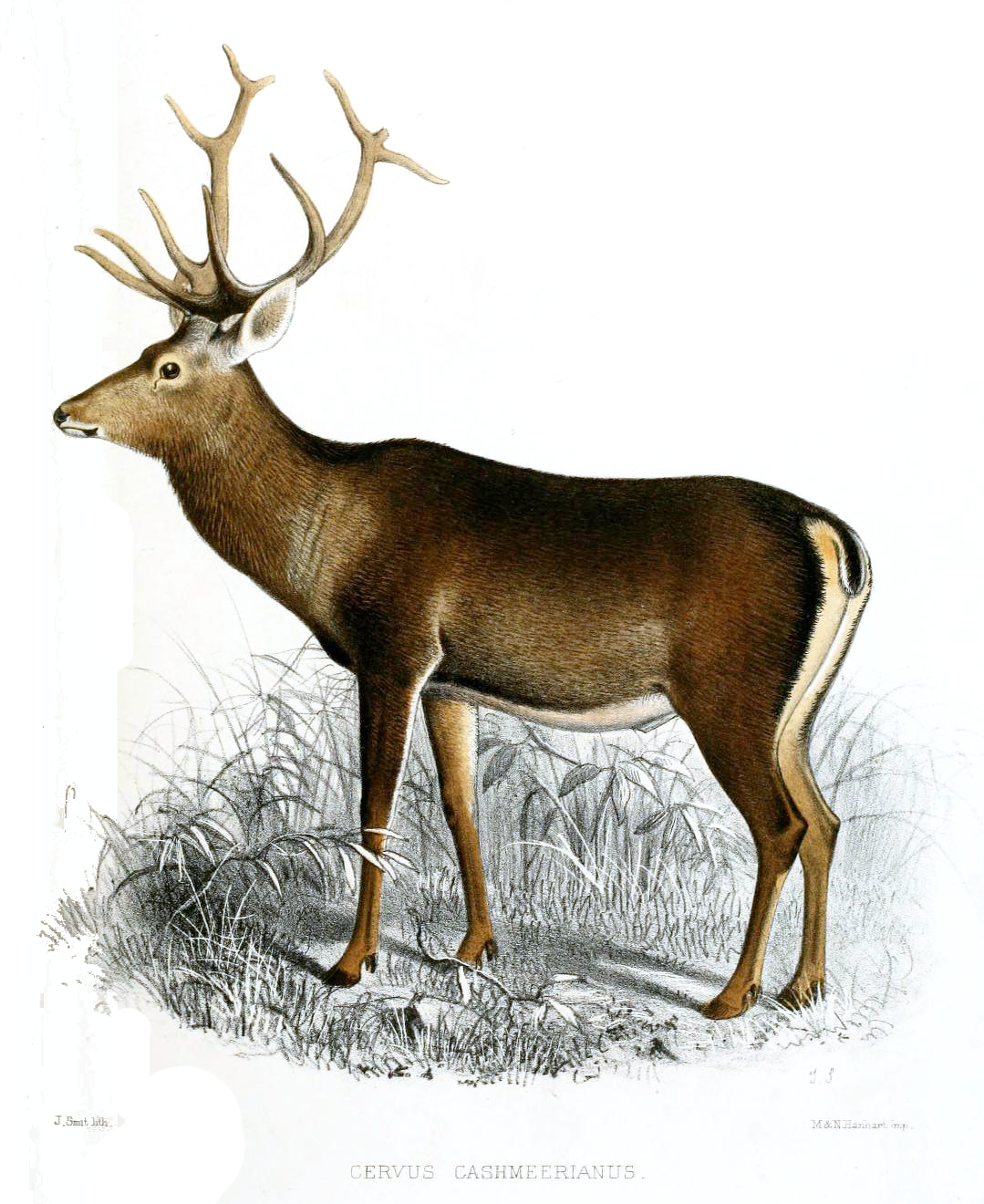

Description and behaviour
Hangul are robust deer with a reddish-brown summer coat that may darken in winter. Males bear branching antlers used during the breeding season for display and competition. Their diet is mixed and largely browser-dominated, consisting of leaves, shrubs and shoots, with grasses taken seasonally. Social organisation changes through the year: females and young often form small groups, while males can be solitary or form loose bachelor groups outside the rut. The species is generally shy and elusive, favouring dense cover close to watercourses.
Habitat and distribution
The hangul requires a mosaic of riverine forest, mixed broadleaf stands and alpine meadows. Historically the subspecies ranged more widely across the Kashmir Valley and adjacent highlands, but its distribution today is markedly reduced and fragmented. Important modern localities include the Kashmir Valley (Kashmir Valley) and remnant pockets in the northern Chamba District (Chamba District) of Himachal Pradesh. Dachigam National Park (Dachigam) is the most widely recognised protected stronghold where focused conservation work has been carried out.
Taxonomy and history
The hangul occupies a complex place in cervid taxonomy. Historically assigned with other south Asian red deer, more recent revisions place it within the elk/red deer complex, and different authorities treat its rank in varying ways. Throughout the 19th and 20th centuries its range and numbers declined as human land use intensified in the region, leaving remnant and isolated populations by the late 20th century.
Threats
Major threats include habitat loss and fragmentation through agricultural expansion and infrastructure, degradation of winter forage by livestock grazing, direct persecution and illegal hunting, and disturbance from increasing human activities. Small, isolated populations are also at elevated risk from disease, genetic inbreeding and random environmental events, which can impede recovery even when direct human pressures are reduced.
Conservation and management
Conservation efforts combine protected-area management, anti-poaching measures, habitat restoration and population monitoring. Dachigam National Park remains a central site for research and protection, but conservationists emphasise the need for landscape-level measures that improve connectivity between fragments and engage local communities in sustainable land use. Scientific monitoring of demography and genetic health supports management decisions and helps prioritise actions.
Importance and outlook
As a range‑restricted and charismatic ungulate, the hangul serves as a flagship species for conservation of riparian and montane forest ecosystems in the western Himalaya. Protecting the hangul benefits a wider suite of species and habitats. While recovery faces significant challenges, coordinated protection, habitat management and community involvement offer pathways to stabilise and potentially increase remaining populations if sustained over the long term.
Further reading and resources
Related articles
Author
AlegsaOnline.com Kashmir stag (Hangul) — endangered elk of the western Himalaya Leandro Alegsa
URL: https://en.alegsaonline.com/art/52437