
Khapra beetle (Trogoderma granarium): a destructive stored‑product pest
Overview of the Khapra beetle, Trogoderma granarium: origin, biology, economic impact on stored grains and seeds, control challenges, and measures for prevention and quarantine.
Overview
The Khapra beetle (Trogoderma granarium) is a small dermestid insect recognized as one of the most damaging pests of stored foodstuffs. Native associations trace its origin to South Asia, and it is widely regarded among the 100 worst invasive species because of its ability to spoil commodities and trigger costly trade restrictions. Authorities list it as one of the world’s most destructive stored‑product pests due to rapid infestations and resistance traits.
Image gallery
2 Images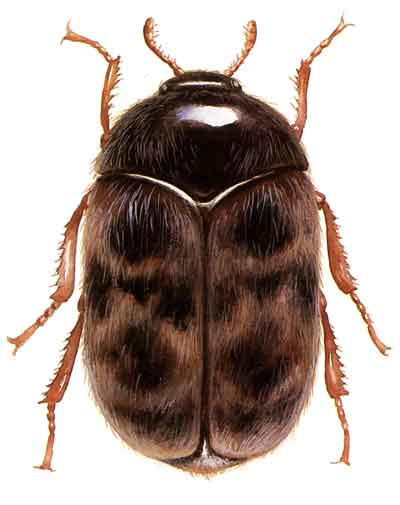

Biology and identification
Adults are small, rounded beetles, while the larvae are hairy, elongated and are the primary feeding stage. Life stages include egg, larva, pupa and adult; the larval stage can persist for long periods under unfavorable conditions. Khapra beetle larvae feed on a range of dried goods, especially processed and whole cereals and similar commodities. Commonly attacked materials include grain and cereal products (grain products) and stored seeds, but they also damage animal‑based products and historical collections in rare cases.
History and spread
Originally associated with warm, dry storage environments in its native range, Khapra beetle has spread to regions in Africa, the Middle East and parts of Europe through infested shipments and packaging. Because it thrives in low‑moisture food and can survive long periods without feeding, accidental introductions are a serious concern. Many countries maintain active surveillance and rapid response plans to prevent establishment.
Impacts and quarantine measures
Infestations reduce the quality and marketability of foodstuffs, cause weight loss and contamination, and may render grain lots unacceptable for sale or export. Economic consequences include direct losses, control costs and trade restrictions; several nations impose strict import controls. For example, a federal quarantine restricts the importation of rice and other specified commodities into the United States from areas known to harbor the beetle. International and national rules aim to limit movement of potentially infested materials.
Detection and control
Management combines prevention, monitoring and treatment. Key measures are strict hygiene and cleaning of storage areas, routine inspection of incoming consignments, and use of bait and pheromone traps for early detection. When infestations occur, nonchemical options such as controlled heat treatments and improved storage hygiene are preferred; fumigation and insecticides are used selectively but can be less effective because of documented resistance to some insecticides. Official eradication and trade measures are organized through inspection, containment and, where necessary, treatments described in regulatory guidance (control and quarantine protocols).
Notable facts and prevention tips
- Its larval stage is the most damaging and can enter prolonged dormancy, making detection difficult.
- It prefers dry, low‑moisture foods, so reducing humidity and keeping storage clean lowers risk.
- Because of its economic importance, effective prevention emphasizes inspection of imports and supply‑chain hygiene rather than sole reliance on insecticides.
For more technical guidance and regulatory details, consult national plant protection organizations and international standards on phytosanitary measures maintained by responsible authorities.
Questions and answers
Q: What is the Khapra beetle?
A: The Khapra beetle, also known as Trogoderma granarium, is a destructive pest of grain products and seeds that originated in South Asia.
Q: Why is the Khapra beetle considered one of the worst invasive species in the world?
A: The Khapra beetle is considered one of the worst invasive species in the world because of its destructive nature towards grain products and seeds.
Q: Why are infestations of the Khapra beetle difficult to control?
A: Infestations of the Khapra beetle are difficult to control because of their ability to survive without food for long periods, their preference for dry conditions and low-moisture food, and their resistance to many insecticides.
Q: What is the federal quarantine regarding the importation of rice into the U.S.?
A: The federal quarantine restricts the importation of rice into the U.S. from countries with known infestations of the Khapra beetle.
Q: What are some characteristics of the Khapra beetle that make it difficult to get rid of once it has infested an area?
A: Some characteristics of the Khapra beetle that make it difficult to get rid of once it has infested an area include its ability to survive without food for an extended period, its preference for dry environments, and its resistance to many insecticides.
Q: How can the Khapra beetle be prevented from spreading to other countries?
A: The Khapra beetle can be prevented from spreading to other countries by implementing strict quarantine measures, particularly on food and seeds that may be contaminated with the beetle.
Q: What can be done to control the infestation of the Khapra beetle?
A: To control the infestation of the Khapra beetle, pest control measures such as fumigation and sanitation of infested areas can be undertaken. However, controlling infestations of the Khapra beetle remains challenging due to their resilience and resistance to many insecticides.
Related articles
Author
AlegsaOnline.com Khapra beetle (Trogoderma granarium): a destructive stored‑product pest Leandro Alegsa
URL: https://en.alegsaonline.com/art/53192
Sources
- aphis.usda.gov : Stibick J. 2007. New pest response guidelines: Khapra Beetle
- entomology.ifas.ufl.edu : University of Florida Food & Agricultural Services
- chicagotribune.com : Chicago Tribune