
King cobra (Ophiophagus hannah): overview, biology, and conservation
Large, tree‑adapted venomous snake of Asia known for its length, hood display, snake‑eating diet, nest‑building reproduction, and conservation concerns.
Overview
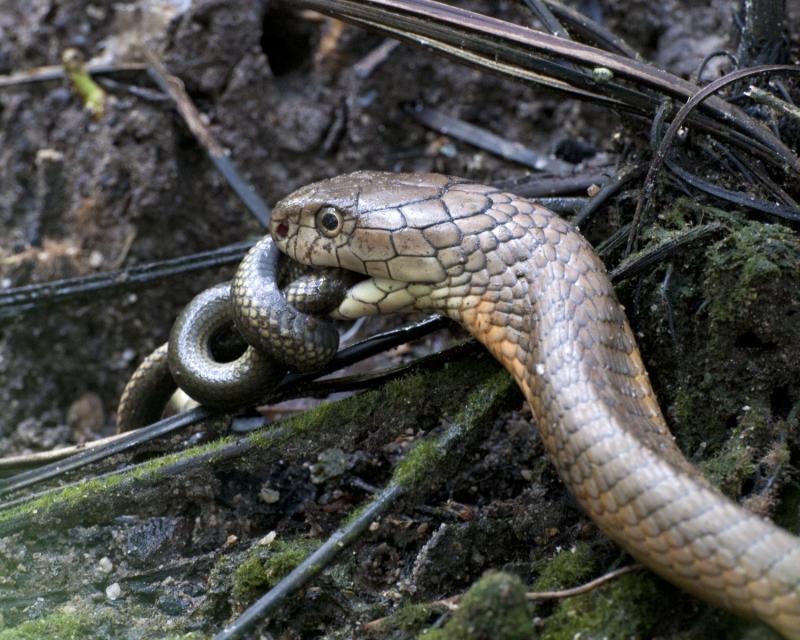
The king cobra (Ophiophagus hannah), also called the hamadryad, is a large elapid snake native to South and Southeast Asia. It holds the distinction of being the longest venomous snake in the world, with exceptional individuals reported to reach about 5.5 m (18 ft), though most adults are considerably shorter (< 4 m). Its scientific name, Ophiophagus, means "snake eater" and reflects a diet that is largely composed of other snakes. For a general note on its size and status see size and records.
Image gallery
10 Images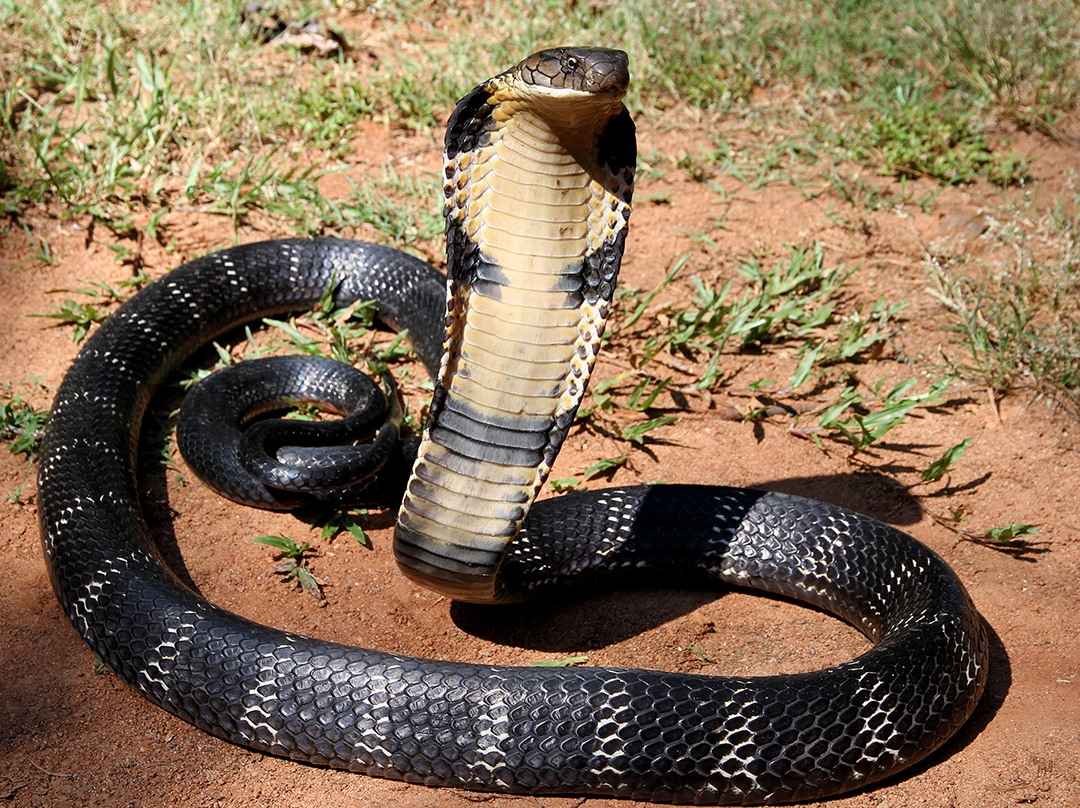




Physical characteristics and behaviour
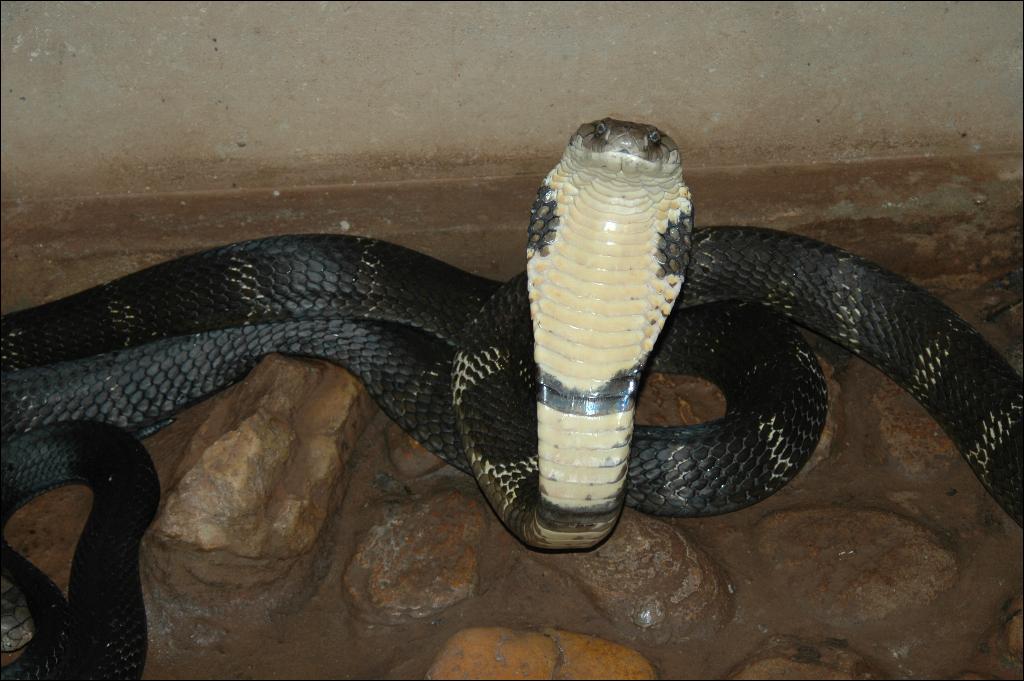
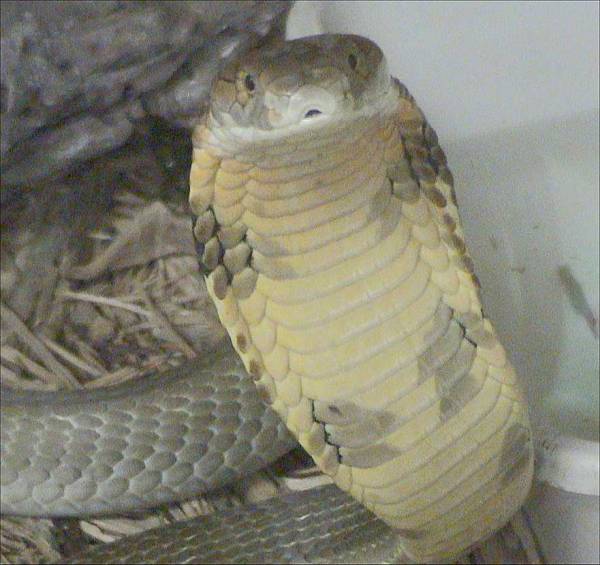
King cobras have an elongated head, unmistakable hood when threatened, and keeled scales giving a somewhat rigid appearance. They can raise the anterior portion of their body off the ground and spread their hood to appear larger; in the tallest displays they can lift enough of their body to look a human in the face. Their senses combine good vision with a strong reliance on chemical cues detected by the tongue and Jacobson's organ. Typical behaviour is wary and reclusive — they generally avoid confrontation with people and will retreat if given an escape route (human encounters).
Diet and feeding
True to the genus name, king cobras are primarily ophiophagous: they feed mainly on other snakes, including both venomous and non‑venomous species. They will also take lizards, small mammals, and occasionally eggs. Because a single meal can be large relative to body size, individuals may fast for weeks or months between meals. Their hunting relies on stalking, striking, and overpowering prey rather than constriction.
Reproduction and lifecycle
Unlike most snakes, the female king cobra constructs a nest of vegetation in which she lays and incubates her eggs, and she remains nearby to guard the nest until the young hatch. Hatchlings are independent from birth. Lifespan in the wild is not precisely known; in captivity they may live for up to around 20 years. For more on reproductive habits see behavior and breeding.
Venom, medical importance, and predators
King cobra venom is potently neurotoxic and can cause severe systemic effects in bitten humans; rapid medical treatment and the availability of appropriate antivenom are important for effective care. Fatalities have occurred historically where access to medical treatment was limited. Natural predators are few; the Indian grey mongoose is reported as one of the species that will attack or harry cobras (mongoose interactions). Research and clinical resources on venom and treatment are available in specialist literature and regional health guidance (venom and treatment).
Distribution, habitat and conservation
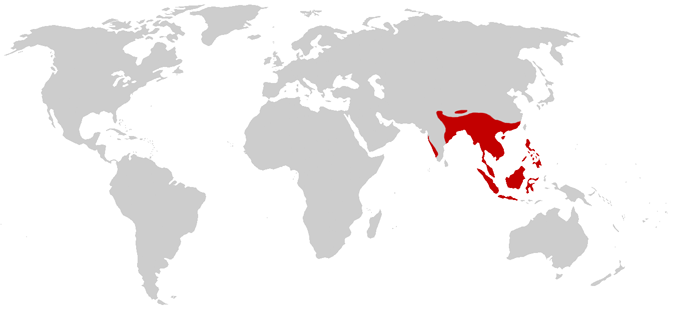
King cobras are found across much of the Indian subcontinent and throughout parts of Southeast and East Asia, favoring tall rainforest, bamboo thickets, and areas near streams and lakes where prey is abundant. They are threatened by habitat destruction, fragmentation, and persecution. Conservation assessments indicate population declines in some regions; protection measures and habitat preservation are important for their long‑term survival. For regional range maps and status information see distribution and conservation reports (status).
Notable facts
- Common name "hamadryad" links the species culturally to forest nymphs and myth.
- They are among the few snakes that build nests and exhibit maternal care for eggs.
- Despite their reputation, king cobras exhibit avoidance behavior and will not generally seek out humans as prey.
For further reading and field identification, consult regional field guides and specialist accounts that cover behavior, venom management, and conservation actions (human‑wildlife coexistence, regional guides, clinical resources).
Questions and answers
Q: What is the King cobra?
A: The King cobra is a venomous snake that belongs to the Elapidae family.
Q: How long can an adult King cobra grow up to?
A: An adult King cobra can grow up to 18 feet (5.5 m) in length.
Q: Where does the King cobra live?
A: The King cobra is found throughout India and some parts of the south and east of Asia.
Q: What is the diet of the King cobra?
A: The King cobra mostly eats snakes, but it may also consume lizards and rodents.
Q: How often does the King cobra eat?
A: After consuming a large meal, the King cobra may live for months before eating again.
Q: What is the lifespan of a King cobra?
A: The King cobra can live up to 20 years.
Q: What is the main predator of the King cobra?
A: The Indian grey mongoose is one of the few predators of the King cobra, but it may not attack them often.
Related articles
Author
AlegsaOnline.com King cobra (Ophiophagus hannah): overview, biology, and conservation Leandro Alegsa
URL: https://en.alegsaonline.com/art/53525
Sources
- commons.wikimedia.org : King cobra
- iucnredlist.org : Ophiophagus hannah
- britannica.com : "Cobra"
- animals.nationalgeographic.com : "National geographic- KING COBRA"
- priory.com : "Ophitoxaemia (venomous snake bite)"
- seanthomas.net : "Most dangerous snakes in the world"