
Kentrosaurus — a spiked stegosaur from Tendaguru
Kentrosaurus, a small stegosaur from the Late Jurassic of East Africa, is known for its paired plates and numerous spikes. Fossils from the Tendaguru formation revealed its anatomy, behavior, and paleobiological significance.
Overview
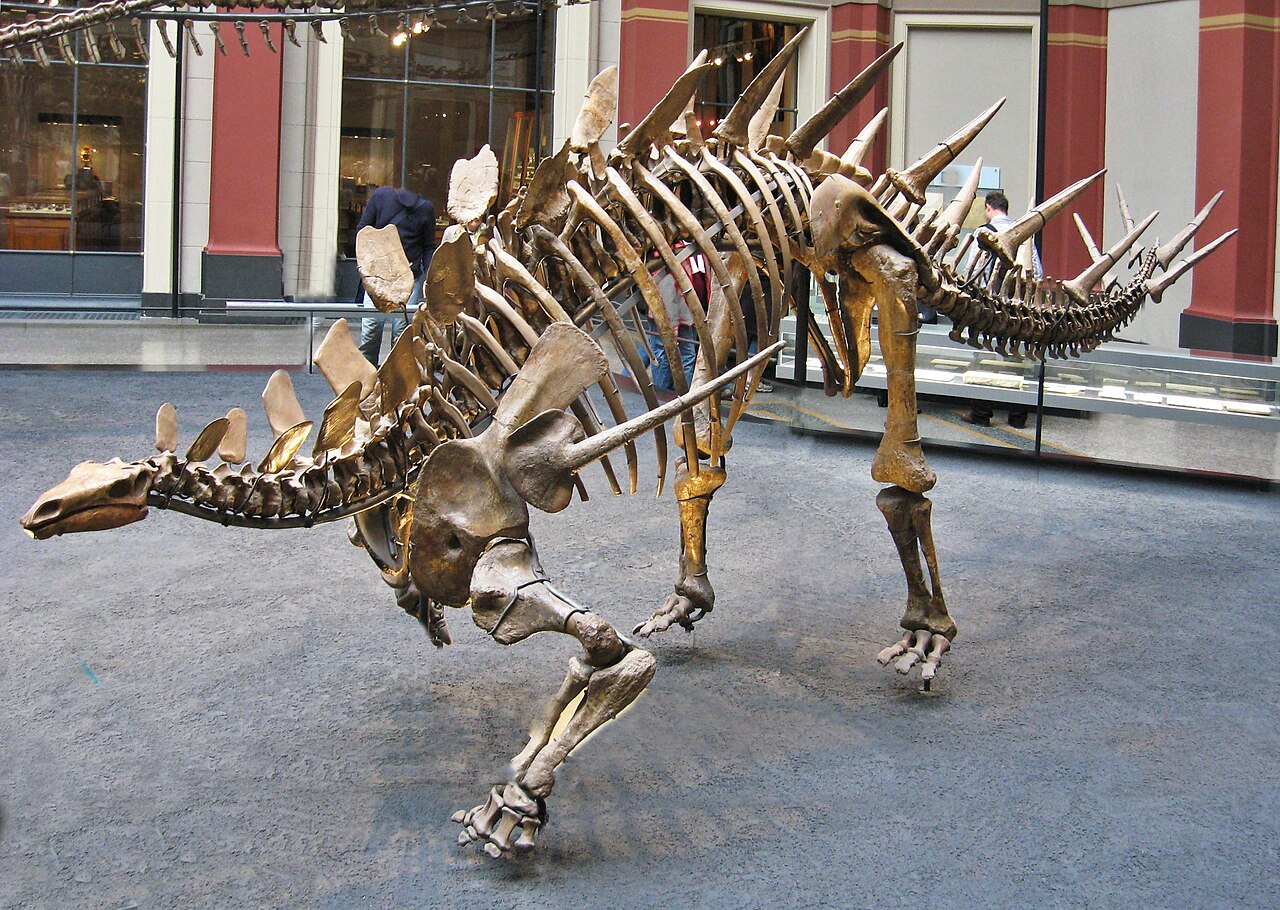
Kentrosaurus is a genus of stegosaurian dinosaur that lived during the Late Jurassic in what is now East Africa. Best known from fossils recovered in the Tendaguru beds of Tanzania, it combined a row of small plates with distinctive long spikes on its shoulders and tail. The animal is often reconstructed as relatively small for a stegosaur and adapted for herbivory with defensive armature to deter predators.
Image gallery
10 Images



Distinctive characteristics
Kentrosaurus shows a mix of features typical of stegosaurs and some that are unusual within the group. Its back bore small, flattened plates and short spines, while the hips and tail carried elongated spikes. Compared with other stegosaurs, the arrangement of plates and spikes suggests a greater emphasis on active defense.
- Size: relatively modest compared with some stegosaurs, with a compact body plan.
- Dermal armor: combination of plates and many spikes along the body and tail.
- Skull and teeth: suited to processing plant material; skull small relative to body.
- Brain: like other stegosaurs, it had a small brain relative to body size, implying limited cognitive abilities rather than precise intelligence; see research on brain-to-body ratios.
Discovery and scientific history
Fossils of Kentrosaurus were unearthed during early 20th-century expeditions to the Tendaguru formation, a rich Late Jurassic site in Tanzania. The genus was described in the early 1900s based on fairly complete material, which allowed paleontologists to reconstruct its distinctive armored silhouette. Several of the original specimens were prepared and studied in European collections, informing later interpretations of stegosaur anatomy and diversity.
Paleoecology and behavior
Kentrosaurus lived in environments dominated by rivers, floodplains and open woodlands where it browsed on low-growing vegetation. Its teeth and jaw morphology indicate it was a herbivore. The arrangement of plates and multiple spikes—especially on the tail and shoulders—suggests these structures served in defense and possibly species recognition or display.
Importance and notable facts
Kentrosaurus is important because it expands our view of stegosaur diversity outside Europe and North America and shows how different lineages adapted armor for defense. Fossils from the Tendaguru site remain a key source for understanding Late Jurassic African ecosystems. For more on the Tendaguru locality and its discoveries, see material related to Tendaguru in Tanzania.
Related articles
Author
AlegsaOnline.com Kentrosaurus — a spiked stegosaur from Tendaguru Leandro Alegsa
URL: https://en.alegsaonline.com/art/52965