
Jura Mountains
A folded limestone range on the border of Switzerland and France, the Jura Mountains stretch from Lake Geneva to the Rhine and are known for karst geology, fossils, pastoral agriculture and winter tourism.
Overview
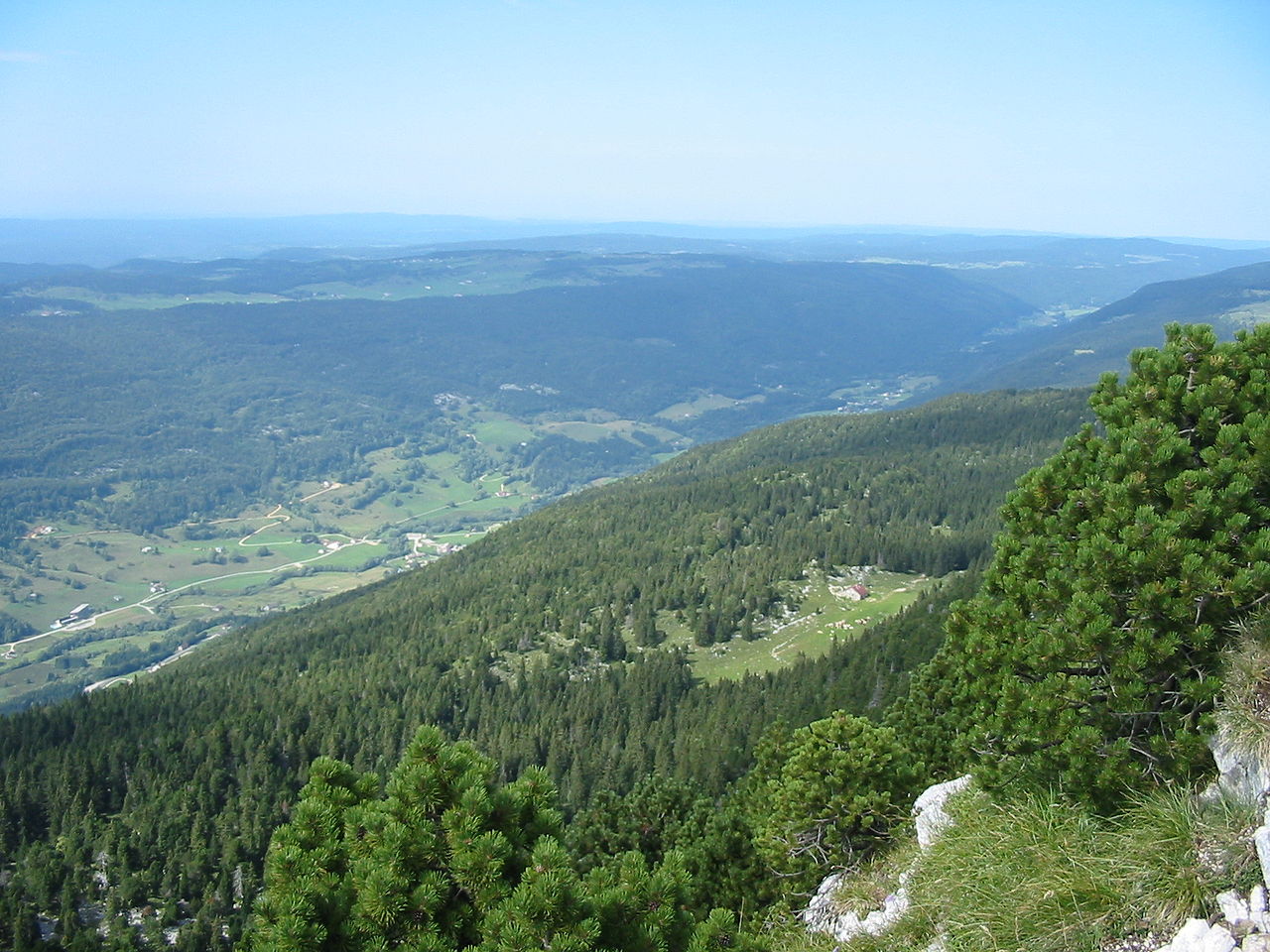
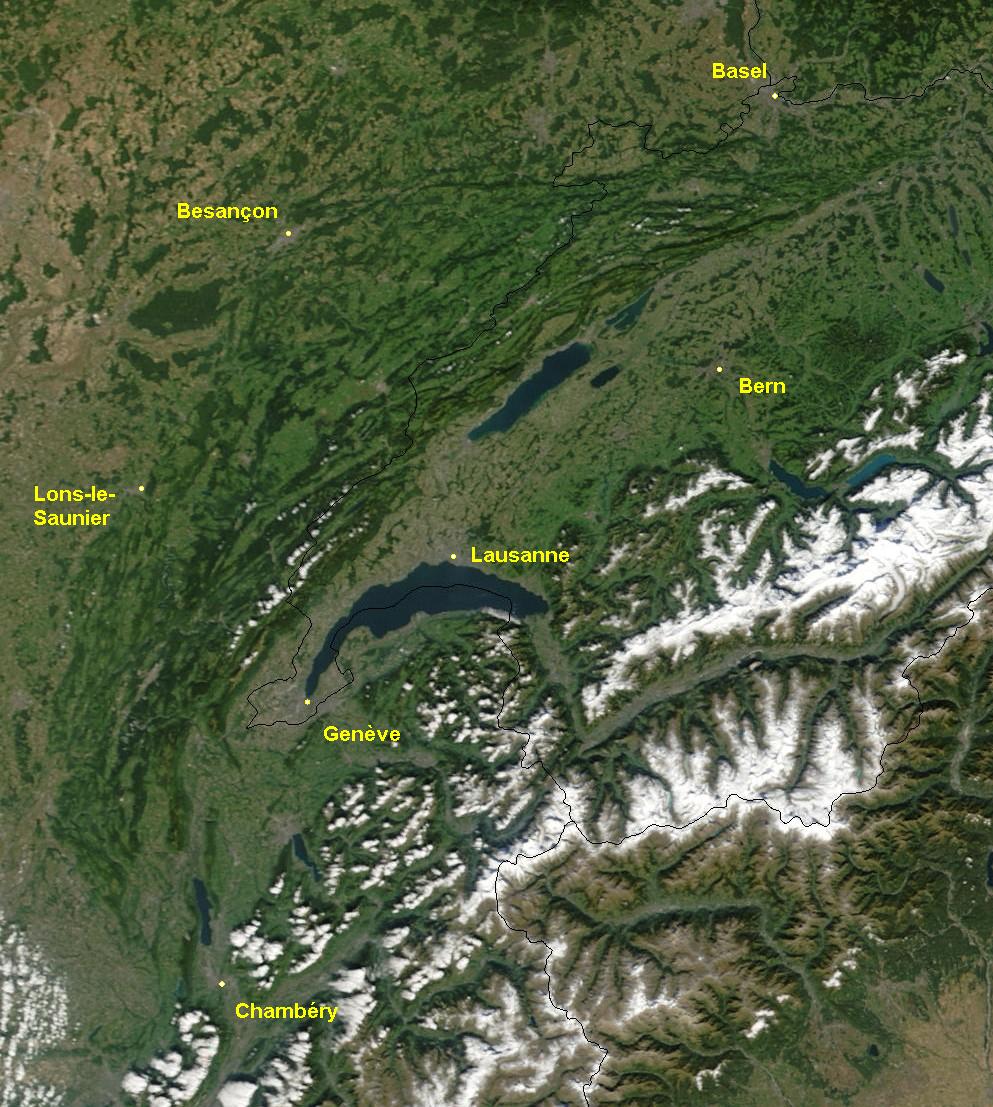
The Jura Mountains are a sub-alpine mountain chain forming a long arc along the western edge of the Alps. The range extends in a curved band from Lake Geneva northeastward toward the Rhine, crossing international borders and serving as a distinct geological and cultural region. Often described simply as a mountain arc, the Jura lies mainly in Switzerland and France, with landscapes that alternate between rounded ridges, wooded plateaus and open pastures.
Image gallery
9 Images




Geology and age
The range is composed predominantly of layered marine limestone and marl that were deposited in the Mesozoic era. Folding and uplift associated with the Alpine orogeny shaped these sediments into the characteristic parallel ridges and synclines of the Jura. The rock sequence contains abundant fossils, and paleontological finds — including fossilized marine organisms and preserved dinosaur traces — illustrate the region's long geological history from roughly 208 to 144 million years ago. Many sites within the chain are noted for their well-preserved fossil horizons and trackways (dinosaur and other traces).
The terrain shows classic karst features where soluble limestone has been sculpted by water: caves, sinkholes and underground drainage systems are common in places and contribute to a varied hydrology and a number of small springs and caves prized by researchers and visitors alike.
Peaks, subranges and landscape
Although lower and more rounded than the nearby Alps, the Jura reaches respectable elevations. The highest summit is the Crêt de la Neige in France at about 1,718 metres, while other well-known high points include the Chasseral, rising to approximately 1,607 metres on the Swiss side. Locally the range is divided into belts such as the High Jura and Lower Jura, and valleys and passes separate distinct massifs that support different land uses and microclimates.
Human use and significance
The Jura has long supported a mix of rural economies. Traditional activities include pastoral agriculture and forestry, with dairy farming and artisan cheese production being especially important. The Swiss Jura also became a center for precision industry, notably watchmaking, which developed using local skills and water power. In modern times, seasonal tourism—especially winter sports, hiking and nature tourism—plays a substantial role in local economies.
Notable facts and distinctions
- The name "Jura" is the source of the term "Jurassic," reflecting the abundant geological record preserved in its rocks.
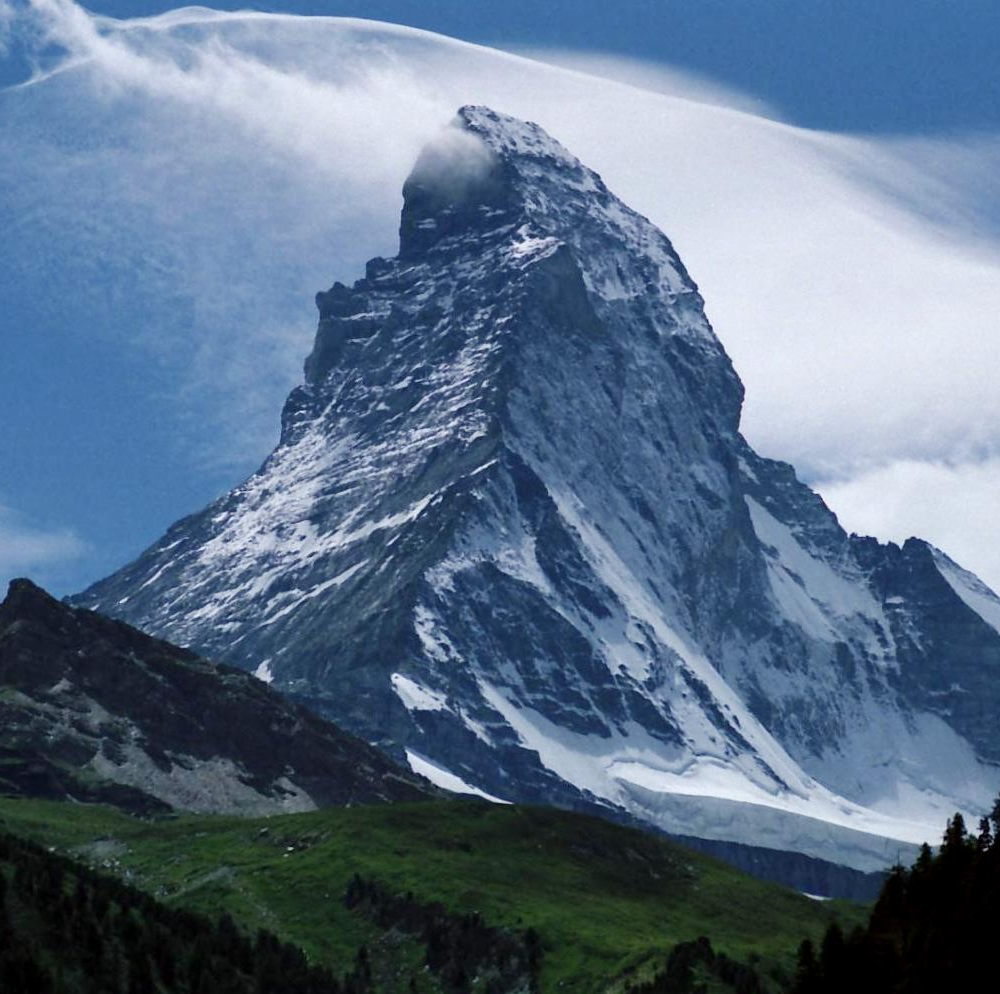
- Compared with the Alps, the Jura is composed of older sedimentary layers that were folded gently rather than thrust into sharp, glaciated peaks.
- Its karst systems and fossil sites make the range important for geology and paleontology; many areas are protected for conservation and scientific study.
- Cross-border cultural ties mean that architecture, cuisine and land use often blend Swiss and French traditions along the chain.
Visitors can explore the region via a network of trails and small roads, visiting lookout summits, limestone caves and rural villages to experience both the natural history and the living cultural landscape of the Jura Mountains.
Further reading and resources: geological surveys, regional parks and paleontological collections provide more detailed information (overview, rock types, western limit, northeastern limit, Swiss side, French side, notable peaks, fossil records).
Related articles
Author
AlegsaOnline.com Jura Mountains Leandro Alegsa
URL: https://en.alegsaonline.com/art/51707