
Arachnology: the scientific study of arachnids
Arachnology is the branch of zoology that studies arachnids—their anatomy, behavior, ecology, classification, and importance to people and ecosystems.
Overview
Arachnology is the scientific discipline concerned with arachnids, a group of jointed-legged invertebrates that includes spiders, scorpions and several related orders. As a field it combines taxonomy, anatomy, ecology and behavior to document and understand these animals and their roles in ecosystems. Researchers often describe new species, clarify relationships among groups, and investigate interactions with humans and other organisms. For a broad introduction to the discipline see scientific discipline and general resources on arachnids.
Image gallery
3 Images

Major groups and characteristics
Arachnids share some common structural features: typically two main body regions, chelicerae (mouthparts), pedipalps, and eight legs. Major groups commonly studied in arachnology include:
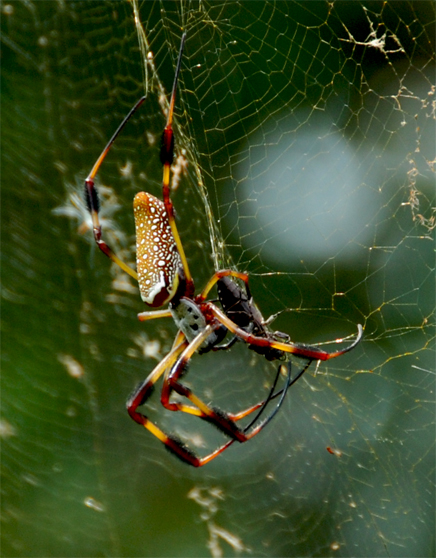
- Spiders — diverse predators known for silk production and venom in many species.
- Scorpions — nocturnal hunters with a curved metasoma and venomous sting.
- Pseudoscorpions — small, pincer-bearing arachnids without a tail.
- Harvestmen — also called opiliones, often with long legs and a single body segment appearance.
- Ticks and mites — medically and economically important but frequently studied under acarology.
History and methods
Interest in arachnids dates back to natural history observations; modern arachnology developed with advances in microscopy, comparative anatomy and taxonomy. Today researchers use field surveys, morphological study, imaging, and molecular techniques such as DNA sequencing to resolve species boundaries and evolutionary relationships. Laboratory studies address physiology, venom composition and silk production, while ecological work examines predator–prey dynamics and habitat associations.
Applications and significance
Studies in arachnology have practical and scientific value: arachnids serve as biological control agents, indicators of environmental change, and subjects in basic research on venom and biomaterials (silk). Medical and veterinary concerns—such as tick-borne disease or scorpion envenomation—connect the discipline to public health. Conservation work highlights habitat loss and the need to document species before they decline.
Distinctions and notable facts
Not all eight-legged arthropods are arachnids and not all arachnids are heavily studied by arachnologists; acarologists focus on many mites and ticks because of their tiny size and specialized biology. Despite common fears, only a small fraction of species are harmful to humans; many are beneficial predators. Ongoing research continues to reveal cryptic diversity and novel behaviors across the group.
Related articles
Author
AlegsaOnline.com Arachnology: the scientific study of arachnids Leandro Alegsa
URL: https://en.alegsaonline.com/art/5147