
José María Morelos y Pavón — Mexican independence leader
Mexican Roman Catholic priest and revolutionary who led and organized the independence movement after Hidalgo; author of Sentimientos de la Nación and a founder of the insurgent congress; executed 1815.
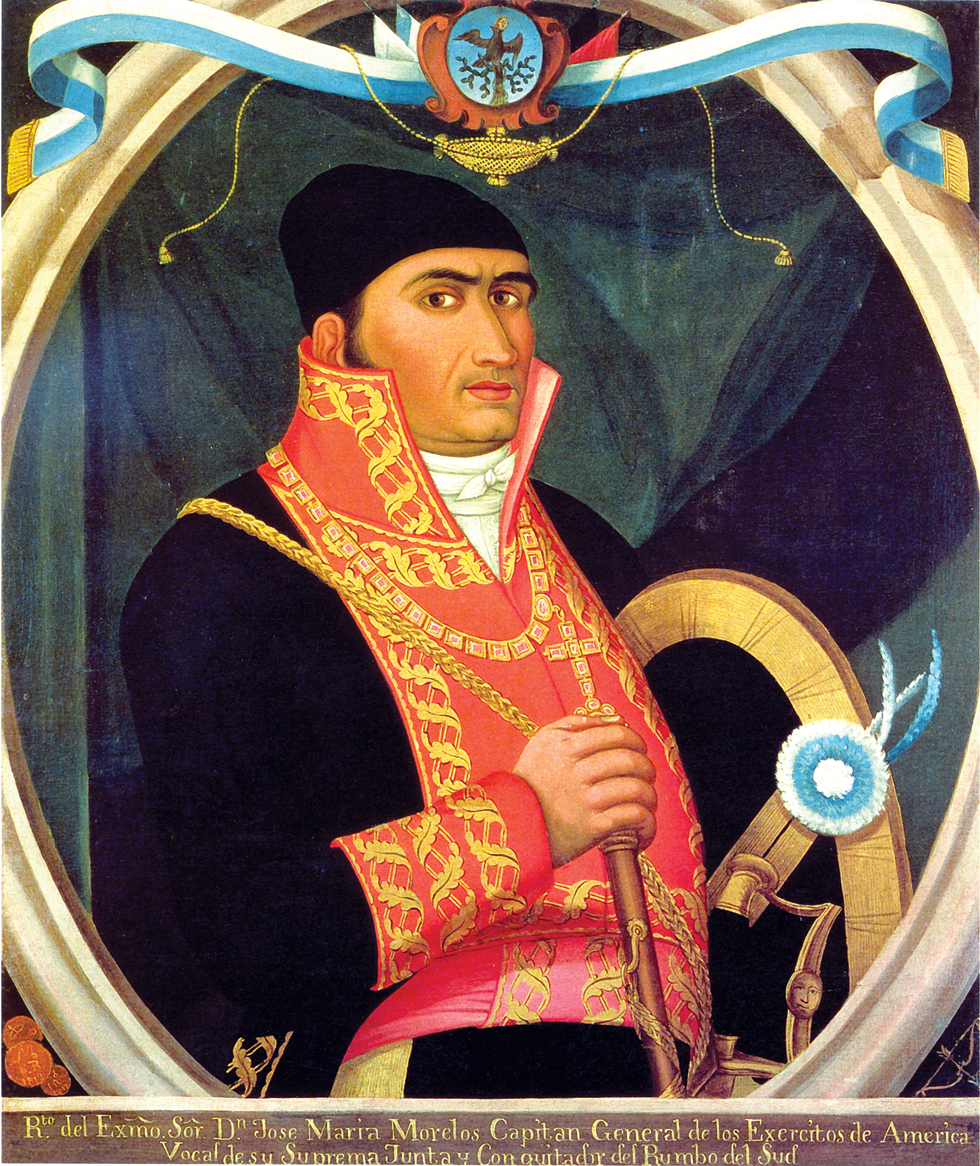
José María Morelos y Pavón (30 September 1765 – 22 December 1815) was a Mexican Roman Catholic priest who became one of the most important commanders of the struggle for independence from Spain. Born in the city of Valladolid (today called Morelia) in the state of Michoacán, he assumed leadership of the insurgent cause after the capture and execution of Miguel Hidalgo y Costilla (see Hidalgo), turning a popular uprising into a more coherent military and political movement.
Leadership and methods. Morelos combined clerical training with steady military organization. Unlike the early spontaneous rebellions, his forces operated with disciplined columns and clear strategic aims. As a rebel leader he focused on securing southern provinces and key ports, and on providing a chain of command that could sustain prolonged resistance during the Mexican War of Independence.
Image gallery
10 Images



Political program and institutions
Morelos is known for giving the insurgency a political identity. He drafted the Sentimientos de la Nación, a program that proposed independence, legal equality, and the abolition of racial privileges and slavery. He also helped convene an insurgent assembly that is commonly called the Congress of Chilpancingo (or Congress of Anáhuac), which declared the intention of formal independence and attempted to create republican institutions for a liberated Mexico.
Campaigns, capture and execution
Between 1810 and 1815 Morelos led several military campaigns that expanded rebel control across the south and won notable victories, even if the insurgents could not yet secure nationwide success. After military reversals and sustained pressure from Spanish royalist forces he was captured by colonial authorities in 1815 and, tried for treason, was executed on 22 December 1815 in San Cristóbal Ecatepec. His death did not end the movement but made him a martyr and a symbol for later phases of the independence struggle.
Legacy and significance
Morelos is commemorated in Mexican history as a central organizer who transformed an early, uneven revolt into a politically articulated struggle. His ideas influenced later constitutional developments and his name lives on in place names, monuments and historical memory. For further reading on the movement and its figures, consult specialized works and archives that examine the period of insurgency and the documents attributed to Morelos and his allies.
- Born: Valladolid (today Morelia), Michoacán — regional context
- Role: parish priest turned rebel leader in the independence war
- Key text: Sentimientos de la Nación — foundation for insurgent policy and republican ideas
- Aftermath: captured and executed following royalist counteroffensives (see Hidalgo and subsequent leaders)
For primary documents and further context, consult archival collections and scholarly introductions to the Mexican independence era. Modern biographies place Morelos beside Hidalgo as formative figures whose different styles—popular uprising and organized republicanism—combined to shape Mexico's path toward sovereignty.
Related articles
Author
AlegsaOnline.com José María Morelos y Pavón — Mexican independence leader Leandro Alegsa
URL: https://en.alegsaonline.com/art/51160