
Valladolid: historic capital of Castile and León in north‑central Spain
Valladolid is a city in north‑central Spain, capital of Castile and León, known for its riverside setting on the Pisuerga, medieval and Renaissance heritage, cultural institutions and university.
Overview
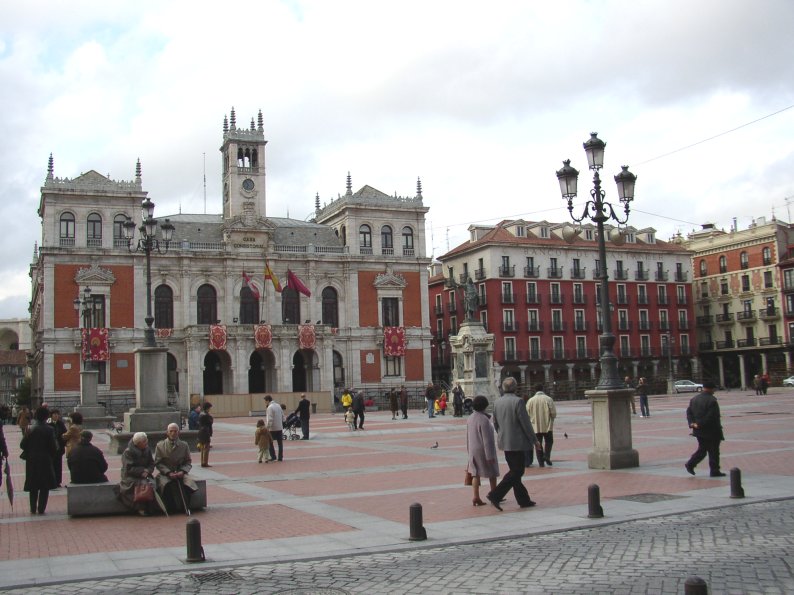
Valladolid is a city in the northwest of the Iberian Peninsula, located in Spain. It serves as the administrative capital of the autonomous community of Castile and León and has a population of roughly 316,564 residents in the city proper. Historically it was one of the important urban centres of the Spanish kingdom and retains many monuments and institutions that reflect that legacy.

Image gallery
10 Images


Geography and climate
The city stands on the banks of the Pisuerga River and lies on the high central plateau known as the Meseta. Its position influences local weather: Valladolid experiences a dry, continental‑influenced climate with hot summers and cool winters. Climatologists often classify its summer pattern as a hot‑summer Mediterranean climate and place it within the broader Köppen climate classification system.
History
Valladolid has roots stretching back to Roman and medieval times and grew into a key Castilian city in the late Middle Ages. It played a role in dynastic and political events: famously, the future Catholic Monarchs met in Valladolid and, in 1469, Ferdinand II of Aragon and Isabella I of Castile were married at the Palacio de los Vivero. The city is also associated with the later era of exploration; notable figures such as Christopher Columbus spent time in the city and died there in 1506.
Culture, education and economy
Valladolid is home to significant cultural institutions, museums and a longstanding university tradition. The city hosts theatrical and film events, maintains collections of religious and fine art, and preserves examples of Gothic and Renaissance architecture. Its economy blends public administration, education, services, light industry and the agricultural trade of the surrounding province.
Sights and notable facts
- Historic plazas and broad avenues that reflect successive urban phases.
- Religious and civic buildings from the medieval and early modern periods.
- Specialized museums, including important sculpture collections and regional art.
- Annual cultural events and an active university community contributing to city life.
Today Valladolid functions as an administrative, cultural and transport hub in north‑central Spain. Its riverside setting, layered historic fabric and ongoing institutional role make it an example of a regional capital that combines heritage with contemporary functions.
Related articles
Author
AlegsaOnline.com Valladolid: historic capital of Castile and León in north‑central Spain Leandro Alegsa
URL: https://en.alegsaonline.com/art/104042