
Mexican War of Independence (1810–1821)
Prolonged conflict in New Spain that ended Spanish rule and led to the formation of independent Mexico; involved diverse social groups, regional campaigns, the Plan of Iguala and long political change.
Overview
The Mexican War of Independence (1810–1821) was a complex and protracted conflict that brought an end to Spanish colonial rule in the territory that became modern Mexico. It combined mass uprisings, formal battles, protracted guerrilla campaigns and political negotiation. The insurgency drew support from a wide range of social groups — including criollos (American‑born Spaniards), mestizos, indigenous peoples, artisans and some members of the clergy — and was shaped by changing events in Spain and the Americas.
Image gallery
10 Images
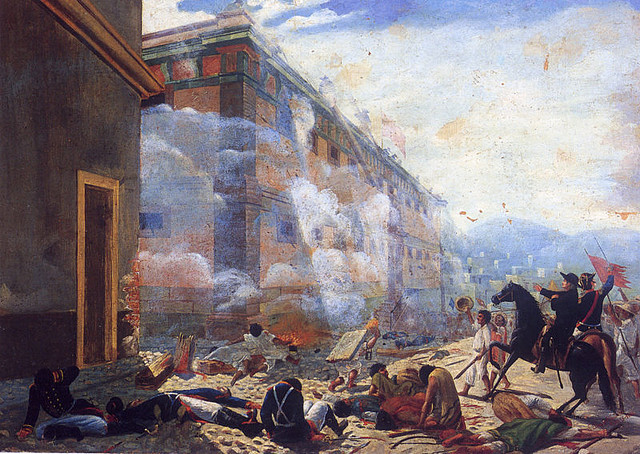


Origins and causes
Long‑term causes included rigid social hierarchies under the Spanish colonial system, economic pressures and the effects of Bourbon administrative reforms that reduced local autonomy. Intellectual currents such as the Enlightenment and memories of pre‑Conquest polities like the Aztec Empire informed political imaginaries. A decisive immediate catalyst was political turmoil in Europe after Napoleon’s invasion of Spain by the First French Empire, which provoked the Peninsular War and weakened metropolitan authority, while independence movements spread through Latin America.
Outbreak and early insurgency
The revolt began on 16 September 1810 with the event known as the Grito de Dolores, when parish priest Miguel Hidalgo called for action against colonial rule. Early leaders such as Hidalgo and Ignacio Allende mobilized peasants and urban artisans and won some impressive early successes. Their forces were broad-based but often lacked discipline and unified strategy, and the initial phase ended with the defeat and capture of several leaders.
Reorganization and the Morelos campaign
After the first defeats the movement reconstituted under José María Morelos, who pursued a more organized military and political program. Morelos convened a congress and issued proposals for political reform, attempting to give the insurgency a coherent constitutional character. His capture and execution in 1815 deepened the conflict, which then shifted toward decentralized guerrilla resistance led by regional commanders.
Guerrilla war and regional dynamics
From about 1815 to 1820 the struggle fragmented into many local campaigns. Leaders such as Vicente Guerrero and others sustained resistance through hit‑and‑run tactics, drawing on local support networks. The character of the war varied across regions: some areas saw prolonged rural insurgency, others sporadic uprisings or negotiated settlements with local authorities.
Negotiation, Plan of Iguala and independence
Political shifts in Spain in 1820 and changing loyalties in New Spain opened the way for settlement. Conservative royalist officers and insurgent commanders came together around the Plan of Iguala, which guaranteed three core principles: independence, preservation of the Catholic Church’s role, and equality between Spaniards and Creoles. The agreement, allied diplomacy and the entry of the Army of the Three Guarantees into Mexico City in 1821 concluded the colonial period and established an independent state.
Aftermath and legacy
Independence removed formal Spanish administrative control but did not resolve deep social and economic inequalities. The new nation experienced political instability as it debated models of government, church‑state relations and land distribution. Military and regional leaders who rose during the conflict continued to shape Mexican politics through the 19th century. The date associated with the initial uprising is commemorated annually as national Independence Day in Mexico.
Further notes
- The insurgency built on earlier plots and unrest, including late‑18th‑century conspiracies and local revolts.
- Military phases ranged from mass mobilization to disciplined insurgent congresses to prolonged guerrilla operations.
- The war intersects with broader Atlantic and Iberian politics, including events in Peninsular Spain and revolts elsewhere in Latin America.
For introductory overviews and primary documents consult specialized histories and archives. Additional reference topics include the social composition of insurgent forces, regional campaigns, and political texts such as the Plan of Iguala and declarations issued during the revolutionary period. Research on the conflict frequently draws on local studies, military records and contemporary proclamations to trace how independence unfolded across diverse provinces of New Spain. See also discussions of how independence affected indigenous communities, the Church and economic institutions as Mexico formed its early national governments.
Key themes for study include the roles of leadership and popular participation, the transition from rebellion to state formation, and the international context that made independence possible. For more information consult academic treatments and edited documentary collections that examine the period 1810–1821 and its aftermath.
Related topics: colonial administration, social hierarchies, military campaigns and regional biographies of leaders such as Hidalgo, Morelos and Guerrero.
Questions and answers
Q: What was the Mexican War of Independence?
A: The Mexican War of Independence was a war between the people of Mexico and the Spanish colonial government.
Q: Why did the war start?
A: It started on 16 September 1810 since Mexican-born Spaniards (criollo people), Mestizos and Amerindians wanted their independence from Spain.
Q: Was the idea of Mexican independence a new concept?
A: No, the idea of Mexican independence went back to the years after the Spanish conquest of the Aztec Empire.
Q: Who led a revolt against the Spanish government?
A: Martín Cortés led a revolt against the Spanish government.
Q: When did the War of Independence really start?
A: After the Conspiracy of the Machetes failed in 1799, the War of Independence really started with the Grito de Dolores in 1810.
Q: What was happening during the Peninsular War?
A: Spain was busy fighting for its independence against the invading First French Empire during the Peninsular War.
Q: What was the impact of the Peninsular War on Latin America?
A: The impact of the Peninsular War was that most of Latin America revolted.
Related articles
Author
AlegsaOnline.com Mexican War of Independence (1810–1821) Leandro Alegsa
URL: https://en.alegsaonline.com/art/64327