
Jörð (Jord): Norse Earth-personification, giantess and goddess
Jörð is the personified earth in Norse myth, named as a giantess and sometimes an Asynja. She is known chiefly as Thor’s mother and Odin’s consort; this article surveys names, sources, roles, and interpretations.
Overview
Jörð (Old Norse for "earth"), often anglicized as Jord, is the poetic personification of the earth in Norse tradition. Surviving sources present her both as a giantess, or giantess, explicitly called a jötun in some contexts, and as a female divine figure or goddess. She appears in the medieval corpus for Norse mythology primarily in genealogical and kenning contexts rather than in extended narratives.
Image gallery
2 Images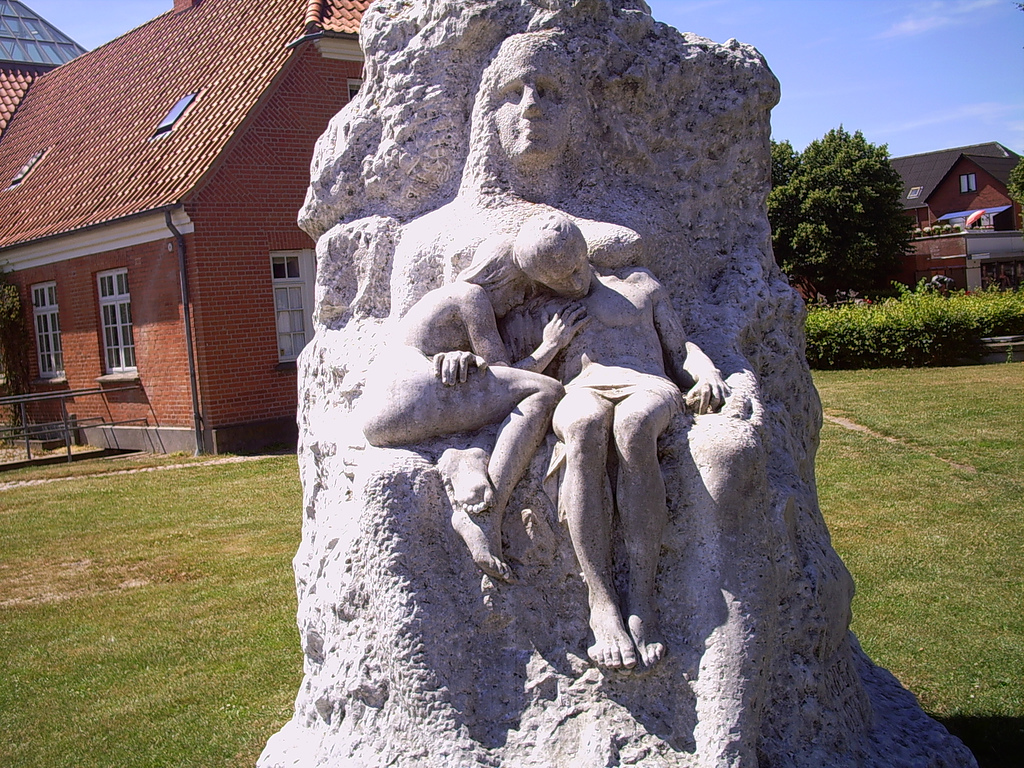

Names and etymology
The name Jörð literally means "earth" and belongs to a family of Germanic words for ground (cf. Old English eorþe, Old High German erda). She is also called Fjörgyn in poetic sources; Fjörgyn in its feminine form functions as a synonym for the earth and is used in kennings that identify Thor as her son. These names reflect the frequent Indo-European tendency to personify the land as a female force linked to fertility and stability.
Literary attestations
Mentions of Jörð are scattered through the medieval poetic and prose record rather than forming a single continuous myth. Important attestations include:
- Poetic Edda — preserved skaldic and eddic verses use Jörð or Fjörgyn in kennings, notably in poems that call Thor "son of Fjörgyn".
- Prose Edda — Snorri Sturluson lists her among the divine figures and provides brief genealogical details.
- Skaldic poetry and later saga material that commonly refer to Thor as "son of Jörð" and employ earth-related imagery in compound names.
Role and relationships
Textual fragments identify Jörð as the mother of Thor and as a consort of Odin, linking the thunder-god to the earth. Some genealogies record her parents as Annar and Nótt, placing her within a family of primeval figures ("Annar" meaning another, and "Nótt" meaning night). These brief genealogical notes suggest a role as a primeval maternal figure rather than a deity with an elaborate cult or many surviving myths.
Scholarly interpretations
Scholars emphasize how fragmentary evidence produces varied readings. Snorri’s inclusion of Jörð among the Asynjur shows one medieval attempt to categorize her within the godly pantheon, while other passages treat her as jötun stock. The alternate names Jörð and Fjörgyn used in poetic language have led commentators to view them as variations of one earth-personification rather than distinct beings. The case of Jörð illustrates how Norse myth often blurs boundaries between giants, gods, and elemental forces.
Legacy and cultural influence
Though Jörð lacks a lengthy narrative in the surviving corpus, she remains an important symbolic figure: a maternal earth linked to Thor’s origins and to cosmological ideas about the land. Modern translations, artistic depictions, and popular retellings draw on her image when evoking the grounded, fertility-related aspect of the Norse world. For readers and students of myth, Jörð is a clear example of how sparse medieval records can yield a stable core image—even as precise details and cultic practices remain uncertain.
Related articles
Author
AlegsaOnline.com Jörð (Jord): Norse Earth-personification, giantess and goddess Leandro Alegsa
URL: https://en.alegsaonline.com/art/51067