
Joseph Campbell: scholar of myth and the hero's journey
Overview of Joseph Campbell (1904–1987), his comparative study of myth, the monomyth or hero’s journey, major works, influences, and cultural legacy.
Overview
Joseph Campbell (March 26, 1904 – October 30, 1987) was an American scholar and writer best known for exploring the common patterns of myth and religion across cultures. He approached stories comparatively, seeking recurring structures and symbols in myths, folktales, and sacred traditions. His work aimed to explain how myths function in human life rather than to catalog them exhaustively. For a concise introduction to his ideas see further resources.
Image gallery
2 Images
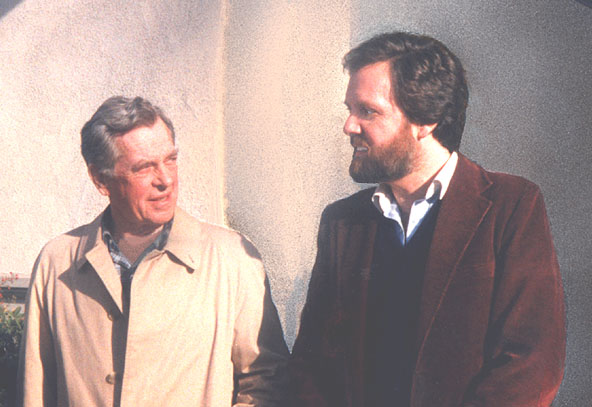
Key ideas and concepts
Campbell popularized the term monomyth, often called the "hero's journey," which describes a narrative pattern of departure, initiation, and return that he identified in myths worldwide. He drew on comparative religion and Jungian psychology to interpret archetypes, symbolic thresholds, and rites of passage. He also emphasized the psychological and practical value of myth in guiding individuals through life's transitions.
Major works and teachings
Campbell authored several influential books that synthesize mythic themes across cultures. Among these are The Hero with a Thousand Faces and the multi-volume Masks of God series, as well as more accessible collections of essays and interviews. He taught and lectured widely, and his conversations with interviewer Bill Moyers were broadcast and published under the title The Power of Myth, which brought his ideas to a broad audience.
Influence and cultural impact
Campbell's formulations have been widely adopted in literary criticism, comparative religion, creative writing, and film studies. Filmmakers, novelists, and storytellers have used the hero's journey as a practical template for narrative structure. Critics caution, however, that not all myths fit Campbell's pattern and that local variation and context can be lost by overly schematic readings.
Life and legacy
Born in 1904 and active through much of the twentieth century, Campbell combined scholarship with a popularizing voice. His work inspired continuing study and public interest in myth, and organizations and editions of his writings have helped preserve and promote his legacy. Scholars today situate his contributions within a broader field of mythology and comparative religion while noting the need for careful, culturally sensitive interpretation.
Related articles
Author
AlegsaOnline.com Joseph Campbell: scholar of myth and the hero's journey Leandro Alegsa
URL: https://en.alegsaonline.com/art/51215