
John Balliol (John of Scotland): King of Scots, 1292–1296
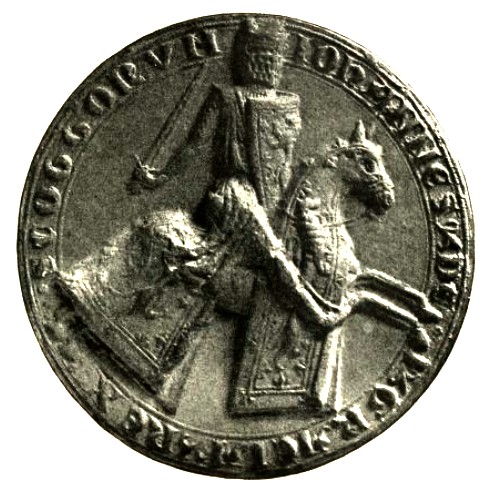
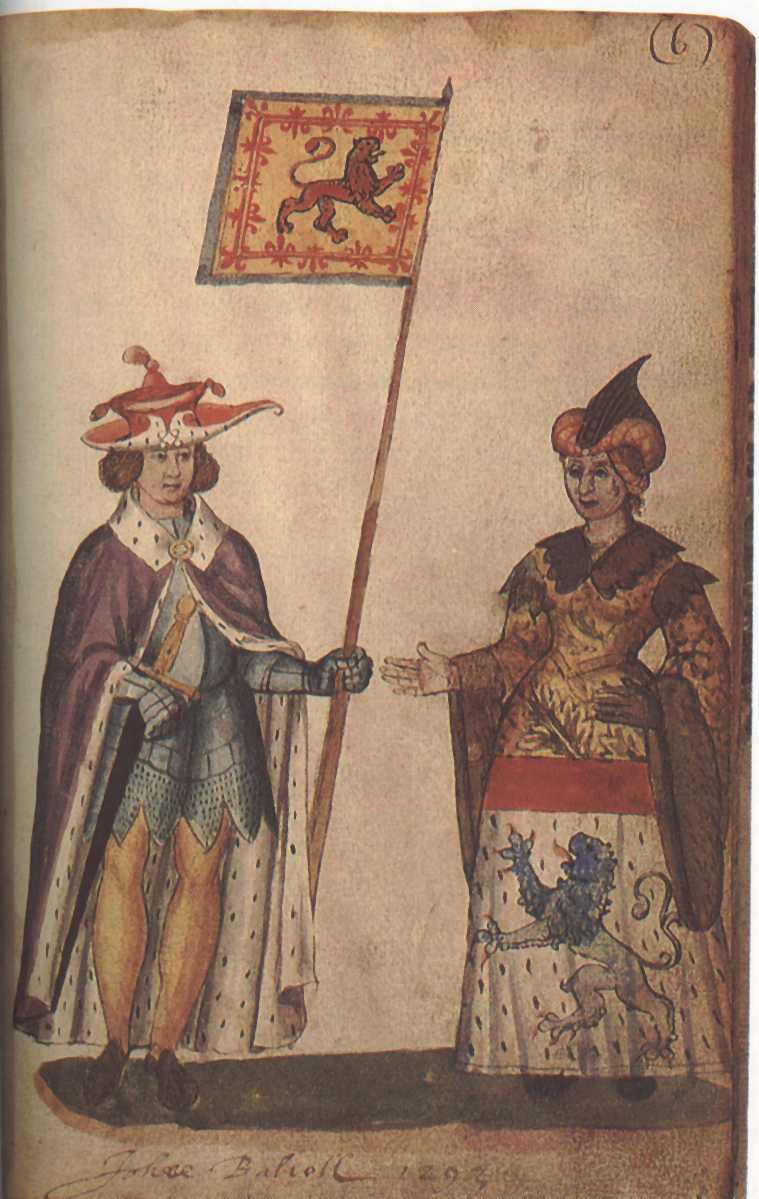
John Balliol (c.1248–1314) was King of Scots from 1292 to 1296. Chosen after the Great Cause, his reign was constrained by Edward I of England; his deposition helped precipitate the Wars of Scottish Independence.
John Balliol (often styled John of Scotland or John de Balliol) was a late 13th‑century noble who became King of Scots after a contested succession. Born about 1248 into the Balliol family, he held lands in both northern England and Scotland and had strong ties to the Anglo‑Norman aristocracy. Through descent he emerged as one of the principal claimants after the death of the Maid of Norway; contemporary and later treatments of his early life and selection are discussed in several survey works on his birth and career.
Image gallery
5 Images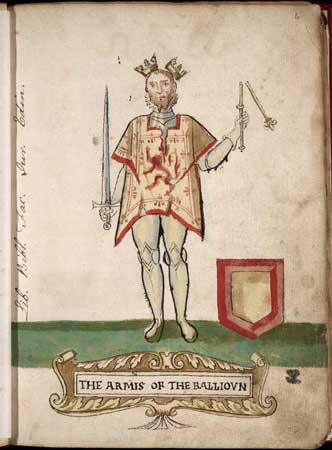


Background and claim to the throne
The end of the direct Scottish royal line in 1290 produced multiple claimants and political uncertainty. Scottish magnates invited King Edward I of England to arbitrate the dispute, a process known as the Great Cause. After legal arguments and examination of genealogies, Edward declared John Balliol to be the rightful heir. Balliol's recognition as king was announced at Scone on 30 November 1292, a date that coincided with St Andrew's Day and was recorded in chronicles of the time. The Balliol family context and genealogical background are treated in family studies and archival material related to the Balliol line.
Coronation and early reign
Balliol's coronation marked a hopeful moment for some Scottish elites, but his authority was fragile. The Scottish magnates who had sought an external arbitrator were divided about royal powers; some expected a king who would reassert local customs and others were anxious about Edward's influence. From the outset Edward insisted on asserting overlordship over Scotland: he summoned Balliol to his councils and pressed legal and feudal claims that limited the independent exercise of kingship. For analysis of Edward I's policies and their impact on Balliol's position, see general studies of Edward's relations with Scotland in scholarship on Edward I.
Conflict with England and the 1296 campaign
Tensions between the crown and leading Scottish magnates, plus disputes over homage and jurisdiction, culminated in military intervention by Edward in 1296. The English campaign of that year included the capture and sack of towns and the defeat of organized Scottish resistance at engagements such as the Battle of Dunbar. Contemporary chronicles describe severe violence in places like Berwick, and later historians have debated the scale and consequences of these events. The campaign undermined Balliol's position and led directly to his enforced removal from power.
Deposition, captivity and exile
Following defeat and political pressure, John Balliol was compelled to abdicate in 1296. He was taken into custody by the English crown and spent time in confinement before being allowed to retire to the Continent. Balliol lived his remaining years in what is today northern France, where he died in 1314. His experience of deposition and exile, and contemporary records of his later life, are summarised in studies of his exile and continental connections on his exile.
Legacy and descendants
John Balliol's short and embattled reign is often seen as a catalyst for the Wars of Scottish Independence. His deposition created a political vacuum that contributed to the rise of resistance leaders and to wider conflict over Scottish sovereignty. Critics at the time and in later tradition sometimes called him Toom Tabard ("empty coat"), a derisive label that reflected the perception of weakness; modern historians treat his failures in the context of powerful external pressure and divided domestic politics. Balliol's son, Edward Balliol, later asserted a claim to the Scottish throne and, with varying degrees of English support, contested control of Scotland in the following decades.
Interpretation and sources
Historical interpretation of John Balliol has varied. Older accounts tended to portray him as a weak or ineffectual ruler, while more recent scholarship emphasises structural constraints: the arbitration that produced his crown, the ambitions of Edward I, and the factionalism among Scottish nobles. Primary evidence for his reign comes from chronicles, royal records and diplomatic correspondence; these sources are supplemented by legal and genealogical compilations consulted by historians and genealogists alike. For overviews and primary‑source collections consult general histories and archival guides on succession and the Great Cause, specialized studies of the Balliol family and pedigrees, and investigative works on Edward I's interventions in Scotland for imperial context.
Notable facts
- Balliol was chosen by a legalized arbitration rather than direct dynastic succession.
- His reign (1292–1296) directly preceded the outbreak of sustained warfare over Scottish independence.
- He spent his final years on the Continent and died in 1314; his descendants remained active in later dynastic contests.
Further reading and documentary materials can be found in collections that bring together chronicles, diplomatic records and genealogical notes; these resources help to situate John Balliol's reign within the wider political changes of late 13th‑century Britain and continental relations on exile and continental sources.
Questions and answers
Q: Who was John de Balliol?
A: John de Balliol, also known as John Balliol, was a major competitor for the Scottish throne in the 13th century.
Q: When was John Balliol born?
A: John Balliol was born in 1248.
Q: How did King Edward choose John Balliol as the king of Scotland?
A: King Edward chose John Balliol as the king of Scotland at Scone on November 30, 1292, St. Andrew's Day.
Q: What was King Edward's relationship with King John like?
A: King Edward treated King John as a "Puppet King" and steadily undermined his authority, leading to tension between the two.
Q: What happened at the Battle of Dunbar?
A: At the Battle of Dunbar, King Edward's men slaughtered and wiped out the town of Berwick, killing around 8000 people in a brutal killing.
Q: What happened to King John after he was stripped of his authority as king?
A: King John was sent away to France by King Edward, where he later died.
Q: Who eventually claimed the Scottish throne after John Balliol?
A: Edward Balliol, son of John Balliol, claimed the Scottish throne from 1332 until 1356.
Related articles
Author
AlegsaOnline.com John Balliol (John of Scotland): King of Scots, 1292–1296 Leandro Alegsa
URL: https://en.alegsaonline.com/art/50751