
John O'Meally — Australian bushranger (1841–1863)
Concise account of John O'Meally, a member of Frank Gardiner's gang, known for his role in the Eugowra gold escort robbery and his death during a police confrontation in 1863.
Overview
John O'Meally (1841 – 19 November 1863) was an Australian bushranger and criminal associated with the gang led by Frank Gardiner. He is most often remembered for taking part in what became the largest gold escort robbery in colonial Australia, an event that highlighted the tensions and law‑enforcement challenges of the goldrush era.
Image gallery
8 Images




Background and rise
Details about O'Meally's early life are limited in surviving records. Like many young men in rural New South Wales during the 1850s and 1860s, he became involved in bushranging and highway robbery amid the social and economic upheaval of the goldfields. He came to prominence by joining a group of mounted outlaws who conducted raids, ambushes and robberies across remote roads.
Eugowra robbery and activities
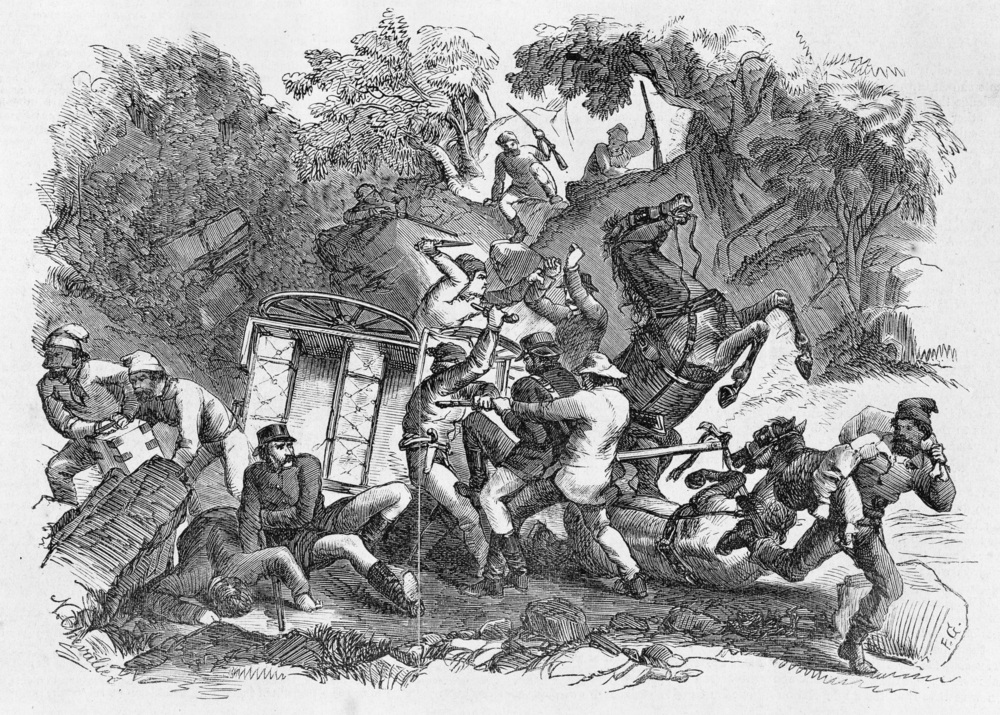
On 15 June 1862 a gang led by Frank Gardiner ambushed a gold escort coach at Eugowra Rocks, making off with several thousand pounds in gold and cash. O'Meally was one of the gang members linked to that attack. The robbery was widely reported at the time and remains a landmark incident in Australian colonial crime history because of its scale and the publicity it generated.
O'Meally and his companions typically operated from concealed camps, relying on speed, knowledge of the countryside and surprise. Their actions were part of a broader pattern of rural banditry that provoked public alarm and a strong policing and judicial response.
- Active period: early 1860s during the New South Wales goldrushes
- Best known for: participation in the Eugowra gold escort robbery
- End: killed during a police confrontation on 19 November 1863
Death and aftermath: O'Meally was killed in November 1863 while resisting capture by authorities. The Eugowra raid and subsequent manhunts led to arrests and trials of several associates and influenced changes in policing on the goldfields. Over time the story of O'Meally has been retold in local histories, studies of bushranging and popular accounts that examine the social conditions of colonial Australia.
Related articles
Author
AlegsaOnline.com John O'Meally — Australian bushranger (1841–1863) Leandro Alegsa
URL: https://en.alegsaonline.com/art/50754
Sources
- eugowra.aus.net : "Story of the Gold Escort Robbery"
- adb.online.anu.edu.au : "Gilbert, John"
- walkabout.com.au : "Walkabout - Carcoar"
- cootamundra-uat.socialchange.net.au : "Early history of Wallendbeen"
- eugowra.aus.net : "Annexures, Resources, References and Reading"