
Johannes Vermeer
Dutch Baroque painter Johannes Vermeer (baptized 31 Oct 1632 – died Dec 1675) is celebrated for luminous domestic interiors, refined use of ultramarine, and a small, carefully observed body of work.
Johannes Vermeer (baptized 31 October 1632 — died December 1675) was a Dutch Baroque painter who lived and worked in the city of Delft. Born into a Protestant family, he married Catherina Bolnes, a Catholic, and they raised a large household. Vermeer’s artistic production was comparatively small and concentrated on carefully composed domestic scenes, which together form the basis of his reputation.
Image gallery
10 Images





Life and career
Documentary traces of Vermeer’s life are relatively sparse but informative: baptismal, marriage and municipal records place him firmly in Delft, where he ran a studio and participated in local civic duties. He is recorded in the city’s guild and in municipal accounts, and those records are primary sources for biographers. Vermeer’s family suffered financial hardship after his death, and some of his pictures were sold to meet debts. The modest size of his oeuvre and his local life meant that his fame was limited in the generations immediately after his death.
Subjects and style
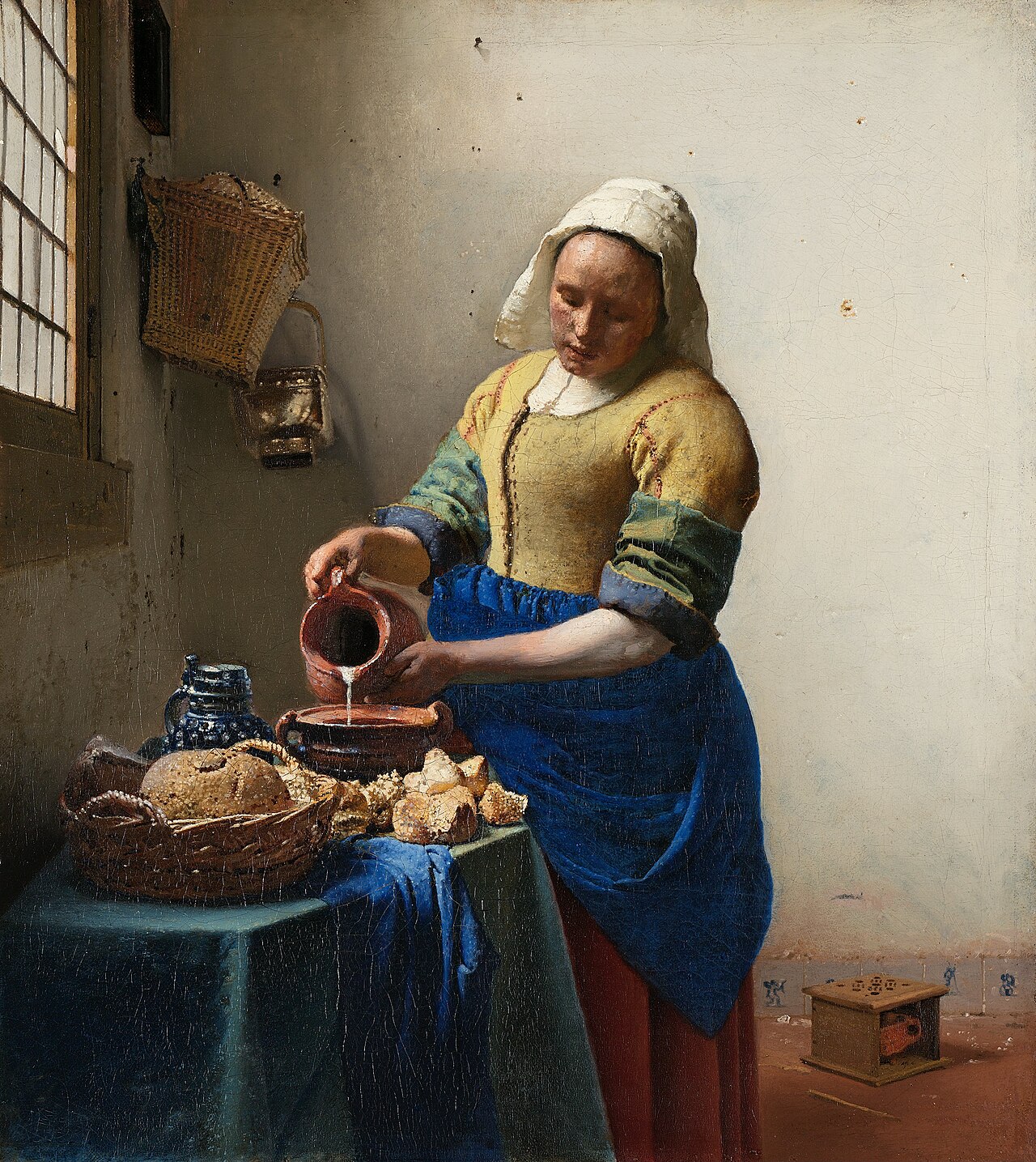
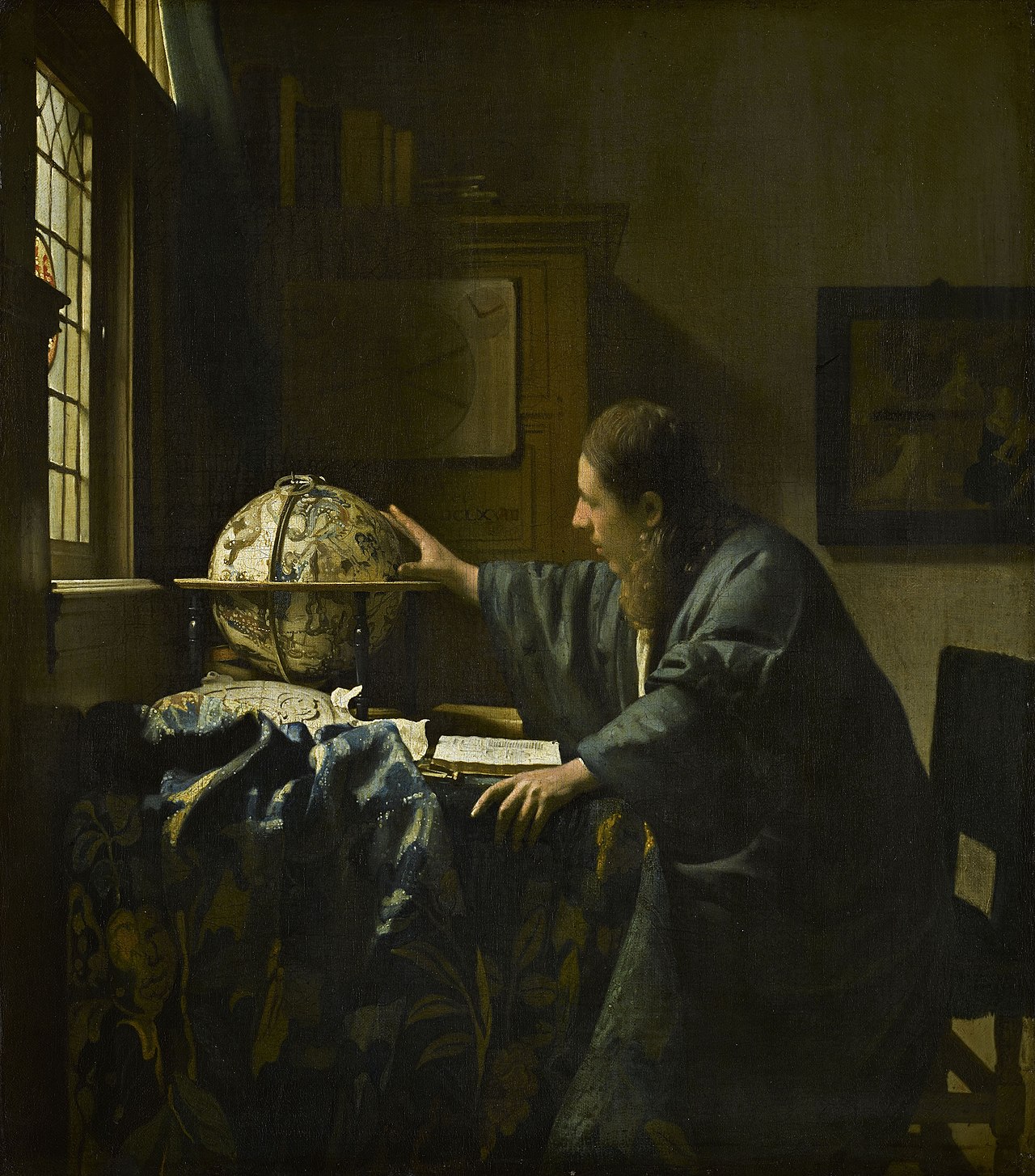
Vermeer is best known for quiet domestic interiors and small-scale genre scenes that focus on solitary figures or intimate groups engaged in everyday activities — reading, writing letters, playing music, serving milk or standing at a window. He composed with restraint: plain or softly modelled backgrounds, measured proportions and controlled gestures direct the spectator’s attention to a single point of interest or narrative. His palette is distinguished by luminous blues and warm yellows; the intense blues in several works were produced with ultramarine made from natural lapis lazuli (ultramarine), a costly pigment that contributed to the paintings’ vivid tonality.
Technique and materials
Vermeer combined careful drawing with subtle optical observation. He employed linear devices and compositional aids to organize space, and some canvases show tiny marks or points that may have served as alignment or perspective anchors on the canvas. His handling of light is often described as still and highly controlled: soft transitions, translucent glazes and a preference for small-scale modulation of tone create a sense of quiet luminosity. For decades scholars have debated whether optical instruments such as a camera obscura influenced his vision; the idea remains a plausible explanation for certain optical effects but has not been proven conclusively. In addition to ultramarine and lead white, Vermeer used common seventeenth-century pigments including earths and lead-tin yellow to build his color scheme.
Works, attribution and legacy
The number of paintings securely attributed to Vermeer is small by comparison with many contemporaries, which makes the study of each work especially important. Well-known paintings include The Girl with a Pearl Earring, The Milkmaid, View of Delft and The Art of Painting. Because his output was limited, attributing works and tracing provenance can be difficult; connoisseurship, technical analysis and archival research together support attributions.
- No universally accepted self-portrait is known; a few figures in contemporary paintings have been suggested as possible likenesses of Vermeer but evidence is inconclusive.
- The small size of his oeuvre makes each secure work central to scholarship and public exhibitions.
- Vermeer’s methods continue to attract study from conservators, scientists and artists interested in materials and technique.
Reception, rediscovery and later history
Vermeer’s international reputation developed slowly. In the nineteenth century a renewed critical interest and the efforts of collectors and scholars helped to re-establish his position in art history. In the twentieth century the problems of attribution were complicated by forgeries; notably, a few artists produced convincing pastiches in Vermeer’s manner that misled collectors and critics before being exposed. Today Vermeer is widely regarded as one of the most significant painters of the Dutch Golden Age and his few surviving works attract intense public and scholarly attention.
Collections and study
Vermeer paintings are held in major museums and collections and are the subject of ongoing technical and archival study. Scholars combine close visual analysis with pigment and layer studies, documentation of provenance and archival research to deepen understanding of his working practices. For those beginning research, standard museum catalogues, specialist monographs and modern technical reports provide complementary perspectives on his achievement; authoritative surveys and exhibition catalogues are useful entry points to the literature (baptismal and civic records, national surveys, period studies and technical analyses).
For readers interested in viewing specific works and further documentation, consult museum catalogues, exhibition resources and scholarly publications that compile high-quality images and technical reports. These sources situate Vermeer’s paintings within seventeenth-century practice and illuminate the enduring appeal of his carefully observed interiors and luminous color: see general overviews, focused monographs and conservation reports for complementary lines of evidence (Delft studies, family and archival research, perspective studies).
Related articles
Author
AlegsaOnline.com Johannes Vermeer Leandro Alegsa
URL: https://en.alegsaonline.com/art/50523
Sources
- essentialvermeer.com : Essential Vermeer
- virtualvermeer.com : Virtual Vermeer
- arttube.boijmans.nl : Van Meegeren's Fake Vermeers at Arttube (Museum Boijmans)
- vermeerdelft.nl : Vermeercentrum
- britannica.com : Entry in Britannica encyclopaedia