
Abrasion (medical)
A superficial skin injury that scrapes or rubs away the epidermis. Often called a scrape or graze, it usually heals without scarring but can bleed, become infected, or scar if deeper.
Overview
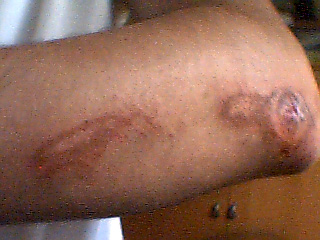
An abrasion is a superficial wound produced when the outer layers of the skin are rubbed away by friction. In clinical contexts this term is used in dermatology to denote damage that typically involves only the visible surface, the skin, and usually does not extend below the epidermis. Small abrasions are often called grazes or scrapes and may bleed slightly; deeper or larger injuries have a higher risk of scarring (scarring) or other complications.
Image gallery
10 Images


Causes and common examples
Abrasions most often result from friction between exposed skin and a rough surface. Typical causes include falls onto pavement (sometimes called "road rash"), contact with rough objects, or sliding across textiles. When abrasive contact involves carpets, clothing, or upholstery the injury is sometimes referred to as a rug burn or carpet burn; more broadly these are a form of mechanical injury.
They are common in accidents, sports, and childhood play. Severity ranges from superficial removal of a few epidermal cells to removal of deeper skin layers that may expose the underlying dermis and produce more bleeding.
Signs, healing, and complications
Typical signs include pain, rawness, oozing of clear fluid or a small amount of blood, and later crust formation. Superficial abrasions generally heal within days without leaving a permanent mark. Greater depth, repeated trauma, delayed cleaning, or infection increase the chance of persistent redness or scar formation. Infection is the principal complication and should be suspected if increasing pain, spreading redness, pus, or fever develops.
First aid and medical care
- Clean the wound gently with running water to remove dirt and debris.
- Control bleeding with gentle pressure; small grazes often stop on their own.
- Apply a non‑adherent dressing or sterile bandage to keep the area moist and protected while it heals.
- Update tetanus immunization as recommended and seek professional care if the abrasion is large, deep, contaminated, or does not improve.
Topical antiseptics or ointments may be used according to local guidance; healthcare providers can remove deeply embedded material and assess for more serious soft tissue damage.
Prevention and notable distinctions
Protective clothing, appropriate footwear, and safe surfaces reduce the risk of abrasions in sports and work settings. Distinguish abrasions from lacerations (cuts with deeper, often cleaner edges) and avulsions (where tissue is forcibly detached); abrasions are primarily a superficial, friction‑related loss of skin rather than a sharp or tearing injury.
Related articles
Author
AlegsaOnline.com Abrasion (medical) Leandro Alegsa
URL: https://en.alegsaonline.com/art/494