
Abscess (medical condition): causes, symptoms, diagnosis, and treatment
An abscess is a localized collection of pus that forms within body tissues, most often from infection. Overview of appearance, causes, assessment, management, risks and prevention.
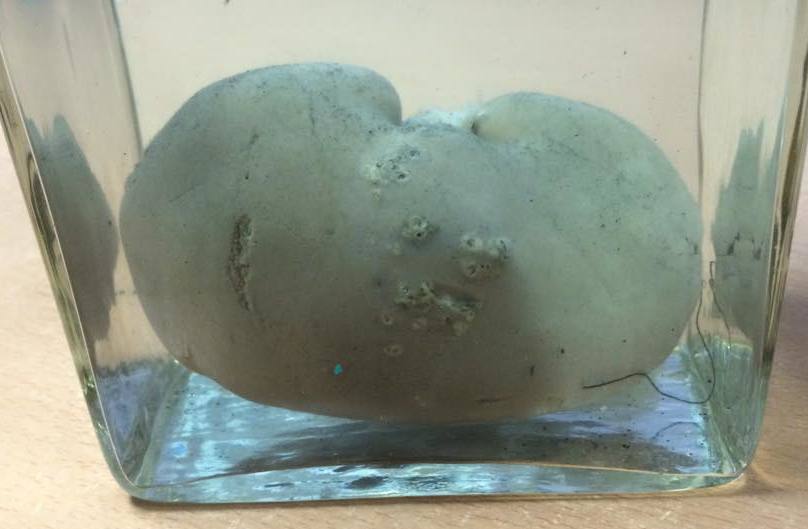
An abscess is a confined pocket of pus that develops in tissue as the immune system attempts to isolate an infection. The English word comes from the Latin abscessus. Abscesses may form in the skin and soft tissues or within organs such as the liver, brain or teeth. They vary in size from small boil-like lesions to large collections that distort normal anatomy and can impair organ function.
Image gallery
8 Images



Signs and characteristics
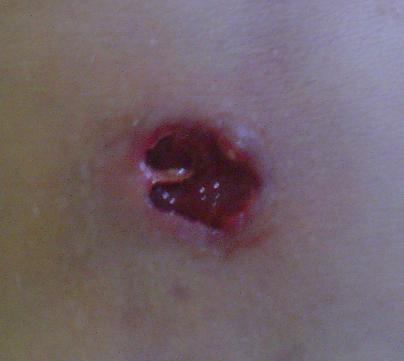
The typical local features are pain, heat, redness and swelling, and the area often feels fluctuant — that is, compressible and like it contains fluid. The surrounding area of erythema frequently extends beyond the central raised collection. Skin abscesses that arise in hair-bearing areas may begin as a follicle infection (a furuncle or "boil") and multiple adjacent infected follicles can coalesce into a carbuncle. Deep abscesses produce more subtle signs related to the affected organ and may present with fever, malaise or localized dysfunction.
Causes and microbiology
Most abscesses are caused by a bacterial infection, commonly involving more than one species; a variety of bacteria can participate in a single lesion. In many regions methicillin-resistant Staphylococcus aureus (MRSA) is a frequent pathogen for skin and soft tissue abscesses. Less commonly, microorganisms such as parasites or fungi produce abscesses — parasitic causes are seen more often in parts of the world with different epidemiology or sanitation patterns and may produce organ-specific abscesses related to travel or exposure risk (parasites).
Diagnosis and imaging
Superficial abscesses are usually diagnosed on clinical examination, but confirmation and assessment of extent can require imaging. Point-of-care ultrasound is useful to distinguish a fluid-filled collection from cellulitis and to guide aspiration. For perianal or deep pelvic collections (for example those around the anus) and for intra-abdominal or retroperitoneal collections, cross-sectional imaging such as computed tomography (CT) or magnetic resonance imaging helps define depth and connections and guides intervention.
Treatment and management
- Incision and drainage: definitive treatment for most skin and soft-tissue abscesses is evacuation of the pus and debridement of necrotic tissue when present. Adequate drainage relieves pressure and removes the bulk of bacteria and inflammatory material.
- Antibiotics: not always required for healthy people when drainage is complete, but indicated for systemic signs, spreading cellulitis, immunosuppression, certain locations (face, hand, perineum), or when high-risk organisms such as MRSA are suspected.
- Wound care: recent evidence supports primary closure after adequate drainage for selected patients rather than traditional long-term packing; decisions are individualized by clinician and wound characteristics.
- Needle aspiration alone may be insufficient for many abscesses and surgical opening is often necessary; image-guided percutaneous drainage is used for deep or organ-based collections.
Risks, prevention and notable facts
Complications include spread of infection, formation of fistulas, scarring and, in severe cases, bloodstream infection (sepsis). Risk factors for recurrent or extensive abscesses include diabetes, intravenous drug use, foreign bodies, poor hygiene and immunosuppression. Preventive measures emphasize wound hygiene, prompt treatment of superficial skin infections, harm-reduction practices for people who inject drugs, and control of underlying chronic conditions. Understanding when to seek care is important: worsening pain, fever, rapidly expanding redness, or signs of systemic illness all warrant medical evaluation.
Clinicians use the history, physical examination and selective imaging to decide between outpatient incision and drainage, antibiotic therapy or more invasive interventions. Public health attention to resistant organisms, sterile technique in healthcare settings and patient education all help reduce the burden of abscess disease.
Questions and answers
Q: What is an abscess?
A: An abscess is a collection of pus that has built up within the tissue of the body.
Q: What are some signs and symptoms of an abscess?
A: Signs and symptoms of an abscess include redness, pain, warmth, and swelling. The area of redness is often bigger than the area of swelling.
Q: What causes an abscess?
A: An abscess is usually caused by a bacterial infection. Rarely parasites can cause abscesses and this is more common in the developing world.
Q: How is a skin abscess diagnosed?
A: Diagnosis of a skin abscess is usually made based on what it looks like and can be proved by cutting it open. Ultrasound imaging may also be used if the diagnosis isn't clear. In cases around the anus, computer tomography (CT) may be important to look for deeper infection.
Q: How do you treat a skin or soft tissue abscsss?
A: Treatment for most skin or soft tissue abscsses involves cutting it open and draining out the pus. Antibiotics are usually not needed for healthy people, but new studies have found that closing the wound after draining instead of packing with gauze can speed healing without increasing risk of return. Sometimes simply sucking out pus with a needle isn't enough.
Q: How common are skin abscsses?
A: Skin abscsses are very common and have become even more so in recent years - as many as 65% of people who take intravenous drugs get them - 3.2 million people went to emergency departments in 2005 in America alone, while Australia saw 13,000 hospitalisations due to this disease in 2008 alone
Related articles
Author
AlegsaOnline.com Abscess (medical condition): causes, symptoms, diagnosis, and treatment Leandro Alegsa
URL: https://en.alegsaonline.com/art/501
Sources
- enotes.us : "Management of skin abscesses in the era of methicillin-resistant Staphylococcus aureus"
- doi.org : 10.1056/NEJMra1212788
- pubmed.ncbi.nlm.nih.gov : 24620867
- books.google.com : Infectious Diseases of the Skin
- books.google.com : The encyclopedia of skin and skin disorders
- choosingwisely.org : "Five Things Physicians and Patients Should Question"
- emottawa.ca : "Primary closure of cutaneous abscesses: a systematic review"
- doi.org : 10.1016/j.ajem.2009.10.004
- pubmed.ncbi.nlm.nih.gov : 20825801
- books.google.com : The substance abuse handbook
- doi.org : 10.1016/j.ajem.2008.02.027
- pubmed.ncbi.nlm.nih.gov : 19328372
- doi.org : 10.1007/s10096-011-1281-3
- pubmed.ncbi.nlm.nih.gov : 21553298