
Mechanics (physics): motion, forces, and material behavior
Mechanics is the branch of physics that studies motion, forces, energy, and the response of materials, from everyday bodies and machines to fluids, solids and statistical or quantum systems.
Mechanics is the area of physics concerned with how bodies move and interact when acted on by forces. It combines descriptive accounts of motion with mathematical tools that predict future behavior. At its core are concepts such as position, velocity, acceleration, mass, force, energy and momentum, together with principles like conservation laws that restrict how systems can evolve.
Image gallery
4 Images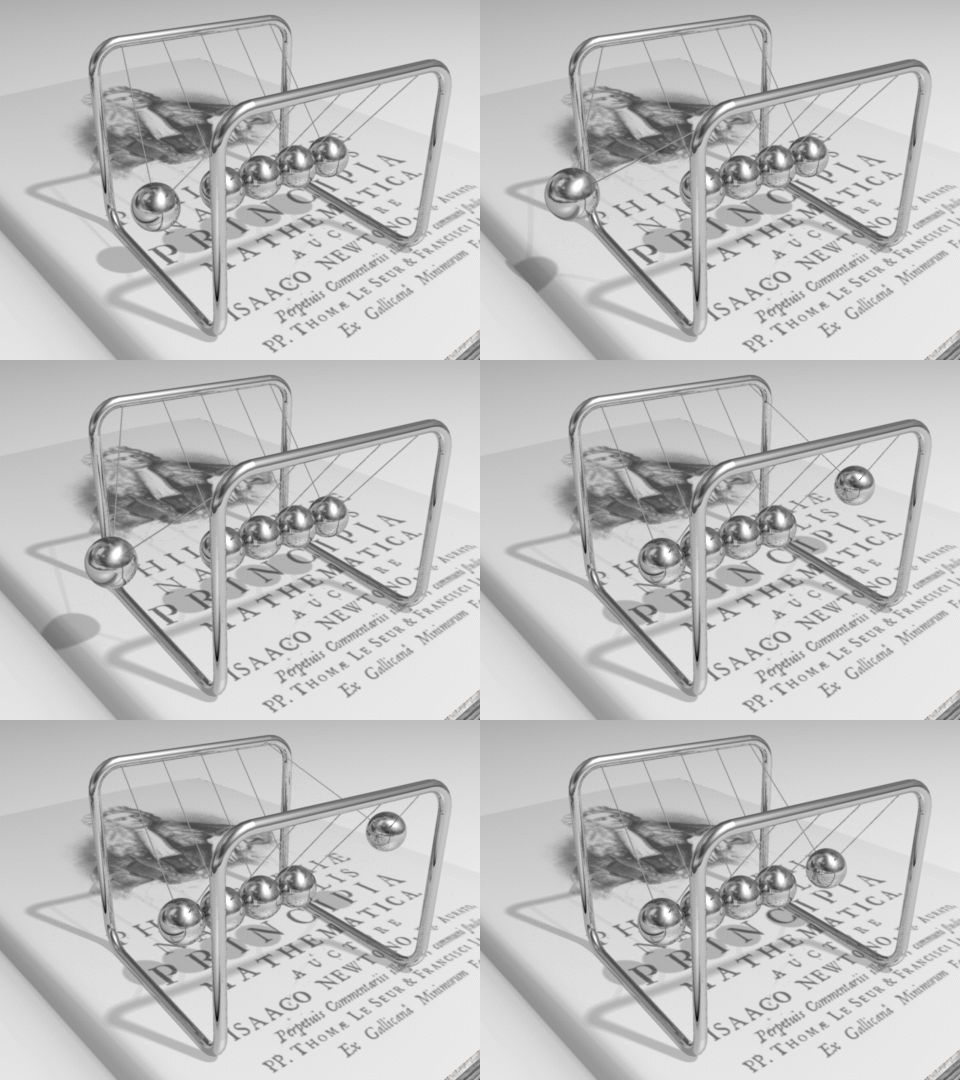

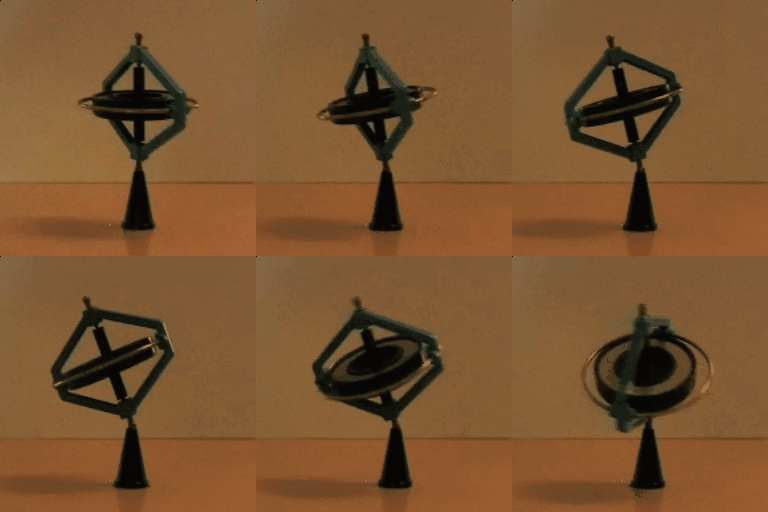
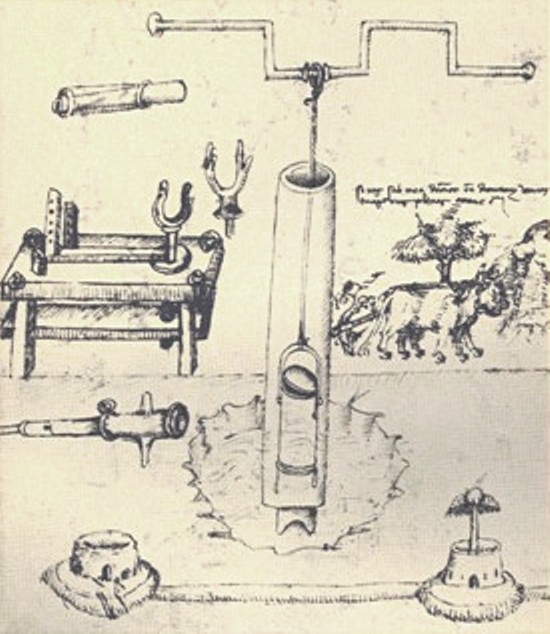
Fundamental concepts and formalisms
Mechanics separates broadly into kinematics (the description of motion) and dynamics (the causes of motion). Newton's laws offer an intuitive, force-based approach; alternative formulations such as the Lagrangian and Hamiltonian frameworks recast problems in terms of energy, generalized coordinates, and variational principles. These formalisms are valuable in handling constraints, complex systems and transitions to other theories.
Branches and scales
The subject spans multiple, interconnected branches. Classical or Newtonian mechanics describes everyday macroscopic objects. Continuum mechanics treats solids and fluids as continuous media and underlies engineering disciplines such as structural analysis and fluid dynamics. Statistical mechanics links microscopic particle behavior to macroscopic properties like temperature and pressure. The word “mechanics” also appears in quantum mechanics, where the rules of motion differ at atomic scales.
History and development
Ideas about motion date back to antiquity, with thinkers in ancient Greece exploring falling bodies and projectiles and figures such as Aristotle offering early qualitative models. Later, systematic experimental and mathematical work by observers and theorists — including Kepler and especially Newton — established the quantitative foundations of classical mechanics. Successive centuries added new methods and wider domains of applicability, from the calculus of variations to continuum theories and statistical treatments.
Practical uses and examples
Mechanics is central to engineering, design and technology. Examples include calculating the loads in buildings and bridges, predicting vehicle dynamics and crash outcomes, planning trajectories for spacecraft, modeling blood flow in biomechanics, and simulating materials under stress. Numerical and experimental tools — finite element analysis, wind tunnels, and precision sensors — extend classical ideas to complex, real-world problems.
Distinctions, modern directions and practitioners
Mechanics can be deterministic (a given initial state leads to a definite evolution) or statistical (descriptions use probabilities). It treats linear and nonlinear behaviour, reversible conservation laws and irreversible dissipative processes. Researchers and professionals who specialize in these topics are sometimes called mechanicians. Ongoing directions include multiscale modeling, computational mechanics and the interface with materials science and quantum theory.
- Core ideas: Newtonian laws, conservation of energy and momentum.
- Mathematical tools: differential equations, variational principles, numerical methods.
- Applications: structural design, fluid mechanics, biomechanics, aerospace and materials engineering.
For further reading and educational resources see introductory texts and review articles in mechanics, or follow linked overviews in general physics references.
Physics overview | Ancient roots | Aristotle | Kepler | Newton | Mechanician
Questions and answers
Q: What is Mechanics?
A: Mechanics is a branch of physics that studies objects moved by forces, including other bodies or forces of nature.
Q: Who were the scientists who contributed to the foundations of Newtonian mechanics?
A: Galileo, Kepler, and especially Newton laid the foundations of much of the so-called Newtonian mechanics we know today.
Q: What is the historical origin of mechanics?
A: The discipline has its roots in ancient Greece, where Aristotle studied the behavior of bodies when they were thrown through the air, such as a stone.
Q: What does a person who works in mechanics do?
A: A person working in the discipline is known as a mechanician.
Q: What type of objects does mechanics study?
A: Mechanics studies objects that are moved by the forces of nature or other bodies.
Q: What is the main goal of mechanics?
A: The main goal of mechanics is to provide an understanding of how things move and interact with each other.
Q: What is the importance of studying mechanics?
A: The importance of studying mechanics lies in its fundamental role in numerous scientific and technological applications, including engineering, physical sciences, and biology.
Related articles
Author
AlegsaOnline.com Mechanics (physics): motion, forces, and material behavior Leandro Alegsa
URL: https://en.alegsaonline.com/art/63355