
Jacob Cats: Dutch poet, jurist and political leader of the Dutch Golden Age
Jacob Cats (1577–1660) was a Dutch poet, jurist and statesman best known for his moralizing emblem books and short verses that became household and nursery material across the Netherlands.
Overview
Jacob Cats (10 November 1577 – 12 September 1660) was a leading literary and civic figure of the Dutch Golden Age. Celebrated for his concise, didactic poems and especially for his emblem books, Cats combined poetic skill with practical moral instruction. He spent his final years in The Hague and left a lasting imprint on Dutch letters and public life.
Image gallery
3 Images

Life and career
Trained and active as a legal professional, Cats bridged the worlds of law, administration and literature. He wrote in accessible verse that addressed everyday conduct and social duties, which helped his work circulate widely among different social groups. As a poet he preferred short, pointed poems that could be easily remembered and quoted.
Emblem books and literary style
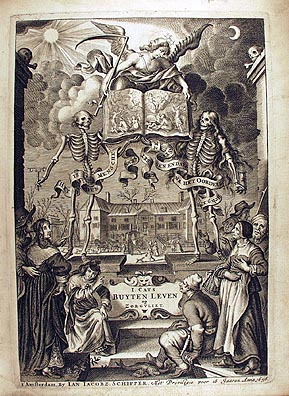
Cats is most famous for his emblem books: collections that paired woodcut images with brief epigrams, moral commentary and practical advice. This hybrid of image and text was popular throughout Europe in the 17th century and suited Cats's didactic aims. While trained as a jurist, his literary voice remained plainspoken and moralizing rather than scholarly, aiming to instruct readers about marriage, household management, temperance and civic virtue.
Political and public roles
In public life Cats served important municipal and provincial functions. He was pensionary of several cities and later rose to become a leading legal adviser and statesman, roles often described with the term politician. His offices included being pensionary of Middelburg and Dordrecht, and he ultimately held the prominent post of grand pensionary of Holland, where he combined administrative responsibilities with the exercise of influence in provincial governance.
Legacy and influence
Cats's short moral verses entered domestic life: many of his lines were memorized and recited in homes and schools, and some became part of the repertoire of simple nursery rhymes and proverbs. His works were reprinted repeatedly in the Netherlands and influenced later writers who sought to teach social norms through literature. The emblem tradition he employed also shaped visual and didactic culture of the period.
Notable facts
- His emblem books paired images and concise poems to teach moral lessons and practical wisdom.
- Cats's writing favored clarity and domestic morality over ornate rhetoric.
- He successfully combined a legal and administrative career with a widely read literary output, making him a prominent civil figure as well as an author.
For study of his work and historical context, consult modern overviews of 17th-century Dutch literature and emblem book traditions; bibliographies and digitized editions often provide access to his most influential pamphlets and collections.
Related articles
Author
AlegsaOnline.com Jacob Cats: Dutch poet, jurist and political leader of the Dutch Golden Age Leandro Alegsa
URL: https://en.alegsaonline.com/art/49011