
Jack (tool)
A jack is a mechanical device used to lift or support heavy loads. This article explains common types, components, history, typical uses and safety considerations.
A jack is a device designed to raise, lower or stabilize heavy objects by converting a small input force into a larger output force. Jacks are widely used in automotive, construction and industrial settings as portable or fixed lifting aids. They vary in size, mechanism and capacity, from hand-operated scissor jacks to large hydraulic systems.
Image gallery
10 Images
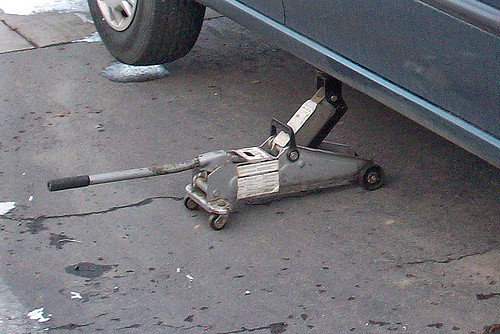


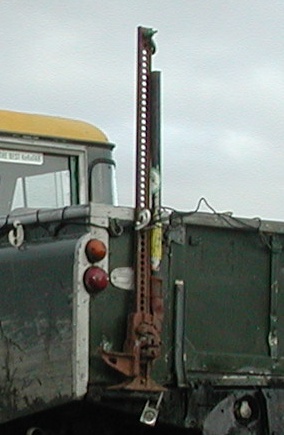
Design and components
Most jacks share a few fundamental elements: a load-bearing contact point (saddle or pad), a frame or housing, a lifting mechanism (screw, scissor linkage, hydraulic cylinder or inflatable bladder) and an actuation method (handle, pump or air supply). Safety features often include valves, locks, pawls or mechanical stops to prevent sudden descent. Materials are typically steel or other high-strength alloys to resist bending and crushing.
Common types
- Automotive (car) jack – A general term for jacks used to lift vehicles for tire changes and inspections; available as scissor, hydraulic trolley or bottle types.
- Scissor jack – A compact, foldable jack that raises a load via a crossed-link mechanism turned by a screw; commonly included with passenger cars.
- Bottle jack – A vertical, cylindrical hydraulic jack with a compact footprint and relatively high lifting capacity for its size.
- Hydraulic jack – Uses a fluid-filled cylinder and pump to generate force; valued for smooth motion and high load capacity, used in garages and workshops.
- Inflatable jack – Employs an air-filled bladder or bag that lifts when inflated; useful on uneven ground or where delicate contact is needed.
- House jack – Heavy-duty jacks designed to lift sections of buildings or support structures temporarily during repairs or foundation work.
Some jacks combine features — for example, a trolley jack uses hydraulic cylinders in a wheeled carriage for mobility, while screw-type floor jacks rely on helical threads for controlled raising.
History and development
Simple lifting devices have existed for centuries, evolving from basic levers and screw jacks to modern hydraulic and pneumatic systems. The practical application of hydraulic principles, notably Pascal's law, enabled compact powerful jacks in the 19th and 20th centuries. Advances in metallurgy, seals and portable pumps further expanded their reliability and capacity.
Uses, importance and safety
Jacks are essential for vehicle maintenance, building adjustments, machinery installation and rescue operations. Their portability and range of capacities make them versatile tools for professionals and hobbyists. Safe use requires placing jacks on firm level surfaces, using appropriate capacity ratings, engaging locks, and supporting the load with stands or cribbing rather than relying on the jack alone. Regular inspection for leaks, bent components or worn threads helps prevent failures.
Notable distinctions: jacks differ from lifts and hoists in that jacks typically act at a single point and are used for temporary lifting, whereas hoists and gantries often move loads vertically and horizontally over greater distances. Choice of jack depends on load, lift height, stability needs and portability.
For further general references and product information, see manufacturers' guides and safety standards applicable to your region.
Related articles
Author
AlegsaOnline.com Jack (tool) Leandro Alegsa
URL: https://en.alegsaonline.com/art/48923