
Ishmael
Ishmael, eldest son of Abraham by Hagar, is a prominent figure in Jewish, Christian and Islamic traditions and is traditionally regarded as an ancestor of many Arab tribes.
Ishmael (Hebrew name: יִשְׁמָעֵאל; Arabic name: إسماعيل) is a prominent figure in the scriptures and traditions of Judaism, Christianity and Islam. In the biblical narrative he is the first son of Abraham by Hagar, an Egyptian servant. Later genealogical traditions trace his ancestry back through patriarchs linked to Noah and earlier figures such as Methuselah, Seth and ultimately Adam and Eve.
Image gallery
8 Images


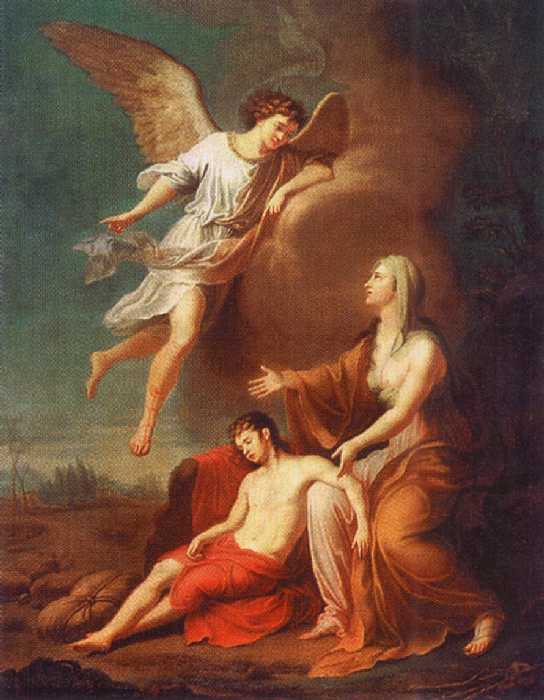

Birth and early narrative
The Hebrew Bible describes Hagar conceiving Ishmael when Sarah, Abraham’s wife, was barren; tensions within the household led to Hagar and Ishmael living apart from Sarah and her son Isaac. Some extra‑biblical and later traditions add details about where Hagar and Ishmael settled, including references to a valley where they met local groups such as the Jurhum, who are sometimes linked in later accounts to nomadic peoples of the Arabian Peninsula and to the line of Joktan (tradition referencing Jurhum/Joktan).
Religious significance
In Jewish and Christian readings Ishmael is remembered as Abraham’s eldest son and as part of the wider family story from which Isaac and his descendants receive the covenantal promises. Islamic tradition treats Ismāʿīl (Ishmael) as a prophet and a devout collaborator with Abraham; many Muslim accounts associate him with the settled communities in the Hejaz region, with the ancestral lineage of Arab peoples, and with early episodes connected to the sanctuary at Mecca.
Genealogical and cultural legacy
Later Arab genealogies often identify Ishmael as a forebear of northern Arab tribes (commonly called the Adnanites). This role has carried social and symbolic weight: Ishmael functions as a shared ancestor in narratives that explain connections among diverse clans and peoples across the Arabian Peninsula. Cultural references to Ishmael appear in religious commentaries, poetry, and historical chronicles across the Middle East.
Comparative and scholarly perspectives
Scholars treat Ishmael primarily as a figure of religious and cultural importance. There is no direct contemporary archaeological evidence that confirms the individual person described in scripture; instead, his story illustrates how ancient communities constructed lineage, identity and territorial claims. Comparative study highlights how Jewish, Christian and Muslim traditions adapt common elements of the narrative to different theological aims, including divergent readings about which son was to be offered in the sacrificial test of Abraham.
Local traditions and remembered sites
Various religious communities preserve local traditions that connect Ishmael to particular places and springs; such traditions feature in pilgrim accounts, local histories and folk memory. Because accounts differ among traditions, descriptions of specific episodes and locations are best understood as part of broader scriptural and cultural narratives rather than as a single, uniform historical record.
Related articles
Author
AlegsaOnline.com Ishmael Leandro Alegsa
URL: https://en.alegsaonline.com/art/48368