
Islam in the United Arab Emirates
Overview of Islam's role in the UAE: history, demographics, religious life, legal framework, public practice, and relations with non-Muslim communities.
The United Arab Emirates (UAE) is a federation where Islam is the official religion and a central element of public life. Introduced to the region in the 7th century during the early expansion of Islam across the Arabian Peninsula, the faith shapes cultural norms, public holidays and many aspects of law and social practice. While the country is home to a large and diverse expatriate population of many faiths, Islam remains the religion of the majority of Emirati citizens and the dominant cultural reference point across the seven emirates.
Image gallery
2 Images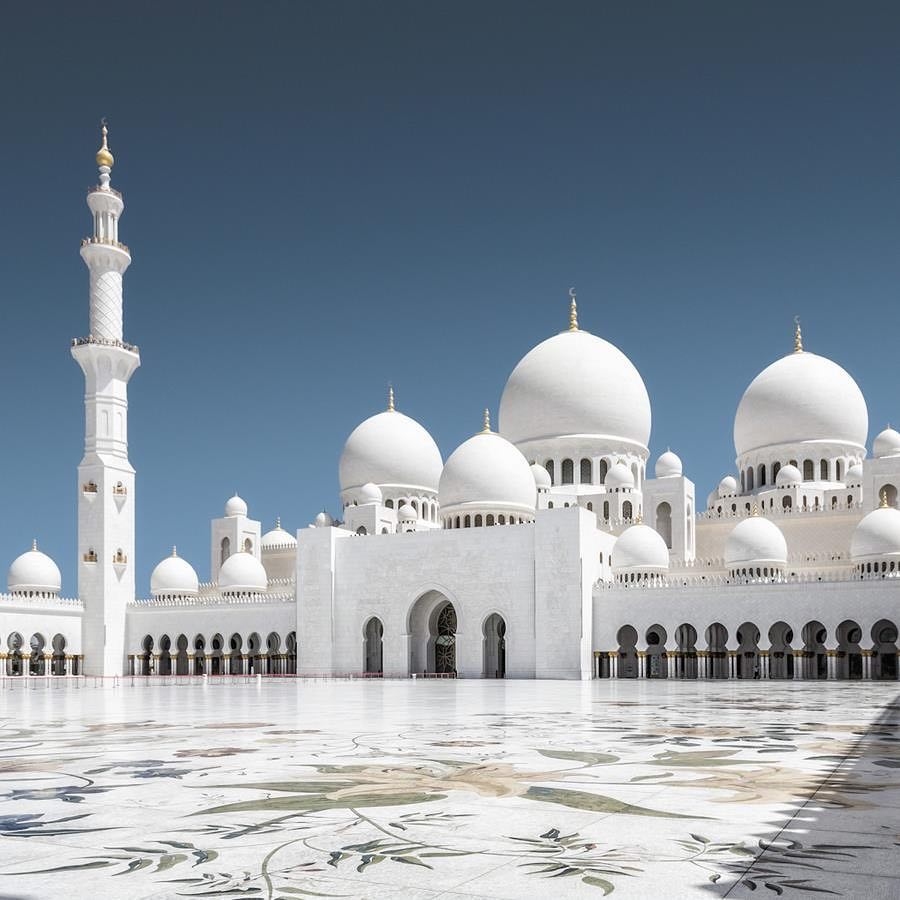

Beliefs, practice and institutions
Most Muslims in the UAE follow Sunni Islam, with a substantial Shia minority among the citizenry and expatriate communities. Religious observance ranges from daily prayer and mosque attendance to communal practices such as the Friday (Jumu'ah) sermon and the observance of Ramadan. Mosques are prominent throughout cities and towns and the call to prayer is a familiar feature of daily life. Islamic education is part of the curriculum for Muslim students in public schools, and Islamic scholars and institutions advise on matters of family law and personal status.
Historical background
Islam reached the coastal communities of what is now the UAE in the 7th century, integrating with existing tribal and commercial networks. Over centuries the region developed local traditions and institutions shaped by Sunni jurisprudence, trade links across the Indian Ocean, and the scholarly exchange of the broader Muslim world. With the formation of the UAE in 1971 the federation enshrined Islam as the official religion in its constitution and retained Sharia as a principal source of legislation.
Law, public life and regulation
The UAE legal system is a hybrid of civil law and Islamic (Sharia) principles. Family law, inheritance and personal status for Muslims are generally adjudicated according to Sharia in dedicated courts, while civil and commercial matters use the federal legal code. Public morality laws address issues such as public decency, alcohol consumption in public, and restrictions during the fasting month of Ramadan; in practice these laws are enforced with attention to cultural norms and the sensitivity of religious observance. Non-Muslim residents are permitted to practise their faiths in designated places of worship and private settings, although proselytizing Muslims is restricted.
Religious diversity and minorities
The UAE hosts a large expatriate population drawn from South Asia, Southeast Asia, Europe, Africa and elsewhere. This diversity includes Christians, Hindus, Sikhs, Buddhists and followers of other faiths. The government issues permits for churches, temples and other places of worship in many emirates and recognizes a degree of religious freedom for non-Muslim communities within regulatory limits. Social attitudes and legal restrictions mean that public expressions of religion by non-Muslims are managed to maintain social harmony.
Notable features and contemporary context
- Islamic holidays such as Eid al-Fitr and Eid al-Adha are national holidays and widely observed.
- Ramadan affects public schedules, business hours and the etiquette for eating and drinking in public during daylight hours.
- Debates about the interaction of Sharia and modern law continue as the UAE adapts regulations to a globalized economy and a multi-faith population.
In summary, Islam in the UAE serves as both a faith community and a cultural framework that influences law, education and everyday life. At the same time, the presence of many non-Muslim residents and visitors has prompted administrative arrangements to accommodate religious diversity within a framework that emphasizes respect for Islamic traditions.
Questions and answers
Q: What is the official religion of the UAE?
A: Islam is the official religion recognized in all seven emirates of UAE.
Q: What percentage of Emirati citizens are Muslims?
A: Almost all Emirati citizens are Muslims, with about 80% of the local population being Muslim.
Q: How has Islam influenced UAE culture?
A: Islam has influenced UAE culture in their political system, sense of dressing, culture and tradition. Mosques can be seen across the emirates from small to large streets. The law in UAE is based on Sharia laws and there are both civil courts as well as Sharia Courts.
Q: What punishments exist for certain offenses in the UAE?
A: Flogging is a punishment for adultery or alcohol consumption, with lashes ranging from 80 to 200. Stoning is a form of capital punishment that is legal in UAE, while kissing in public can result in imprisonment and lashes. Homosexuality and apostasy are criminal offenses punishable by death sentence according to Article 1 and 33 of the UAE penal code.
Q: Is eating pork allowed for non-Muslims living in the UAE?
A: Pork is considered haram (forbidden) for Muslims but non-Muslims may eat it on their own will without any restrictions from authorities or laws.
Q: Are Israeli citizens allowed to enter into United Arab Emirates?
A: Israeli citizens and those holding an Israeli visa are not allowed into United Arab Emirates due to tensions between Israel and Arab World.
Related articles
Author
AlegsaOnline.com Islam in the United Arab Emirates Leandro Alegsa
URL: https://en.alegsaonline.com/art/48387