
Iron(II) hydroxide (Fe(OH)2) — properties, formation, and uses
Iron(II) hydroxide, Fe(OH)2, is a sparingly soluble ferrous hydroxide that forms a greenish precipitate, oxidizes readily in air, and appears in corrosion, environmental chemistry, and laboratory synthesis.
Overview: Iron(II) hydroxide is the inorganic compound with the formula Fe(OH)2. It is composed of ferrous iron cations and hydroxide anions; the iron is in the +2 oxidation state. In pure form it is a poorly soluble solid and is commonly encountered as a greenish or gray-green precipitate when solutions containing Fe2+ are treated with a base.
Image gallery
3 Images

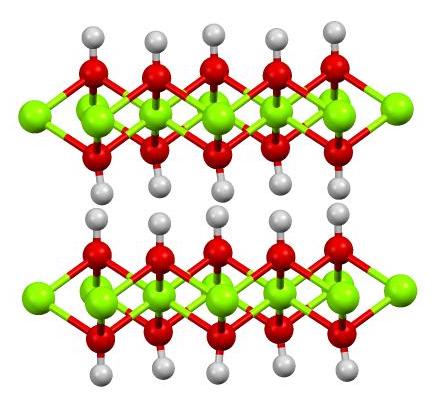
Basic characteristics
Fe(OH)2 is generated by combining ferrous salts and hydroxide ions, for example by adding sodium hydroxide to a solution of an Fe2+ salt. The simple reaction is often written as Fe2+ + 2 OH- → Fe(OH)2. Freshly prepared material is sensitive to oxygen: exposure to air leads to oxidation and conversion to mixed Fe(II)/Fe(III) phases or ultimately to iron(III) oxides and hydroxides, which are brownish. Because of this reactivity, samples are often handled under inert atmosphere in research settings.
Appearance, solubility and chemistry
- Appearance: typically a greenish, gray-green or dark precipitate when formed in water.
- Solubility: Fe(OH)2 is sparingly soluble in neutral water; solubility increases in strongly acidic conditions where Fe2+ is stabilized.
- Reactivity: readily oxidized by oxygen and can transform into iron(III) hydroxides or layered mixed-valence compounds often referred to as "green rust."
For readers seeking more on the component ions, see general references on iron ions and hydroxide ions. The compound's behavior on exposure to air and during corrosion processes is discussed in sources on oxidation and corrosion.
Occurrence, uses and significance
Iron(II) hydroxide appears in natural settings such as reducing soils, sediments, and groundwater where oxygen is limited and iron remains in the +2 state. In the laboratory it is a common precipitate used to demonstrate basic inorganic reactions and to prepare other iron-containing materials. Environmentally, Fe(II) hydroxides and related mixed-phase solids can influence the mobility and transformation of contaminants because of redox activity and sorption capacity. For distinctions with other iron hydroxides, compare Fe(OH)2 with ferric hydroxide Fe(OH)3, which contains Fe3+ and has different color, solubility and oxidative behavior.
Note: Practical handling of Fe(OH)2 requires awareness of its instability in air and tendency to convert to higher oxidation-state products; these transformations are central to its role in corrosion and many environmental processes.
Related articles
Author
AlegsaOnline.com Iron(II) hydroxide (Fe(OH)2) — properties, formation, and uses Leandro Alegsa
URL: https://en.alegsaonline.com/art/48235