
Operation Downfall: Planned Allied invasion of Japan in 1945–46
Operation Downfall was the Allied plan for invading Japan at the end of World War II, consisting of two major phases (Olympic and Coronet). The plan was canceled after Japan's surrender in August 1945.
Overview
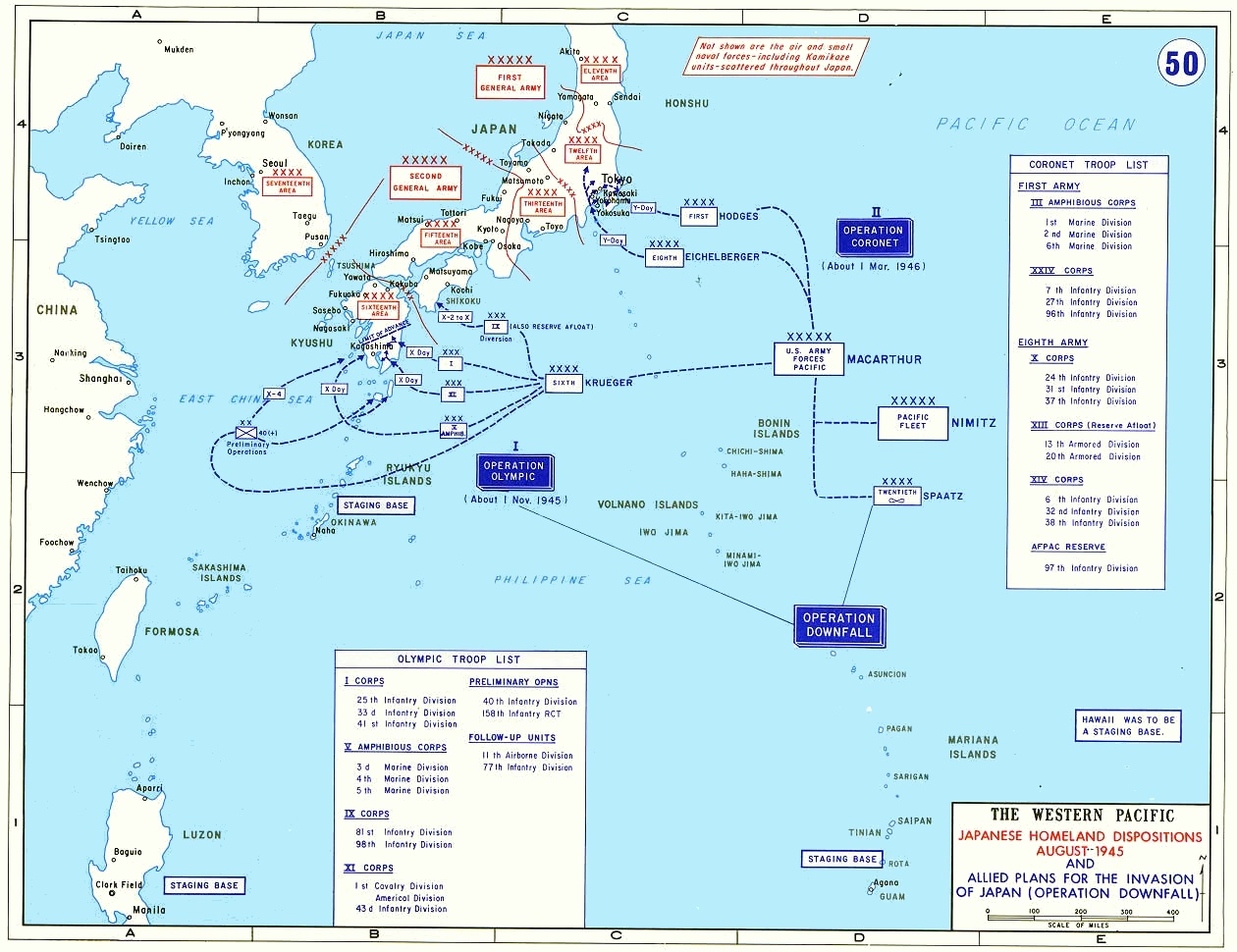
Operation Downfall was the Allied plan to invade the Japanese home islands in the closing months of World War II. Prepared in 1945, it aimed to force Japan's unconditional surrender by occupying territory and overthrowing organized resistance. The operation would have been conducted by Allied forces and involved complex amphibious, airborne and land operations; it is often described as the contingency plan that would have replaced diplomatic or incremental options should other measures fail. The invasion target was Japan and related naval and air approaches, described in planning documents as a multi-stage campaign rather than a single assault; it grew from earlier island-hopping campaigns and lessons learned across the Pacific.
Image gallery
8 Images



Planned phases and main objectives
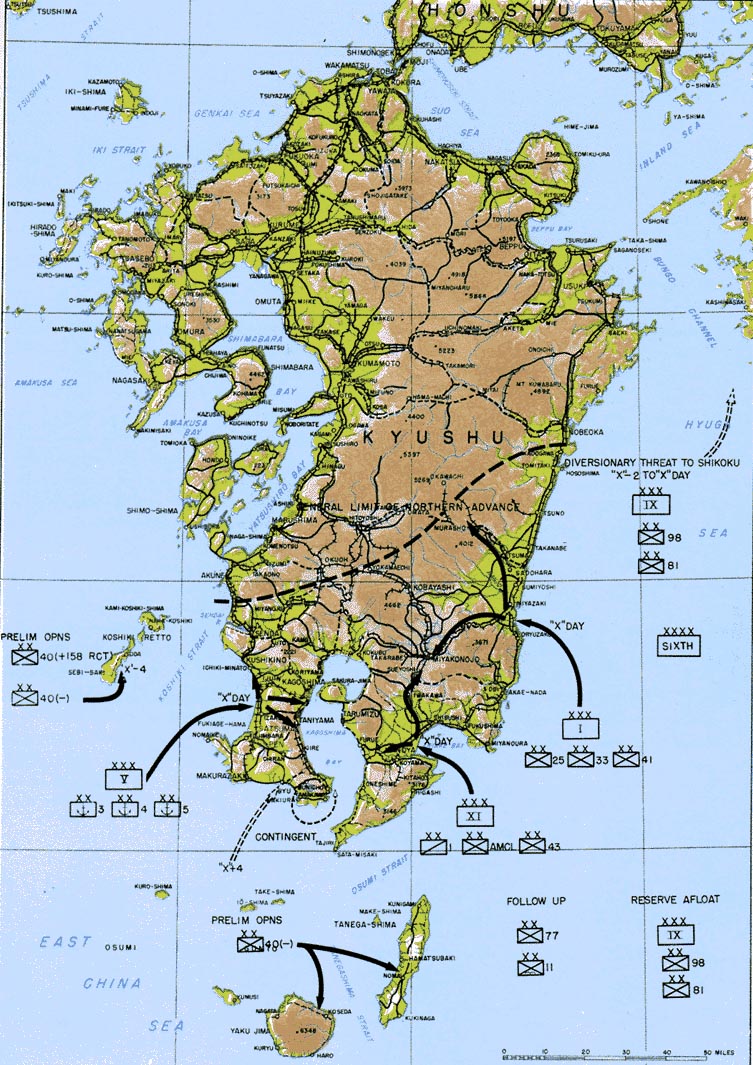
Downfall was divided into two principal phases. The first, Operation Olympic, was designed as a major amphibious landing on the southern island of Kyūshū to secure airfields and staging areas. Those bases would then support Operation Coronet, a larger invasion of the Kantō Plain near Tokyo on the main island of Honshū. Timetables prepared by planners set Olympic for late 1945 and Coronet for early 1946, with detailed logistics for troop movements, shipping, and sustained air support, including pre-invasion bombardments and close air cover from carrier and land-based aircraft.
The scale envisioned was enormous: thousands of ships, millions of tons of supplies, and the coordination of ground, naval and air assets from several Allied nations. Planners considered phased occupation, reconstruction responsibilities, and the challenges of controlling large urban and rural populations while facing a determined military defense.
Resistance, risks and projections
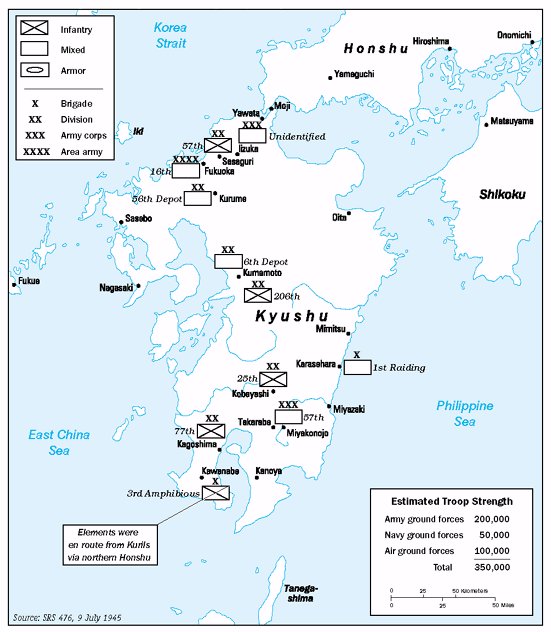
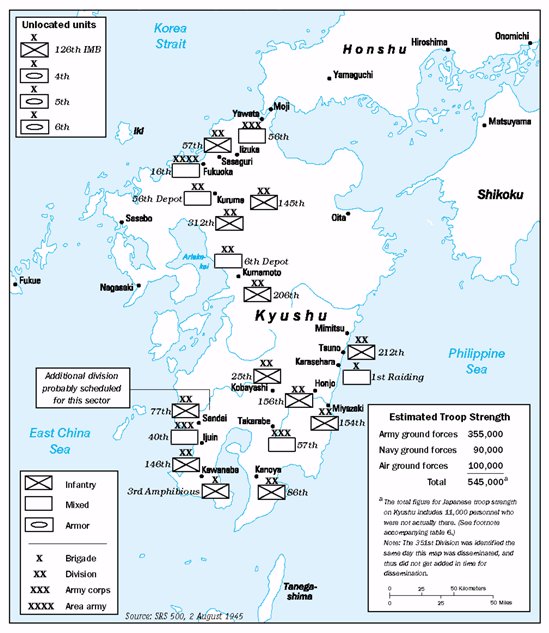
Japanese defensive preparations and the prospect of mass civilian involvement shaped planners' assessments. Military leaders expected entrenched defenders, fortified positions, and widespread use of suicide attacks by aircraft and small craft. Casualty estimates varied widely and were the subject of intense debate within Allied staffs; some calculations suggested very high numbers of casualties on both sides if the invasion proceeded, while others argued for alternatives to reduce bloodshed.
Circumstances that ended the plan
Several developments in August 1945 changed the strategic situation and led to cancellation of Operation Downfall. The United States dropped atomic bombs on Hiroshima and Nagasaki, and the Soviet Union declared war on Japan and invaded Manchuria; together these events contributed to Japan's decision to surrender. The Japanese government announced acceptance of surrender terms in mid-August 1945, and plans for Olympic and Coronet were called off as occupation and surrender procedures began.
Legacy and historical significance
Operation Downfall remains a central counterfactual in discussions of the final months of World War II. Historians and commentators examine the plan when evaluating the necessity and consequences of other actions taken at the time, including the use of atomic weapons and diplomatic strategies. The operation also influenced postwar planning for occupation, demobilization and reconstruction, and it has been studied as an example of large-scale joint operations, logistical planning, and the ethical dilemmas of warfare.
- Key reasons for cancellation: atomic bombings, Soviet entry into the war, and Japan's surrender.
- Components: Olympic (Kyūshū), Coronet (Honshū) and extensive air and naval support.
- Historical debates: projected casualties, alternatives to invasion, and long-term consequences of the decisions made.
For more context on the forces and planning documents related to Downfall, see material on invasion planning and contemporary analyses of the Allied strategic options. Contemporary accounts of the atomic bombings at Hiroshima and Nagasaki and records of Soviet operations also illuminate why the operation was never executed.
Related articles
Author
AlegsaOnline.com Operation Downfall: Planned Allied invasion of Japan in 1945–46 Leandro Alegsa
URL: https://en.alegsaonline.com/art/47894