
Interstellar medium
The interstellar medium (ISM) is the gas and dust between stars in a galaxy, varying widely in density, temperature and ionisation; it fuels star formation and shapes galactic evolution.
Overview
In astronomy, the interstellar medium (ISM) denotes the diffuse mixture of gas, dust and energetic particles that occupies the void between stars within a galaxy. Far from being uniform, the ISM shows strong contrasts: dense, cold concentrations coexist with tenuous, hot regions. Its composition, physical state and distribution set the stage for many large-scale processes in galaxies.
Image gallery
10 Images






Composition and basic properties
The ISM consists primarily of gas and solid particles called dust. The gaseous component is dominated by forms of hydrogen — including molecular hydrogen in cold clouds and atomic hydrogen elsewhere — together with traces of hydrogen and heavier elements and noble gases such as helium. Dust grains are microscopic and composed of carbonaceous and silicate materials; they absorb and scatter starlight and provide surfaces for chemical reactions.
Phases and structure
The ISM is commonly described in several overlapping phases that differ in density, temperature and ionisation. Typical phases include:
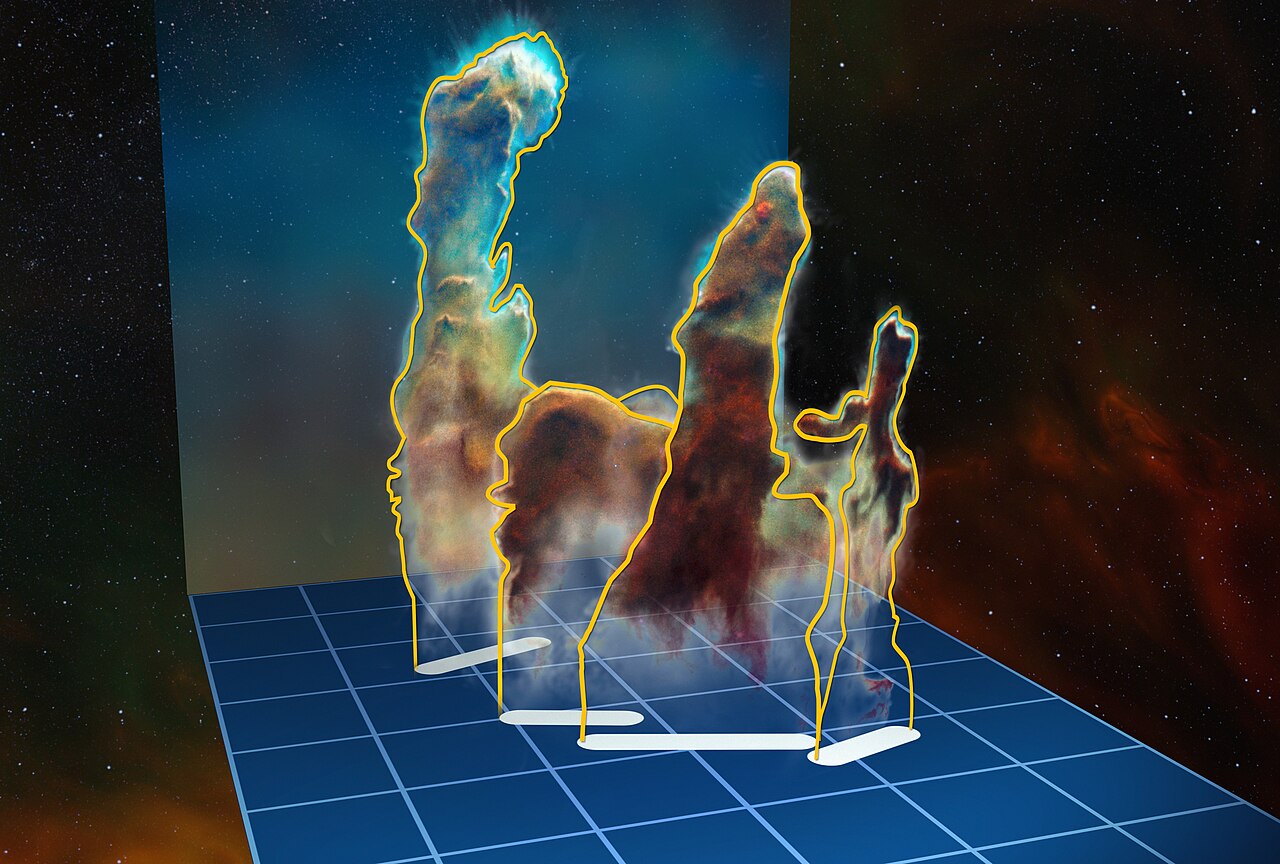
- Cold, dense molecular clouds where molecules form and stars are born.
- Warm neutral and warm ionised gas that fills much of the disk inside galaxies.
- Hot, low-density ionised regions produced by supernova explosions and energetic processes.
These phases exchange mass and energy through shocks, radiation and turbulence; the degree of ionisation and the presence of magnetic fields influence the dynamics and chemistry of the medium.
Role in star formation and galactic ecology
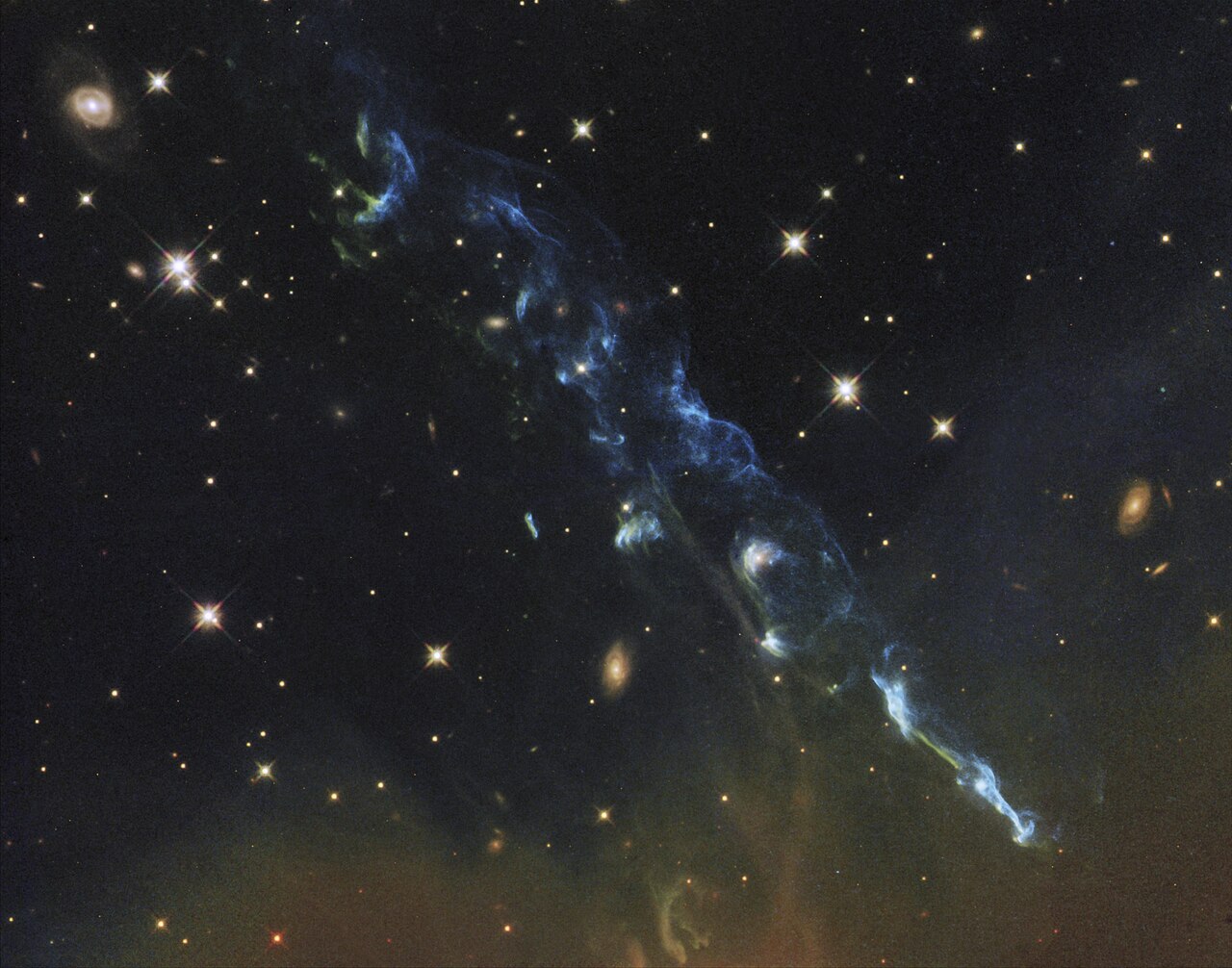
Molecular clouds in the ISM are the birthplaces of stars: gravity, cooling and local instabilities allow gas and dust to collapse into protostars. Conversely, stellar winds, ultraviolet radiation and supernovae return energy and newly forged elements to the ISM, enriching future generations of stars. Dust and gas in the ISM also create the luminous clouds astronomers call nebulae, which serve as visible tracers of these processes.
Observing the interstellar medium
Because different phases emit or absorb radiation at different wavelengths, astronomers study the ISM across the electromagnetic spectrum: radio and millimetre lines reveal cold molecular gas, infrared traces warm dust, optical emission lines expose ionised regions, and X-rays indicate very hot plasma. Observations combined with theoretical models help reveal the ISM's role in galaxy evolution and in regulating star formation.
Notable facts: the ISM contains only a small fraction of a galaxy's mass but plays an outsized role in cycling matter and energy; cosmic rays and magnetic fields embedded in the ISM influence its chemistry and dynamics.
Further reading and technical resources are available through specialized literature and review articles linked from core astrophysics portals and research databases.
Related articles
Author
AlegsaOnline.com Interstellar medium Leandro Alegsa
URL: https://en.alegsaonline.com/art/47836