
Nebula (interstellar clouds of gas and dust)
A nebula is a diffuse interstellar cloud of gas and dust where stars form, remnants of stellar explosions, and key laboratories for astrophysics and cosmic chemistry.
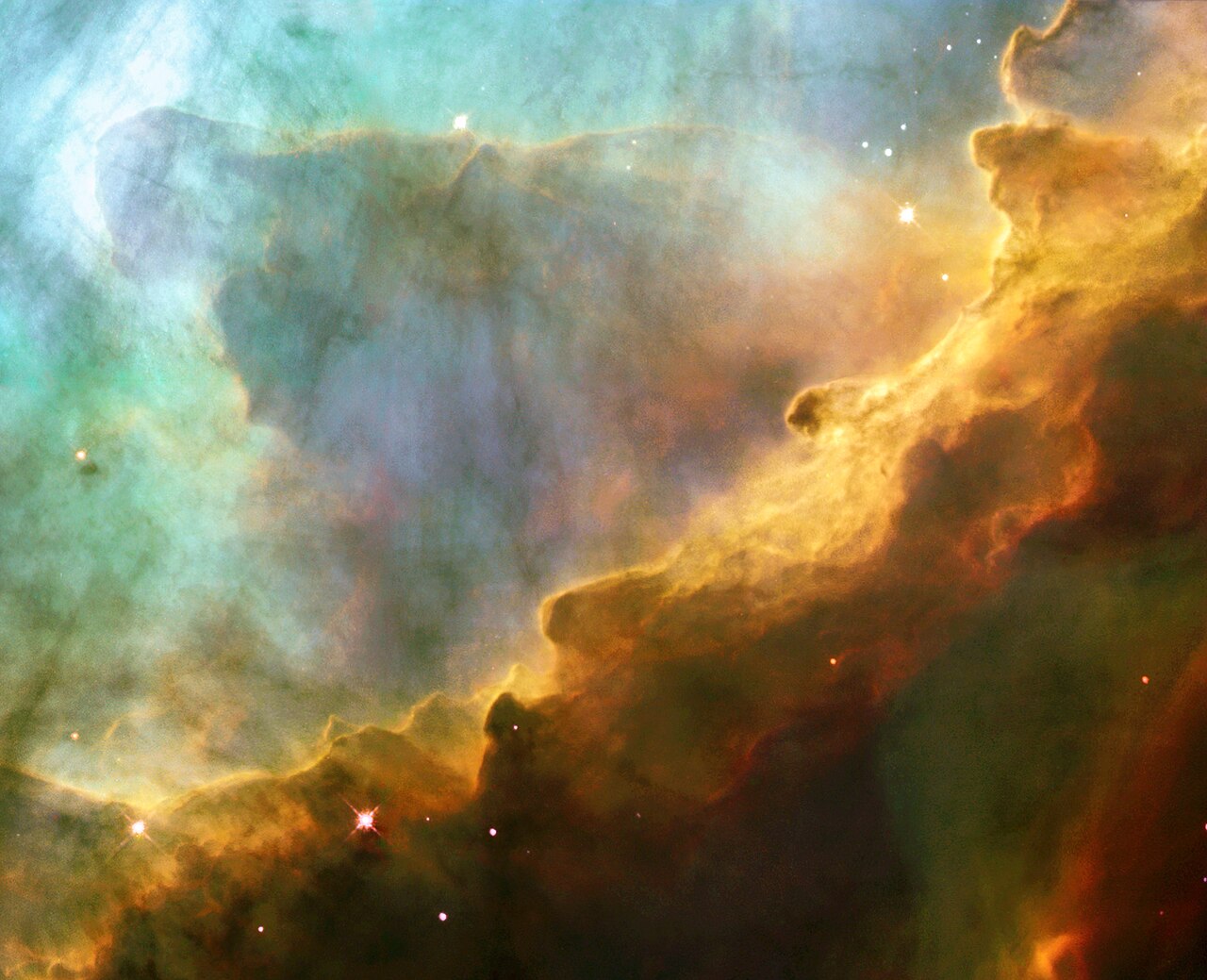
A nebula is an interstellar cloud of dust, hydrogen, helium and other ionized gases within a galaxy. These clouds range from faint, cold concentrations that obscure background stars to bright regions glowing with emission lines excited by nearby hot stars. Nebulae are not single, uniform objects but diverse collections of gas and particles whose appearance and behavior depend on density, temperature, composition and local radiation fields.
Image gallery
10 Images





Types and characteristics
Nebulae are commonly grouped into several observational categories:
- Emission nebulae: clouds heated by ultraviolet light from young, massive stars that re-emit distinctive spectral lines.
- Reflection nebulae: dust clouds that scatter the light of nearby stars, often appearing blue because short wavelengths scatter more efficiently.
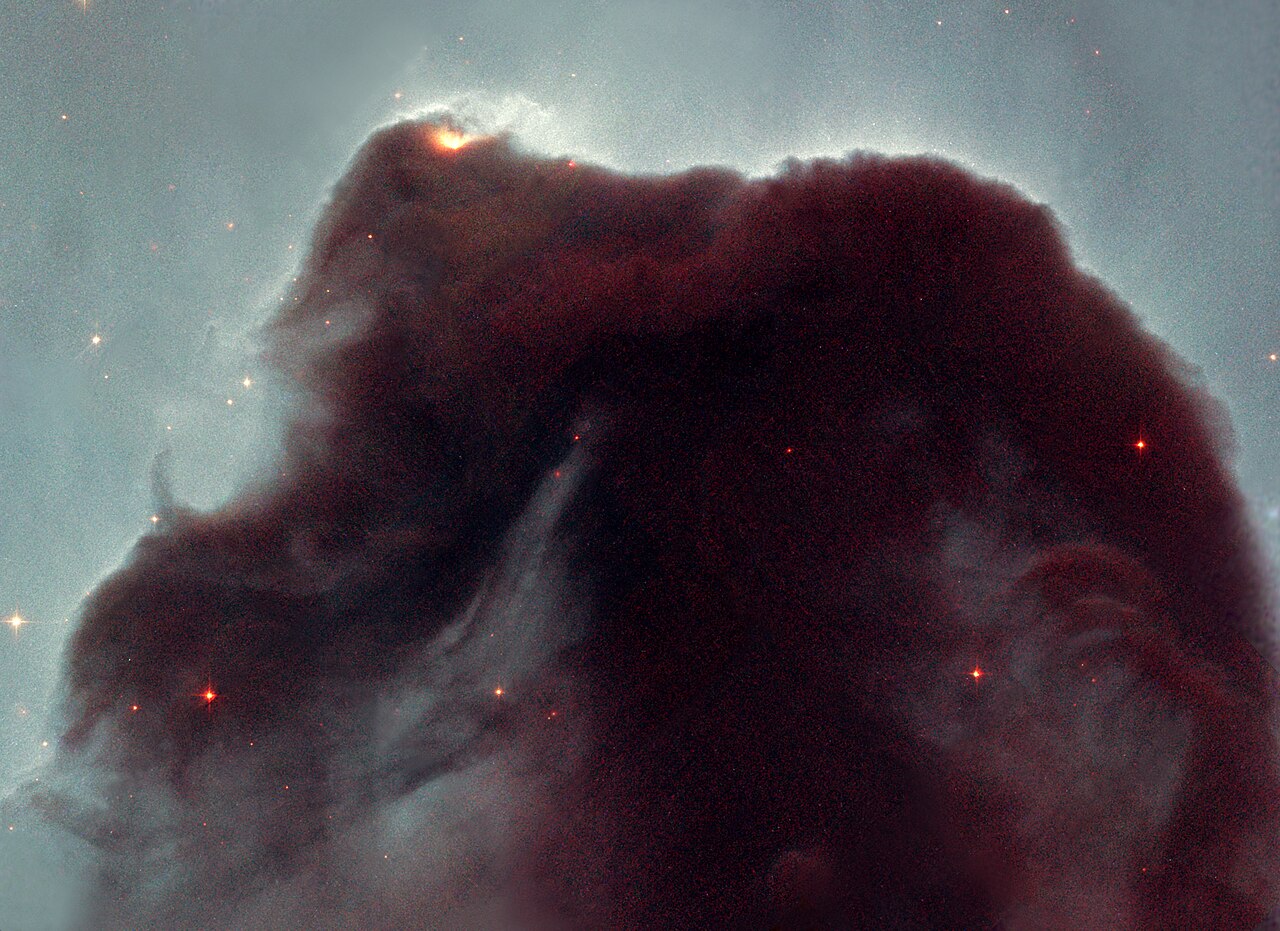
- Dark nebulae: dense regions that block light from objects behind them and appear as silhouette patches against the star field.
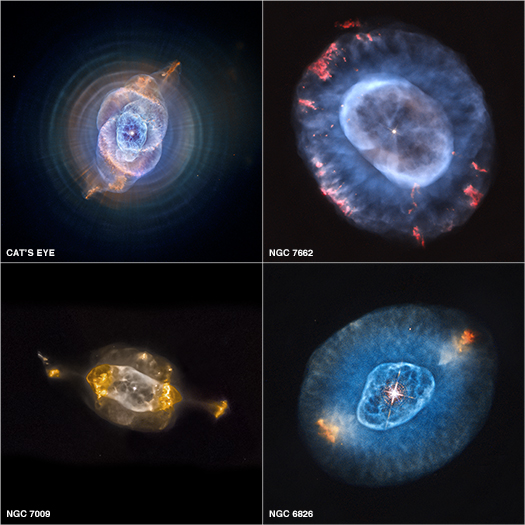
- Planetary nebulae and supernova remnants: shells of gas expelled by dying stars; the former arise from low- to intermediate-mass stars, the latter from stellar explosions.
Physical conditions in nebulae vary widely: some are cold (tens of kelvin) molecular clouds where molecules form and stars are born; others are hot ionized regions (thousands to tens of thousands of kelvin) dominated by free electrons and ions.
Formation, evolution, and role
Nebulae often originate from the outflows of evolved stars, the debris of supernovae, or the coagulation of the interstellar medium under gravity. Over time parts of a nebula can collapse to form protostars; radiation, stellar winds and shock waves from newly formed stars then reshape the surrounding gas. Through these processes nebulae are central to the life cycle of matter in galaxies, recycling heavy elements and influencing subsequent generations of star and planet formation.
Observation and scientific importance
Astronomers study nebulae across the electromagnetic spectrum: radio and millimeter observations reveal cold molecular gas, infrared penetrates dust-obscured regions, and optical and ultraviolet data show ionized gas and emission lines used to determine chemical abundances and physical conditions. Nebulae provide insight into stellar evolution, the initial mass function of stars, and the chemical enrichment history of galaxies.
History and notable observations
Descriptions of nebulous objects date back to medieval and ancient records. A notable early reference comes from the 10th century: the Persian astronomer Abd al-Rahman al-Sufi mentioned a "little cloud" near the Andromeda region in his Book of Fixed Stars, an observation that anticipated later recognition of faint fuzzy objects beyond the stars. With the advent of telescopes and spectroscopy in the modern era, nebulae became well-defined scientific targets.
Famous examples include the Orion Nebula (a nearby star-forming H II region), the Crab Nebula (a supernova remnant), the Eagle Nebula with its pillar structures, and many planetary nebulae that display varied shapes. When discussing nebulae, it is important to distinguish observational categories from physical origins: for example, a "planetary nebula" is named for its appearance, not any relation to planets.
Questions and answers
Q: What is a nebula?
A: A nebula is a cloud of dust, hydrogen, helium and other ionized gases found in a galaxy.
Q: Who discovered the first nebula?
A: The Persian astronomer, Abd al-Rahman al-Sufi, discovered the first nebula and mentioned it in his book, Book of Fixed Stars in the year 964.
Q: What did Abd al-Rahman al-Sufi call the first nebula he discovered?
A: Abd al-Rahman al-Sufi called the first nebula he discovered a "little cloud" near the Andromeda galaxy.
Q: What are the components of a nebula?
A: The components of a nebula are dust, hydrogen, helium and other ionized gases.
Q: Where are nebulas usually found?
A: Nebulas are usually found in galaxies.
Q: What is the significance of the discovery of a nebula?
A: The discovery of a nebula is significant because they are known to be the birthplace of stars.
Q: Why are nebulas important to the study of the universe?
A: Nebulas are important to the study of the universe because they provide insight into the formation of stars and galaxies, and the chemical makeup of the universe.
Related articles
Author
AlegsaOnline.com Nebula (interstellar clouds of gas and dust) Leandro Alegsa
URL: https://en.alegsaonline.com/art/68953
Sources
- etymonline.com : Nebula
- ui.adsabs.harvard.edu : 1984QJRAS..25...65H