
Interstellar travel: concepts, challenges and prospects
Comprehensive overview of human and robotic travel between stars: distances, propulsion concepts, mission architectures, technical and biological challenges, historical studies and near‑term research directions.
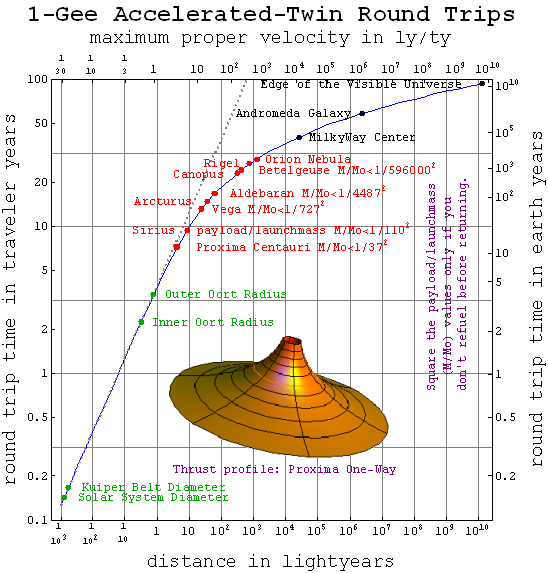
Interstellar travel describes voyages and missions—manned or unmanned—between stars rather than between bodies inside the Solar System. The subject combines astrophysics, spacecraft engineering, long‑duration life‑support, and mission planning. Practical interstellar flight must confront distances measured in light‑years: the nearest known star system, Proxima Centauri, lies a few light‑years away, so even very fast craft would require long transit times. Discussion of interstellar travel therefore ranges from near‑term robotic probes and technology demonstrators to far‑future human missions and speculative physics ideas. The theme is a staple of science fiction, but also a real area of theoretical and experimental study by laboratories and agencies around the world.
Image gallery
10 Images




Core characteristics and major challenges
Interstellar voyages are distinguished by several severe and interrelated challenges. Distance creates long mission durations and large delta‑v (change in velocity) requirements; energy and propulsion must scale far beyond what is needed for operations inside the Solar System. At high speeds, protection against collisions with interstellar dust and gas, and shielding against cosmic radiation, become critical engineering problems. Autonomy is essential because round‑trip communications take years to decades, producing unavoidable delays for control and telemetry. For crewed missions, sustaining human life for extended periods raises biological, psychological and social questions: closed‑loop life support, food production, medical care, and the effects of isolation and confinement over generations in some concepts.
Propulsion and mission architectures
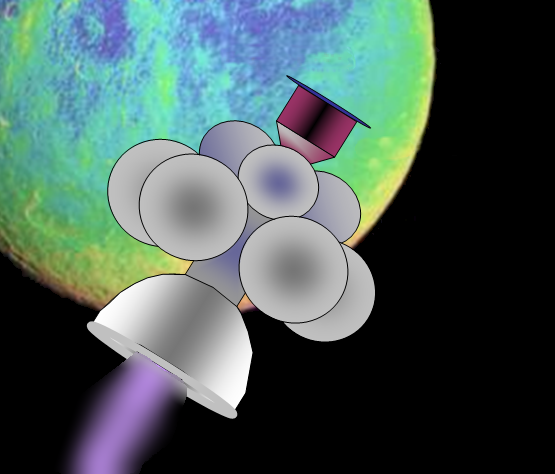
- Chemical and electric propulsion: Conventional rockets and electric thrusters are well understood and effective for intra‑system travel, but they are impractical for rapid interstellar transit without multi‑stage or extremely long burn strategies. Advanced ion and Hall‑effect thrusters can provide high efficiency for long missions, and some studies explore using beamed energy to power electric propulsion; for example research combines ion engines with remote energy beaming approaches such as ion engine concepts and ground or orbital power stations.
- Light sails and laser propulsion: Very lightweight sails pushed by intense lasers can, in principle, accelerate gram‑scale probes to a significant fraction of lightspeed. This approach minimizes on‑board fuel needs and is the core idea behind several recent proposals and experimental initiatives exploring laser beaming for propulsion.
- Nuclear and advanced fusion concepts: Fusion propulsion offers higher specific impulse and energy density than chemical systems, and designs such as conceptual interstellar fusion drives have been studied in engineering reviews. These concepts remain difficult because of reactor size, heat management, and fuel production challenges.
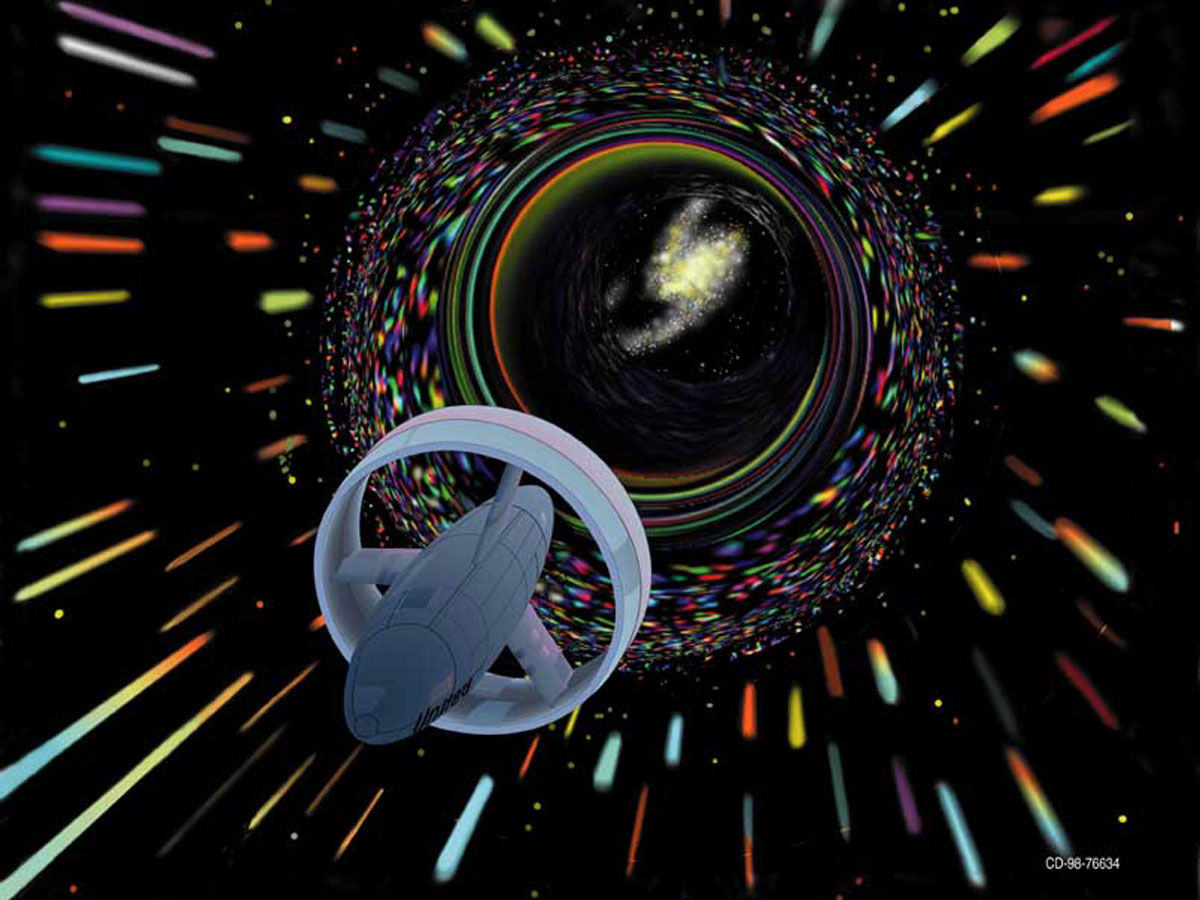
- Exotic and theoretical ideas: Concepts such as collection of interstellar gas for reaction mass (Bussard ramjet), antimatter drives, or speculative spacetime methods (commonly called warp drives or wormholes) appear in literature as theoretical explorations; they currently lie beyond practical engineering capability and remain speculative.
Mission types and human factors
Interstellar mission architectures are often grouped into broad types. Unmanned probes aim for the highest science return per cost and risk and are the most plausible near‑term path: they can be small, fast, and highly automated. Generation ships propose large self‑sustaining habitats where multiple human generations would live and reproduce during the voyage; these present large societal and resource commitments. Sleeper or hibernation‑based concepts aim to place crew in long‑term stasis, reducing life‑support mass and social challenges, but require reliable biomedical technology. Each architecture has different technical, ethical and economic trade‑offs that influence feasibility and priority.
Hazards and engineering limits
At interstellar velocities, even microscopic particles carry destructive kinetic energy; shielding and detection systems must mitigate such impacts. The sparse interstellar medium also limits use of some propellantless concepts and affects thermal control. Communications across light‑year distances require high‑gain antennas or relay strategies and produce long latencies that rule out real‑time control. Finally, energy requirements for accelerating and decelerating significant mass are large enough that breakthroughs in energy generation, storage, or beamed power are likely prerequisites for practical crewed missions.
History, studies and cultural context
Interest in travel between the stars has a long cultural history in literature and film, reflected in technical and conceptual studies by scientific organizations. Several organized projects and feasibility studies—ranging from early engineering examinations to modern private initiatives—have explored possible designs for probes and hypothetical crewed vessels. Discussions often reference iconic ideas such as large starships in fiction while distinguishing narrative devices from engineering constraints. National and international agencies, including NASA, research groups and academic teams, continue to analyze propulsion trade‑offs, target selection, and enabling technologies.
Targets, scientific return and prospects
Potential near‑term targets for robotic missions include the nearest stellar systems and their planets. Direct exploration would provide unique scientific data about planetary composition, potential biosignatures, and local astrophysical environments. Achieving such missions depends on incremental progress: technology demonstrations for beamed propulsion, improvements in autonomy and radiation hardening, and advances in materials and miniaturization. Private and public research initiatives have increased interest in small‑scale demonstrators that could validate components of larger interstellar strategies.
Although no currently available technology enables routine human travel to other stars, a combination of continued basic research, international cooperation, and stepwise technology demonstrations could make robotic interstellar exploration feasible within coming decades to centuries. For summaries and entry points into the literature, consult general overviews of interstellar travel and specific studies on propulsion and mission design, including reports and concept papers that examine ion and electric propulsion, laser beaming concepts, and agency work at space organizations. Technical proposals and experimental programs remain active areas of research and debate as the scientific community refines what is physically attainable and ethically justifiable for voyages between the stars.
Further reading should prioritize peer‑reviewed reviews, technical assessments, and summaries produced by established space research institutions to separate speculative ideas from engineering and scientific progress.
Questions and answers
Q: What is interstellar space travel?
A: Interstellar space travel is the travel between stars, either manned or unmanned.
Q: Is interstellar travel easier than travel within the Solar System?
A: No, interstellar travel is much more difficult than travel within the Solar System.
Q: Does suitable technology exist for interstellar travel?
A: No, suitable technology does not currently exist for interstellar travel.
Q: Has the idea of a probe with an ion engine been studied for interstellar travel?
A: Yes, the idea of a probe with an ion engine has been studied for interstellar travel.
Q: What is the source of energy for a probe with an ion engine for interstellar travel?
A: The energy for a probe with an ion engine for interstellar travel would come through a laser base station.
Q: Are both unmanned and sleeper ship interstellar travel possible?
A: Yes, both unmanned and sleeper ship interstellar travel seem possible with sufficient travel time and engineering work.
Q: Are there technological and economic challenges for both manned and unmanned interstellar travel?
A: Yes, both manned and unmanned interstellar travel present considerable technological and economic challenges which are unlikely to be met in the near future.
Related articles
Author
AlegsaOnline.com Interstellar travel: concepts, challenges and prospects Leandro Alegsa
URL: https://en.alegsaonline.com/art/47838
Sources
- go2starss.narod.ru : "Лендис. Межзвездный ионный зонд, снабжаемый энергией по лазерному лучу" · web.archive.org
- universetoday.com : "Interstellar travel may remain in science fiction"
- universetoday.com : "Astronomy without a telescope – Oh-My-God particles"
- public.web.cern.ch : "Facts and figures"
- ska.cosmosmagazine.com : "Extreme speed"
- arxiv.org : hep-ph/0206072
- ui.adsabs.harvard.edu : 2003IJMPA..18.2229A
- doi.org : 10.1142/S0217751X03013879
- hyperphysics.phy-astr.gsu.edu : "Cosmic rays"
- astroreview.com : "Electromagnetic control of spacetime and gravity: the hard problem of interstellar travel"
- jbis.org.uk : "Interstellar travel: the wait calculation and the incentive trap of progress"
- nature.com : "The exoplanet next door : Nature News & Comment"
- doi.org : 10.1038/nature11572
- exoplanet.eu : Star: eps Eridani