
Antonov An-225 Mriya
Antonov An-225 Mriya — the heaviest aircraft ever built, a six-engine Ukrainian cargo plane designed for the Buran shuttle and later used for outsized freight; destroyed during the 2022 conflict in Ukraine.
Overview
The Antonov An-225 Mriya was a Soviet-designed strategic airlift cargo aircraft built by the Antonov design bureau and later operated from Ukraine. Conceived in the 1980s to carry the Buran space shuttle, it became known as the heaviest airplane ever constructed and one of the world’s most distinctive freighters. The An-225 combined exceptional payload capacity with a unique six-engine layout, allowing it to move items too large or heavy for other means of transport. For the Buran project see Buran shuttle; for general information about Antonov see Antonov design bureau.
Image gallery
10 Images


Design and key characteristics
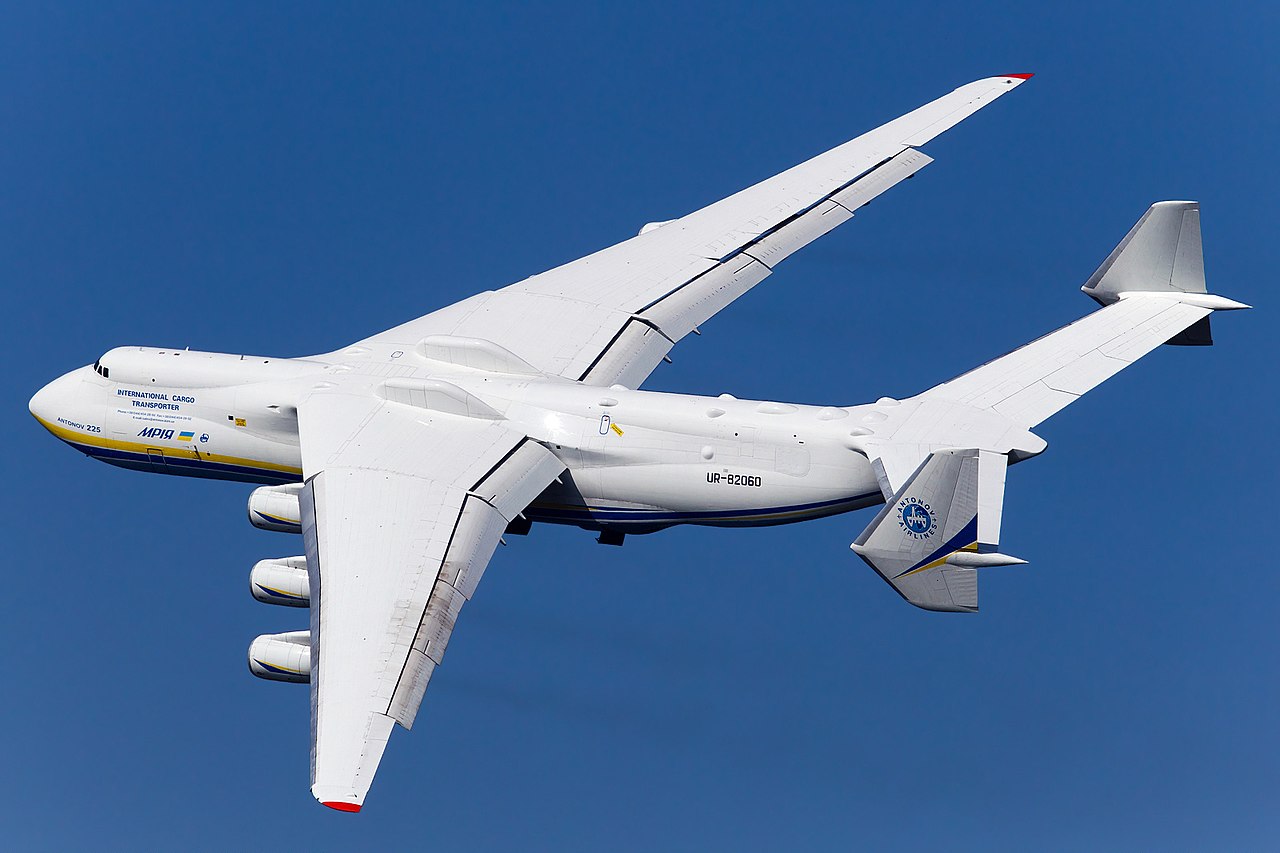
The An-225 was developed from the earlier An-124 Ruslan family and shared several structural features with that type while scaling them up. It featured six turbofan engines and a twin-tail arrangement to stabilize very large external loads. The aircraft had a nose that could be raised for frontal loading and a large internal cargo bay, enabling it to carry oversized items internally or on its upper fuselage.
- Engines: six high-bypass turbofans (based on the Ivchenko D-18 family).
- Layout: high-wing, twin vertical stabilizers, nose-loading capability.
- Payload: designed to lift exceptionally heavy and bulky loads that exceeded conventional airfreight limits.
- Relation to other types: an enlarged derivative of the An-124 Ruslan and able to carry parts comparable in size to large airliners such as a Boeing 747 fuselage.
History and development
Work on the An-225 began in the 1980s in the Ukrainian Soviet Socialist Republic to support the Soviet space programme. The first and only completed aircraft made its maiden flight in 1988. After the dissolution of the Soviet Union, ownership and production responsibilities for Antonov transferred to independent Ukraine and the company’s facilities were based near Kyiv (Kyiv). A second airframe had been started but was never finished.
Operational use and significance
After the collapse of the original space programme, the An-225 found a long career in commercial and humanitarian roles. It was used to transport oversized industrial equipment, generators, turbines, and other cargo that would be difficult to move by rail or sea. Operators highlighted its flexibility for one-off, urgent, or hard-to-transport items; it became an icon of strategic airlift capability and occasional public interest for its extraordinary size.
Destruction and legacy
During the 2022 Russian invasion of Ukraine the sole operational An-225, registered UR-82060, was reported destroyed while at the Antonov Serial Production Plant and associated airport complex near Hostomel/Antonov Airport. The loss removed a unique capability from the global air-cargo fleet and sparked international attention about aircraft preservation during armed conflict. For reports about the facility see Antonov production plant and for context on Ukrainian control and company history see Antonov in Ukraine.
Notable facts and distinctions
The An-225 is remembered both for its engineering extremes and for the practical role it played moving outsized freight across continents. Although only one completed example flew commercially, the type influenced later thinking about very large transport aircraft and remains a subject of technical study and public fascination. Additional background and archived material can be consulted via general references to the Antonov programme (Antonov) and historical accounts of the Buran project (Buran).
Related articles
Author
AlegsaOnline.com Antonov An-225 Mriya Leandro Alegsa
URL: https://en.alegsaonline.com/art/4776