
Antonov An-3
Turboprop development of the Antonov An-2 biplane: a Soviet-era, multipurpose STOL utility aircraft used for passenger, cargo and agricultural work with limited post‑Soviet production.

Overview
The Antonov An-3 is a turboprop-powered development of the much‑used Antonov An-2 single‑engine biplane. Designed by the Antonov design bureau in the late Soviet period, the An-3 kept the An-2's rugged biplane layout and short‑takeoff‑and‑landing (STOL) capability while replacing the original piston radial engine with a modern turboprop and updating systems for improved reliability and performance. It was intended for a range of civil roles including airliner and cargo duties in harsh or remote environments and for agricultural applications. The type traces its origins to the Soviet aviation industry (USSR) and is a direct modernization of the classic Antonov An-2.
Image gallery
3 Images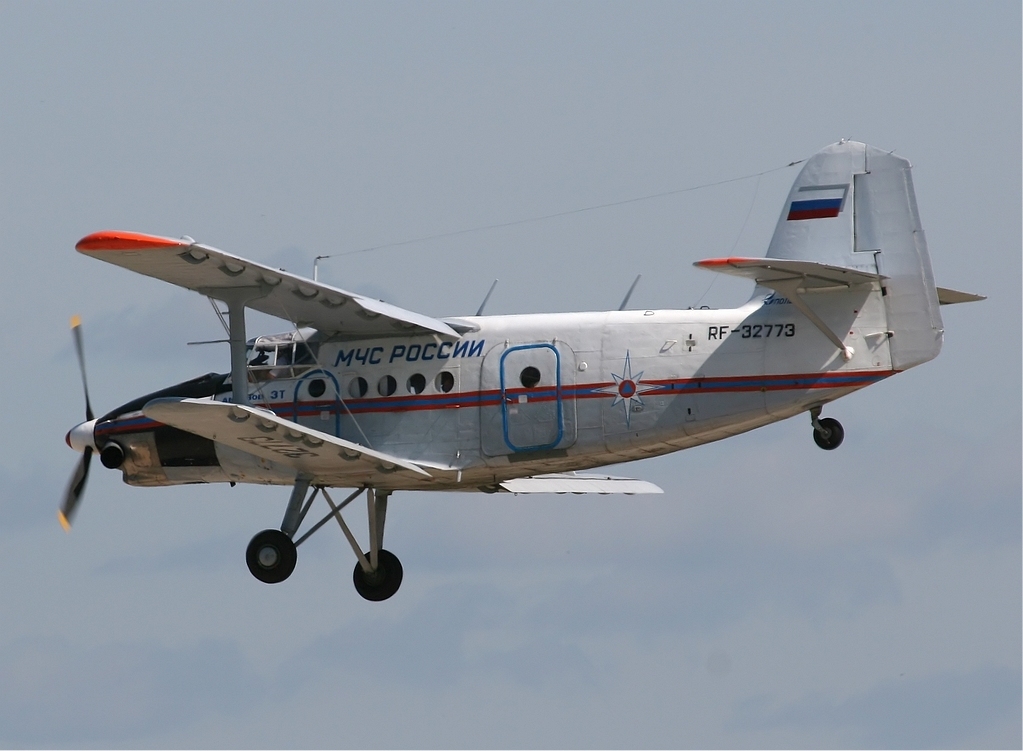


Design and characteristics
The An-3 retains the An-2's single-engine biplane planform and sturdy fixed landing gear, features that give it excellent low‑speed handling and the ability to operate from unprepared strips. The most significant change is the installation of a turboprop powerplant in place of the original Shvetsov radial engine family. This conversion brings higher cruise speeds, better fuel efficiency, improved hot‑and‑high performance and reduced maintenance compared with the older piston configuration. The airframe, cabin layout and cargo floor are generally similar to the An-2, enabling the An-3 to carry a small passenger load or equivalent freight and to perform banner, agricultural spraying and parachute training missions.
History and development
Design work and prototype testing for the An-3 began in the late 1970s. The prototype's first flight was in 1980, but full introduction and limited production were delayed by changing political and economic conditions around the collapse of the Soviet Union. Serial manufacture started in the 1990s under Antonov in the newly independent Ukraine; only a modest number of conversions and factory-built An-3s were completed, reflecting a niche market and the large number of existing An-2s in service. Sources indicate roughly two dozen operational An-3 airframes were built.
Roles, operations and variants
Operators value the An-3 where simple, robust aircraft are needed for short, rough-field operations. Common uses include:
- Light passenger transport and commuter runs to remote airstrips.
- Freight and cargo shuttles where runway length or surface is limited.
- Aerial agriculture and aerial application work.
- Parachute training and utility missions in civil and state service.
Most examples were marketed with transport-focused designations such as An-3T; additional conversions retained agricultural fittings or were outfitted for specialized utility tasks.
Notable facts and distinctions
The An-3 is unusual as a late‑20th‑century modernization of a biplane: it kept the tried‑and‑tested low‑speed characteristics of the An-2 while updating propulsion and systems to contemporary standards. It should not be confused with later Antonov designs that share a number but different layout, such as the jet transport An-72. For background on the ancestor type, see the original An-2 lineage and service history (An-2), and for general manufacturer information consult Antonov references (airliner and cargo pages).
Related articles
Author
AlegsaOnline.com Antonov An-3 Leandro Alegsa
URL: https://en.alegsaonline.com/art/4779