
Antonov An-124 Ruslan
The Antonov An-124 Ruslan is a Soviet‑era strategic airlifter by Antonov, designed for very large and heavy cargo. It features a nose-loading ramp, heavy‑duty landing gear and is used in military and commercial roles.
Overview
The Antonov An-124 Ruslan is a large, four‑engined strategic transport aircraft developed by the Antonov design bureau in the Soviet Union. Created to move outsized and very heavy cargo over long distances, the An-124 has been used by military forces and commercial heavy‑lift operators. Its NATO reporting name is "Condor." The aircraft is notable for a hinged nose section that provides direct front access to the main cargo hold and for its ability to operate large and irregular loads that most standard freighters cannot accommodate.
Image gallery
10 Images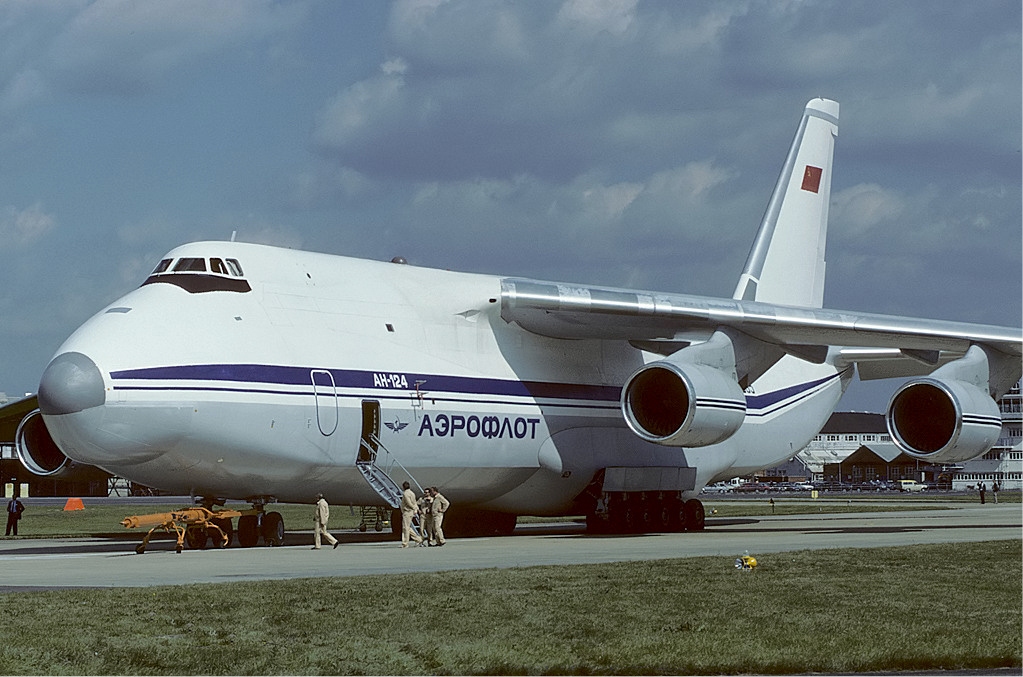



Design and key characteristics
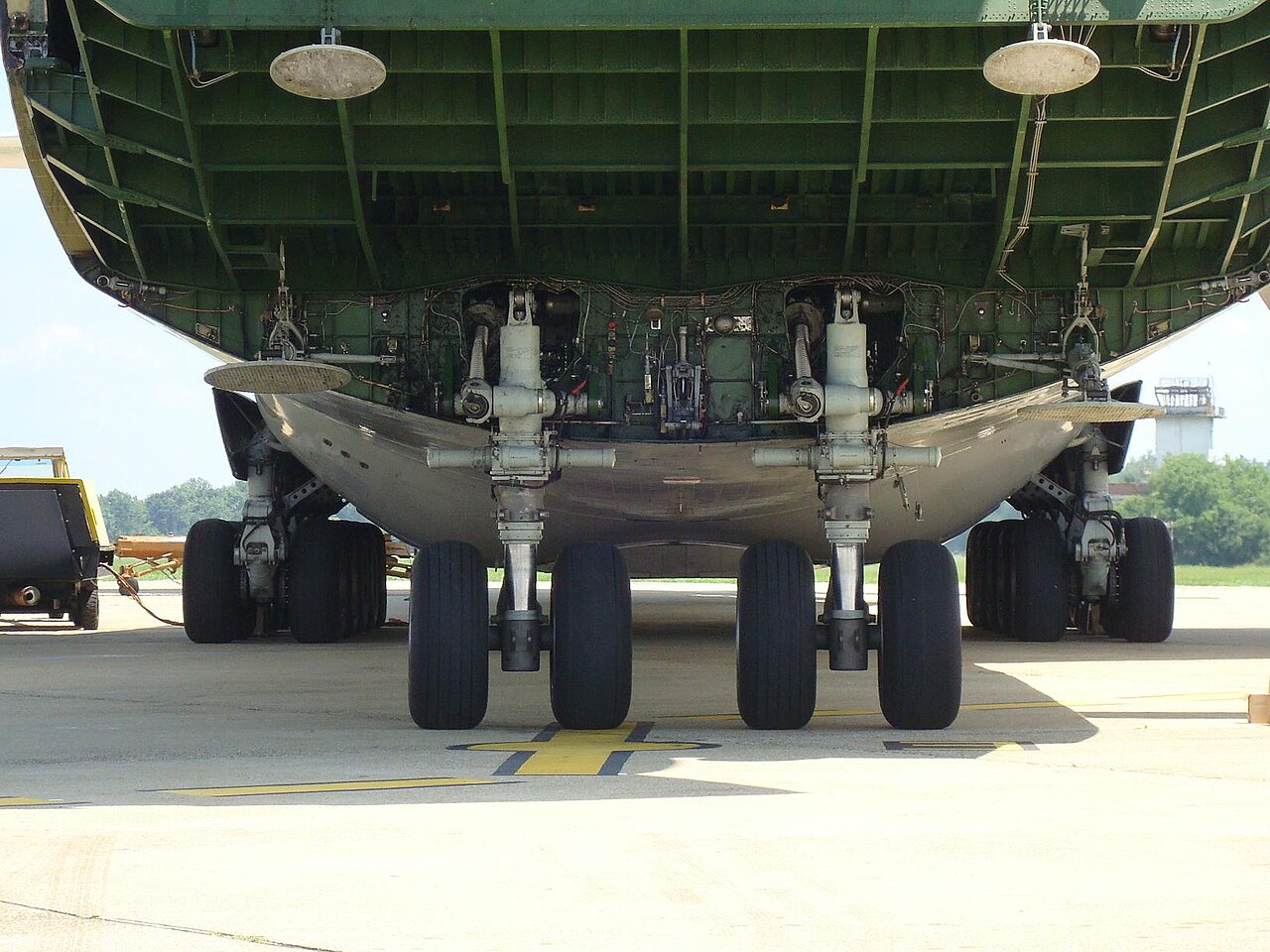
The An-124 combines features that make it suitable for specialized airlift tasks. Its fuselage is wide and tall relative to many transport aircraft, and the forward fuselage can be raised to form a nose ramp for direct loading. The landing gear is robust and distributed over many wheels to reduce the pressure on runways and to allow operations from semi‑prepared strips. The An-124 carries its load internally and is equipped with on‑board handling gear to move heavy items into position.
- Cargo access: Nose‑tilt and large cargo doors enable roll‑on/roll‑off and crane loading.
- Powerplant: Four high‑bypass turbofan engines provide the thrust needed for heavy payloads.
- Landing gear: Multi‑wheel bogies and a kneeling function assist in ground handling and distribute weight.
- Onboard equipment: Built‑in winches and cranes support self‑loading of bulky items.
History and development
Developed during the Cold War to meet the Soviet military's requirement for strategic mobility, the An-124 first flew in the early 1980s. It was produced by the Antonov bureau and built in facilities of the Ukrainian Soviet Socialist Republic. The design later served as the basis for an even larger derivative, the Antonov An-225, which extended the concept to exceptionally large single‑item loads. Following the end of the Cold War, several An-124s entered commercial service with civilian operators that specialized in outsized cargo transport.
Operational use and importance
The An-124 has been employed in a wide range of roles where ground transport is impractical or too slow. Typical missions include moving large industrial components, generators, construction machinery, and aircraft parts; supporting humanitarian relief efforts by airlifting relief supplies or equipment to disaster zones; and transporting military vehicles and helicopters. Because of its size and capabilities, the An-124 is often chartered for one‑off tasks that would otherwise require complex logistics or disassembly of cargo.
Variants, comparisons and notable facts
Several versions and modernizations of the An-124 exist, addressing avionics, cabin systems, and civil certification for international operation. The type is commonly compared with other strategic airlifters like the U.S. C-5 Galaxy and commercial heavy freighters; each design reflects different tradeoffs in payload, range and airport compatibility. The Antonov firm's work on the An-124 is closely associated with the broader legacy of Eastern European heavy transport aircraft and can be followed through resources published by Antonov.
Today, a limited number of An-124s remain in active service with military and civilian operators worldwide, prized for missions that require moving outsized and heavy items that few other aircraft can carry.
Tags
Related articles
Author
AlegsaOnline.com Antonov An-124 Ruslan Leandro Alegsa
URL: https://en.alegsaonline.com/art/4774