
Antonov An-24: Soviet twin‑engined regional transport aircraft
A rugged twin‑engined turboprop designed by Antonov for regional airline and military use, capable of operating from short or unprepared runways; produced in the USSR and licensed in China (Y‑7).
Overview
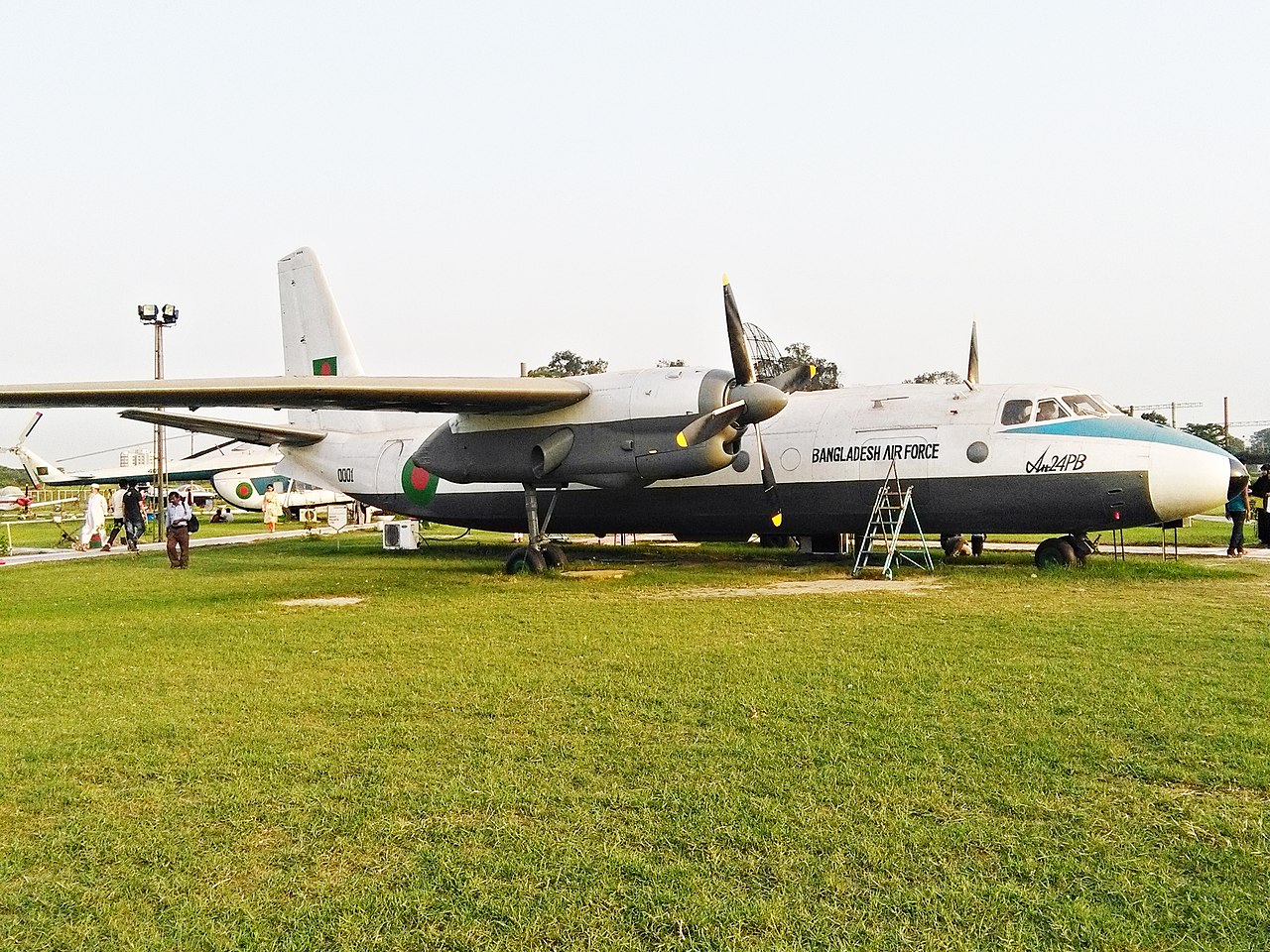
The Antonov An-24 is a twin‑engined turboprop regional transport aircraft developed by the Soviet design bureau Antonov. Built to serve short and medium‑range routes, the type was intended for reliable operation in harsh climates and from austere airfields. As a twin‑engined transport aircraft, it found use with both civilian airlines and military air forces, where its simple systems and rugged undercarriage proved valuable.
Image gallery
10 Images




Design and characteristics
The An-24 is a high‑wing monoplane with two turboprop engines mounted on the wing. Its configuration emphasizes short takeoff and landing capability; the airframe and landing gear are robust to tolerate rough runways and frequent operations. Typical service roles include passenger transport, freight, and specialized missions that require high payload flexibility.
- Wing and engines: high wing for ground clearance and good low‑speed handling; twin turboprops for reliability.
- Capacity and layout: configured for regional passenger loads or cargo; rear and nose loading depend on variant.
- Operational features: simple systems and easy maintenance suitable for remote bases (see design points).
History and development
Designed in the Soviet era to replace older piston transports, the An-24 entered production in the years following its initial flights in the late 1950s. The aircraft was produced in large numbers across Soviet factories and in Warsaw Pact countries. It was also produced under licence in China as the Shaanxi/Y-7 family, where local manufacturers completed production and support (Y‑7).
Variants and derivatives
Over time the basic An-24 airframe spawned numerous versions adapted for passenger, cargo, and military uses. One well known derivative is the An-26, a modernized military transport with a loading ramp and other changes for tactical airlift (An‑26). Many other subtypes modified avionics, powerplants, or internal arrangements to suit specific roles.
Operational use and legacy
The An-24's combination of reliability and ruggedness allowed it to remain in service for decades. It was widely operated across the Soviet Union, Eastern Europe, Asia, and parts of Africa and South America. While many operators have retired older examples in favor of newer regional turboprops and jets, the type continues to serve in remote areas where its ability to use short and unprepared runways is essential. Its long service life makes the An-24 an important chapter in postwar regional aviation and military transport history (STOL capability).
For further reading and technical summaries, consult archival sources or dedicated aircraft registries and restoration groups that track surviving airframes and their civil or military operators (Antonov, airline records, military listings, engine and propulsion notes, transport classifications, design analyses, Chinese licence production, derivative models).
Related articles
Author
AlegsaOnline.com Antonov An-24: Soviet twin‑engined regional transport aircraft Leandro Alegsa
URL: https://en.alegsaonline.com/art/4777