
Boeing 747: the wide-body 'Jumbo Jet' and its role in modern aviation
The Boeing 747 is a four-engine, wide-body airliner introduced in the late 1960s. Nicknamed the 'Jumbo Jet', it pioneered high-capacity long-haul travel and remains influential in passenger and cargo aviation.
Overview
The Boeing 747 is a four-engine, wide-body jet airliner developed by Boeing in the late 1960s. Famously nicknamed the "Jumbo Jet" and often called the "Queen of the Skies," the 747 is instantly recognisable by its pronounced upper deck or "hump" forward of the wings. As the first wide-body commercial aircraft, it introduced a new category of high-capacity, long-range air transport and became a cultural and technological icon of mass air travel for decades.
Image gallery
10 Images


Design and key characteristics
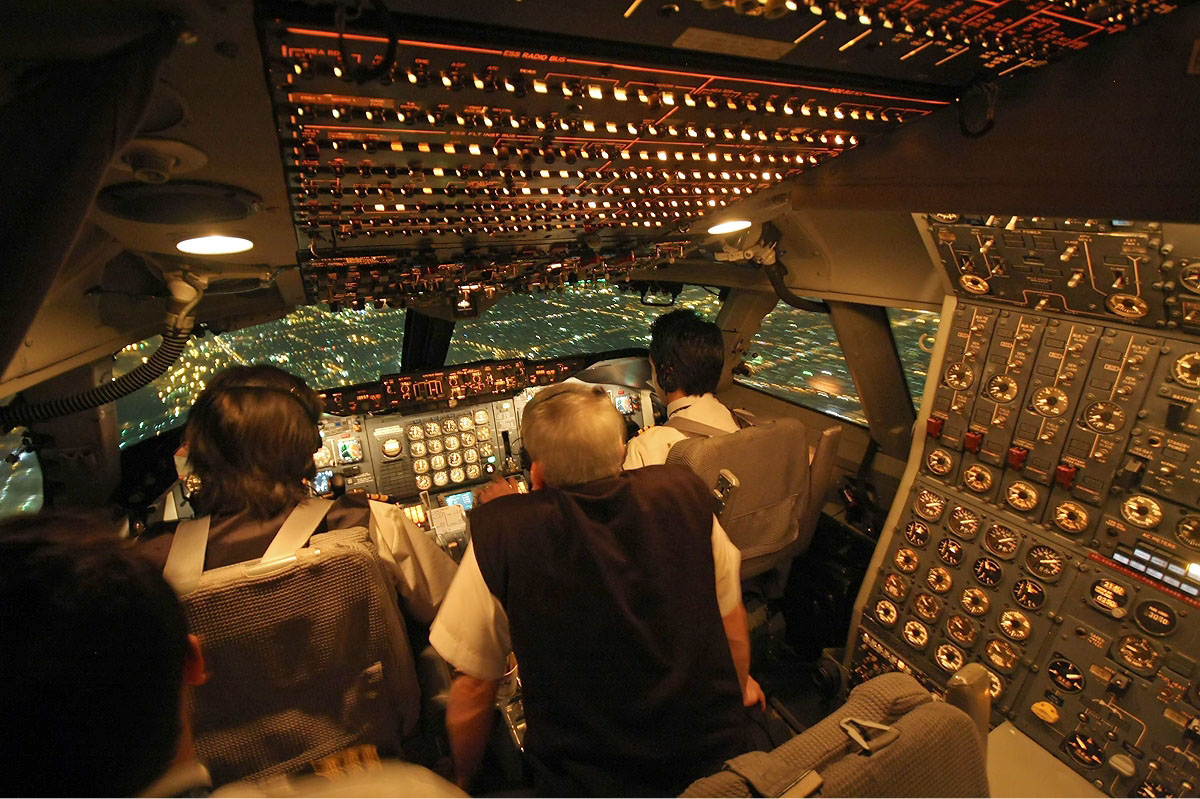
The 747 features a wide, twin-aisle fuselage and is powered by four high-bypass turbofan engines. Its partial second deck was originally conceived as a lounge or premium cabin area and to permit efficient conversion to a freighter by fitting a hinged nose cargo door. Early 747s carried a flight engineer in a three-person flight crew; later models adopted modern flight decks that reduced the required crew to two. The aircraft combined new structural and aerodynamic solutions for its size, including high-lift devices and a wing designed to balance cruise efficiency with good low-speed handling for airport operations.
Origins and commercial introduction
Conceived to meet rapidly growing demand for international jet travel, the 747 programme grew from an ambition to carry many more passengers than earlier jets such as the Boeing 707. The prototype first flew in 1969 and the type entered airline service in 1970 with carriers such as Pan Am. Its entry into service reshaped airline route planning and airport infrastructure, prompting new gate and apron designs to accommodate very large aircraft.
Variants and performance
Over decades the 747 family evolved through multiple variants. Early -100 and -200 models were followed by stretched and upgraded versions including the -300, the widely used 747-400, and the latest passenger stretch, the 747-8. The 747-400 became known for its long-range capability and cruise around Mach 0.85. Passenger versions, freighters, and combi layouts gave the family broad commercial flexibility.
Freight, special missions and continued relevance
One of the 747's enduring strengths has been its adaptability. Beyond scheduled passenger service it has served as a dedicated freighter, a cargo workhorse valued for its nose-loading capability, and as VIP or government transport. Modified 747s have carried heads of state and been used in special-mission roles, aerial refuelling conversions and other unique applications. While newer twin-engine designs offered improved fuel efficiency for many passenger routes, the 747 retained a niche where payload volume and specialized loading mattered.
Market expectations and legacy
Boeing originally designed the 747 with an eye to the possible rise of supersonic transport, anticipating that premium passengers might prefer faster aircraft; the ease of freight conversion was therefore a hedge against market change. This judgment balanced expectations about supersonic and subsonic air transport and proved important as the market evolved. When Airbus introduced the A380, it surpassed the 747 in passenger capacity, but the 747 remained influential in cargo and specialised roles.
Production, retirement and successors
Production of the 747 continued for many decades, with cumulative deliveries numbering in the low thousands by the early 21st century. Airlines began to retire some passenger 747s as more efficient twinjet long-haul types entered service and as airline economics shifted, but freighter demand and special uses have kept variants flying. Boeing and the industry have discussed future large-aircraft concepts and replacement strategies as technology and market needs evolve, and the 747's role in aviation history informs those designs.
Notable facts
- The 747 established a template for very large commercial aircraft and influenced airport design, passenger expectations and international travel patterns.
- Its distinctive hump and convertible nose make it one of the most recognisable aircraft ever built.
- Variants served a broad range of missions: passenger transport, express and bulk freight, governmental VIP transport and specialised conversions.
For readers seeking detailed technical specifications, production histories and operator lists, manufacturer publications and dedicated aviation references provide comprehensive variant data and operational records. The Boeing 747 remains a landmark in the story of commercial flight: a machine that combined technical ambition, commercial foresight and a capacity to adapt to changing markets and missions.
Additional reading: manufacturer pages and historical summaries provide variant comparisons, development timelines and explanations of design choices; see material linked to the manufacturer's history and specific models for further study.
Boeing corporate history | Early jetliners | Launch customers | Very large aircraft comparison | Supersonic concepts | Subsonic transport | 747-400 overview | Cruise speed context | 747-8 introduction
Questions and answers
Q: What is the Boeing 747?
A: The Boeing 747 is a jet airliner developed by Boeing in 1969. It is made by Boeing Commercial Airplanes and is often referred to as the Jumbo Jet or Queen of the Skies.
Q: When was the first type of 747 made?
A: The first type of 747 was two and a half times the size of the Boeing 707 and it made its first flight for an airline in 1970.
Q: How many people can it carry?
A: The Boeing 747 can carry more people than any other aircraft, up to 853 passengers. It held this record until the Airbus A380 was made.
Q: What else can it be used for besides carrying passengers?
A: The Boeing 747 can also be used to transport cargo and many other things due to its double deck design, which allows seats to be removed and replaced with a cargo door at the front of the plane.
Q: How popular has it been over time?
A: Initially, it was thought that only 400 planes would be sold but by 1993 1,000 had been produced and by September 2012 1,448 aircraft had been built with 81 still waiting to be built. This shows that despite predictions otherwise, it has remained popular over time.
Q: How fast does it usually fly?
A: The usual speed for a Boeing 747-400 is Mach 0.85–0.855 (up to 570 mph, 920 km/h).
Q: When will it eventually be replaced? A: The747 will eventually be replaced by theBoeing Y3 (part oftheBoeing Yellowstone Project).
Related articles
Author
AlegsaOnline.com Boeing 747: the wide-body 'Jumbo Jet' and its role in modern aviation Leandro Alegsa
URL: https://en.alegsaonline.com/art/12644
Sources
- boeing.com : Boeing 747 family -- The right choice for the large aircraft market.
- boeing.com : "Boeing Commercial Airplanes prices."
- video.google.com : "Great Planes-Boeing 747."
- time.com : "Pilot of the Jet Age."
- news.bbc.co.uk : "A380 superjumbo lands in Sydney."
- boeing.com : "Technical Characteristics – Boeing 747-400"
- boeing.com : "Boeing Multimedia Image Gallery 707"
- pbs.org : "Innovators: Juan Trippe."
- news.bbc.co.uk : "Air travel, a supersonic future?."
- infoplease.com : "Passenger Planes: Boeing 747."
- oea.larc.nasa.gov : "Lockheed C-5 Galaxy, Partners in Freedom."
- geae.com : "GE Aviation: CF6."
- memagazine.org : "Mechanical Engineering 100 Years of Flight."
- seattle.bizjournals.com : "Everett and Renton react differently to Boeing."