
Inn (river)
The Inn is a 518 km alpine river flowing from Switzerland through Austria into Germany. A right tributary of the Danube, it shapes the Engadin and Inntal valleys and supports towns, hydropower and recreation.
The Inn is a transnational river rising in the high Alps and flowing eastward for about 518 kilometres through three countries before joining the Danube. Its Latin name is Aenus and in Romansh it is known as En. The Inn has long been a defining physical and cultural corridor in central Europe, linking alpine headwaters with lowland river systems.
Image gallery
6 Images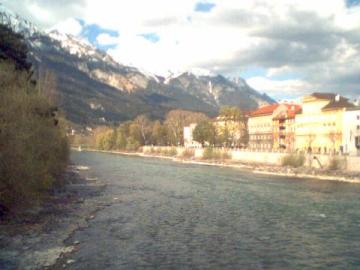


Course and main features
The headwaters originate in the high valleys of Switzerland, where glacial and snowmelt sources feed its upper reaches, and the river flows east through the Engadin basin. Entering Austria, it carves the broad Inntal (Inn Valley) and passes important urban centres such as Innsbruck. Further downstream the Inn forms part of the border region before crossing into Germany and meeting the Danube at Passau. The Inn is a right tributary of the Danube and contributes substantially to the latter's upper discharge.
Hydrology and ecology
Fed by alpine precipitation, snowmelt and glacier runoff, the Inn displays seasonal variability with higher flows in spring and early summer. In its course it alternates between steep, fast alpine stretches and wider, sediment-rich valley sections. This range of habitats supports diverse fish and bird populations and riparian vegetation typical of central European mountain rivers. Conservation efforts focus on maintaining water quality, preserving spawning grounds and restoring floodplain habitats where possible.
Human settlement and uses
- Settlement: Valleys along the Inn provided routes for trade and settlement; several towns grew around river crossings and bridges.
- Hydropower and regulation: The river is used for hydroelectricity and flow regulation, with dams and weirs present in parts of the basin to generate power and manage floods.
- Recreation and navigation: The Inn supports recreational activities such as rafting, canoeing, angling and riverside hiking; portions of the lower river have historically supported limited navigation.
Management and significance
Because the Inn crosses national boundaries, cooperative management between Switzerland, Austria and Germany is important for flood control, hydropower coordination and habitat conservation. Its role as a major alpine contributor to the Danube means that changes in the Inn basin—whether from climate, land use or infrastructure—have implications downstream as well as locally.
Today the Inn continues to shape landscapes, economies and cultural identities across the Engadin, the Tyrolean valley and Bavarian borderlands, combining natural value with significant practical uses.
Related articles
Author
AlegsaOnline.com Inn (river) Leandro Alegsa
URL: https://en.alegsaonline.com/art/47388