
Indonesia AirAsia Flight 8501
AirAsia Flight 8501, an Airbus A320, crashed into the Java Sea on 28 December 2014 en route from Surabaya to Singapore, killing all 162 on board; an investigation found technical faults and crew loss of control.
Overview: On 28 December 2014, Indonesia AirAsia Flight 8501, an Airbus A320 passenger service operated by AirAsia, disappeared from radar while climbing en route from Surabaya to Singapore. The aircraft lost contact with air traffic control about 42 minutes after takeoff. All 162 people on board—passengers and crew—were later confirmed dead after wreckage, bodies and personal effects began surfacing in the sea.
Image gallery
9 Images


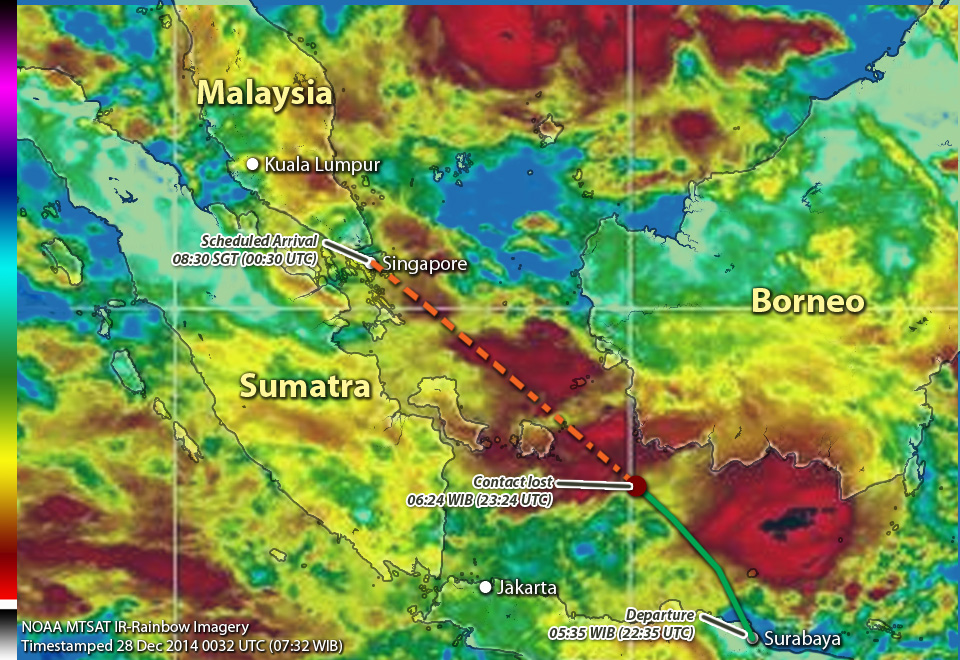

Flight details and location
The flight departed Juanda International Airport and was scheduled to arrive in Singapore. Weather in the region was affected by convective activity and thunderstorms, which complicated both the flight and subsequent search efforts. The wreckage was located in waters of the Java Sea and areas administered by Indonesian authorities near Borneo; search and recovery teams recovered debris and human remains in the days and weeks after the accident.
Aircraft and systems
The aircraft involved was an Airbus A320, a widely used short- to medium-range commercial jet. Investigators examined flight-control systems and components after recovering major sections of the fuselage and the flight recorders. Reports and later technical reviews highlighted a malfunction in components related to the aircraft’s rudder and flight-control computers. Maintenance records showed prior, recurring faults with the rudder system, reported multiple times earlier in the year.
Sequence of events and investigation
Search teams recovered the cockpit voice recorder and flight data recorder and worked with international agencies during the inquiry. The Indonesian National Transportation Safety Committee led the investigation with technical assistance from manufacturers and foreign safety bodies. Investigators traced a critical failure to a cracked solder joint on circuit boards that affected the rudder travel limiter and related flight-control units. That malfunction prompted repeated warning indications and non-normal system behavior, which, combined with adverse weather, preceded a loss of control.
Findings and conclusions
- The investigation identified a hardware defect—a cracked solder connection—that caused intermittent failures in the rudder and flight-control electronics.
- Maintenance records showed the rudder system had experienced recurrent faults earlier in the year, a factor examined in recommendations.
- Investigators concluded the accident resulted from a sequence of technical malfunctions together with inappropriate handling of the aircraft’s response by the crew, leading to aerodynamic stall and uncontrolled descent.
Aftermath, lessons and notable facts
The accident prompted safety recommendations aimed at improving inspection and repair standards for electronic components and at refining pilot training for handling repeated system warnings and upsets in adverse weather. The tragedy highlighted how a seemingly small hardware defect can cascade into a catastrophic event when combined with operational stressors. Coverage of the incident and its technical findings appeared in international media and transport safety reviews; recovered evidence and official reports informed changes to procedures among operators and manufacturers in the region. For more background and primary documents consult official reports and summaries produced by the investigating authority and participating technical organizations, and news coverage that followed the recovery of debris and remains.
Key references and context: contemporary reporting and the final investigative report are primary sources for the technical conclusions and recommended safety actions. Additional context about the airline, aircraft type and operating environment is available from aviation safety organizations and regulatory agencies involved in the response and follow-up. See airline notices and official statements for operational details and follow-up measures regarding fleet inspections and training initiatives.
Related topics and resources: airline operations and safety protocols (AirAsia), airport of origin (Surabaya), destination city (Singapore), weather impacts on flights (severe weather), accident location (Java Sea), national context (Indonesia), and recovery documentation (recovered debris).
Related articles
Author
AlegsaOnline.com Indonesia AirAsia Flight 8501 Leandro Alegsa
URL: https://en.alegsaonline.com/art/47200
Sources
- independent.co.uk : "AirAsia captain's behaviour 'very unusual' prior to QZ8501 crash, investigators learn"
- cbsnews.com : "Two more bodies found"
- theguardian.com : "AirAsia crash: crew lost control of plane after apparent misunderstanding"
- worldcat.org : 0261-3077
- bbc.com : "Flight QZ8501: What we know"
- edition.cnn.com : "Pilot response led to AirAsia crash into Java Sea - CNN"
- nytimes.com : "Crash of AirAsia Flight 8501 Spotlights Indonesia's Poor Air Safety Record"
- worldcat.org : 0362-4331