
Indohyus — an Eocene artiodactyl with semiaquatic adaptations linked to whales
Indohyus was a small, deerlike Eocene artiodactyl from Kashmir whose dense bones and skeletal traits link it to early whales, offering insight into the transition from land to water.
Overview
Indohyus was a small, deerlike mammal that lived in the Eocene, roughly 48–49 million years ago. Fossils come from deposits in Kashmir in what is today India. The genus belongs to the family Raoellidae, an extinct group of even-toed ungulates (artiodactyls). Although Indohyus was not a whale, skeletal and ecological evidence place it close to the ancestry of modern Cetacea, making it important for understanding how whales evolved from terrestrial mammals.
Image gallery
10 Images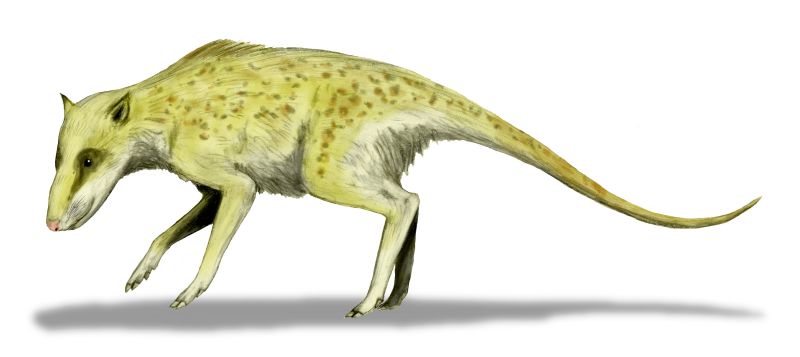


Anatomy and adaptations
About the size of a raccoon or small dog, Indohyus had a compact, ungulate body and limbs adapted for walking rather than for swimming. Its overall appearance has been described as deer-like, with herbivorous dentition. A distinctive feature was an increase in bone density (osteosclerosis) in the limbs and skull. Thickened cortical bone reduces buoyancy and is a common adaptation in animals that spend time submerged; modern analogues include the hippopotamus and some water-dwelling ungulates. These skeletal traits indicate that Indohyus engaged in frequent contact with water, even if it was not a specialized swimmer.
Behavior, habitat and ecology
Interpretations of the fossil evidence suggest Indohyus inhabited freshwater or nearshore environments such as river margins, lakeshores or marshes. Its heavy bones would have helped it remain submerged at shallow depths, a strategy seen in living species like the water chevrotain that dive to hide from predators. Dental wear patterns and jaw morphology indicate a primarily plant-based diet. Indohyus likely used water both as a refuge from aerial or terrestrial predators and as part of its general foraging habitat.
Evolutionary significance
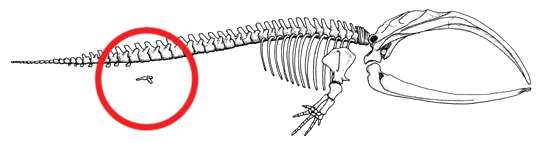
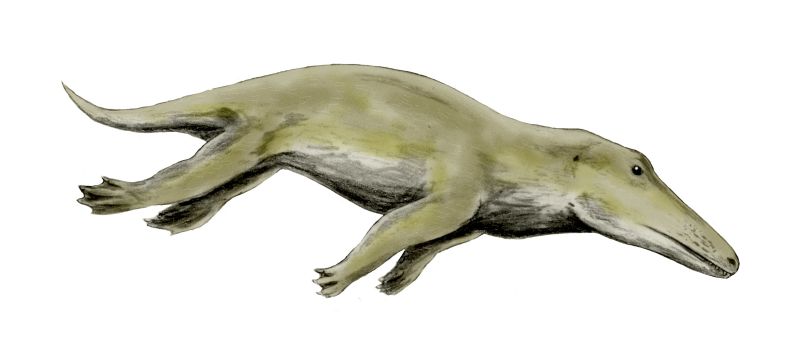
Indohyus is significant because it provides a morphological link between terrestrial artiodactyls and early cetaceans. Its combination of artiodactyl characteristics and semiaquatic adaptations supports a model in which the ancestors of whales passed through a semiaquatic stage before becoming fully aquatic. Indohyus lived at the same time as early cetacean relatives such as Pakicetus, and its fossils complement molecular and anatomical evidence that modern whales share a common ancestry with even-toed ungulates.
Discovery, species and notable facts
Specimens of Indohyus were described from Eocene strata in the Indian subcontinent in the early 21st century, and the genus has attracted attention because of its implications for cetacean origins. Paleontologists have recognized more than one species within the genus based on differences in size and skeletal details; these species indicate that members of this group occupied a range of ecologies in Eocene Asian environments. The name itself has been explained as a compound referring to India and a piglike aspect (pig), reflecting comparative anatomy rather than diet or precise relationships.
Key features and distinctions
- Small body size, roughly raccoon- to cat-sized.
- Herbivorous teeth and ungulate limb structure.
- Increased bone density (osteosclerosis) consistent with shallow-water submergence.
- Placement in Raoellidae, a group closely related to early cetaceans.
- Coexistence in time and region with early cetacean forms such as Pakicetus.
Indohyus is a reminder that the transition from land to sea was complex and involved intermediate, partly aquatic stages. Although not a direct ancestor of all modern whales, it represents a branch of artiodactyls that illustrates how changes in habitat and skeletal structure set the stage for the evolution of fully aquatic cetaceans.
Related articles
Author
AlegsaOnline.com Indohyus — an Eocene artiodactyl with semiaquatic adaptations linked to whales Leandro Alegsa
URL: https://en.alegsaonline.com/art/47199
Sources
- sciencedaily.com : "UC Berkeley: French scientists find missing link between the whale and its closest relative, the hippo"
- sciencedaily.com : "New fossils suggest whales and hippos are close kin"
- scienceblogs.com : "The loom: whales: from so humble a beginning"
- guardian.co.uk : "Whales may be descended from a small deer-like animal"
- scienceblogs.com : "Pharyngula: Indohyus"