
Indo-Pakistani War of 1971
A concise, neutral overview of the 1971 conflict between India and Pakistan that led to the creation of Bangladesh, its causes, major events, and lasting consequences.
The Indo-Pakistani War of 1971 was a brief but consequential armed conflict between India and Pakistan that culminated in the emergence of the independent state of Bangladesh. Fought across eastern and western theaters, the most decisive operations took place in the east and concluded with the surrender of Pakistani forces there on 16 December 1971. The campaign reshaped regional politics in South Asia and left a lasting humanitarian and diplomatic legacy.
Image gallery
10 Images


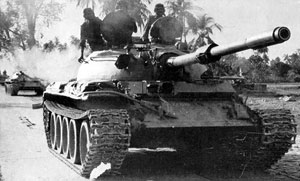
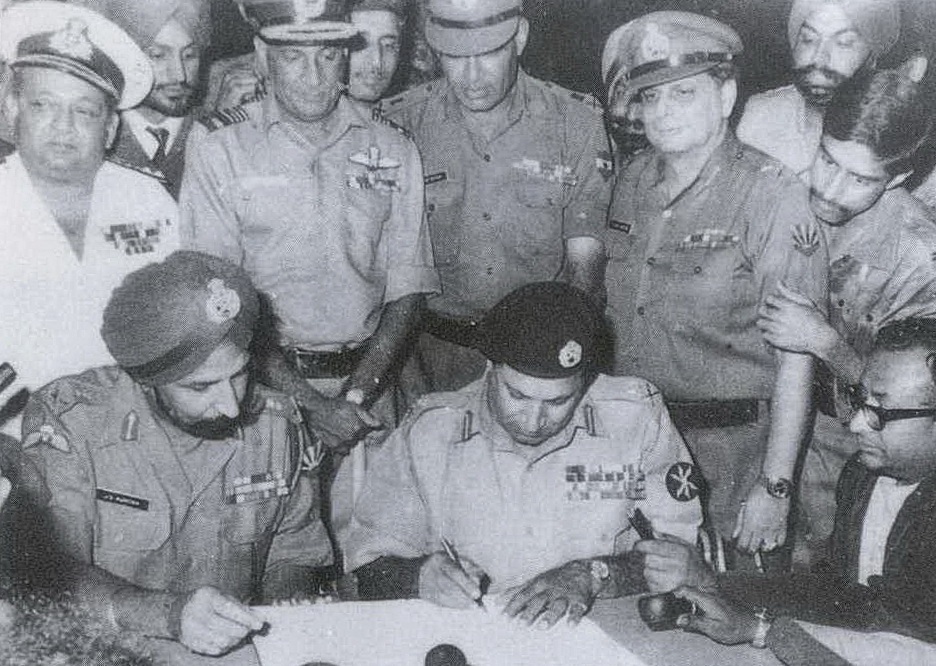


Overview
Hostilities formally began in early December 1971 and are commonly described as lasting just under two weeks, making the confrontation one of the shortest conventional wars of the twentieth century. Although combat occurred on more than one front, the military focus and the principal political outcome were centered on East Pakistan (present-day Bangladesh), where a popular insurgency and civil conflict preceded large-scale Indian intervention.
Causes and context
- Political breakdown: Longstanding political and economic grievances between East and West Pakistan culminated in contested elections and a refusal by West Pakistani authorities to transfer power in 1970.
- Civil conflict and repression: The Pakistani military launched a violent campaign to suppress dissent in East Pakistan in March 1971, precipitating mass displacement and international concern.
- Refugee crisis: Millions of people fled from the conflict zone into neighboring India, creating a major humanitarian and security burden that influenced Indian policy.
- International alignment: The conflict took place against Cold War alignments; India had developed close ties with the Soviet Union, while Pakistan maintained relationships with the United States and China.
Course of the conflict
Fighting encompassed air, land and naval operations. Pakistan launched limited air strikes against Indian airfields on 3 December 1971, following which India formally entered the war and opened a full-scale military campaign in the east. Indian forces, often operating alongside local Bengali guerrilla units, moved rapidly to isolate and defeat Pakistani garrisons. Intense battles occurred over key towns, ports and lines of communication. In the western sector, clashes and artillery engagements continued but did not yield the same decisive political outcome as the eastern campaign. The eastern theater ended with the formal Instrument of Surrender signed by Pakistani Eastern Command on 16 December 1971.
Consequences and legacy
The immediate and most visible outcome was the creation of Bangladesh as an independent nation, a major redraw of South Asian boundaries. India’s military success led to the capture of many Pakistani military personnel and civilian internees; contemporary reports and subsequent accounts cite tens of thousands taken into custody by Indian forces — figures often given in the range of approximately 90,000 to 100,000 prisoners of war and internees (see related accounts). The conflict also produced a large humanitarian crisis, with significant civilian casualties and widespread displacement.
Politically, the 1971 war altered regional alliances and perceptions. It strengthened Indo-Soviet ties, complicated Pakistan’s relations with some Western partners, and influenced later diplomatic initiatives in South Asia. Military historians often note the 1971 surrender as one of the largest capitulations in the post‑World War II era. The war’s memory continues to shape national narratives in India, Pakistan and Bangladesh, and it remains a subject of study for its operational, humanitarian and diplomatic dimensions. For further context on the new state formed from East Pakistan, see Bangladesh.
Questions and answers
Q: What was the Indo-Pakistani War of 1971?
A: The Indo-Pakistani War of 1971 was a military conflict between India and Pakistan.
Q: How long did the war last?
A: The war lasted just 13 days.
Q: Where did the Indian and Pakistani forces fight during the war?
A: The Indian and Pakistani forces fought on the eastern and western fronts.
Q: When did the war effectively end?
A: The war effectively came to an end after the Eastern Command of the Pakistani Armed Forces signed the Instrument of Surrender (1971) on December 16, 1971.
Q: What happened after the surrender?
A: After the surrender, East Pakistan seceded as the independent state of Bangladesh.
Q: How many West Pakistanis were taken as prisoners of war by India?
A: Around 97,368 West Pakistanis who were in East Pakistan at the time of its independence, including some 79,700 Pakistan Army soldiers and paramilitary personnel and 12,500 civilians, were taken as prisoners of war by India.
Q: Is the Indo-Pakistani War of 1971 considered one of the shortest wars in history?
A: Yes, the Indo-Pakistani War of 1971 is considered one of the shortest wars in history.
Related articles
Author
AlegsaOnline.com Indo-Pakistani War of 1971 Leandro Alegsa
URL: https://en.alegsaonline.com/art/47196
Sources
- time.com : The World: India: Easy Victory, Uneasy Peace
- english.pravda.ru : World’s shortest war lasted for only 45 minutes
- subcontinent.com : subcontinent.com/1971war/surrender.html
- sify.com : 1971 War: 'I will give you 30 minutes'
- books.google.com : Pakistan: Between Mosque and Military
- theworldreporter.com : "1971 India Pakistan War: Role of Russia, China, America and Britain"
- state.gov : "Foreign Relations, 1969–1976, Volume E-7, Documents on South Asia, 1969–1972"
- coat.ncf.ca : "The Men Behind Yahya in the Indo-Pak War of 1971"
- time.com : "The U.S.: A Policy in Shambles"
- books.google.com : The flawed architect: Henry Kissinger and American foreign policy
- select.nytimes.com : "Mr. Nixon and South Asia"
- rediff.com : 1971 War: How the US tried to corner India
- frontierindia.net : frontierindia.net
- bharat-rakshak.com : "Cold war games"
- indianexpress.com : Birth of a nation