
Imitation of Life (1959 film)
Douglas Sirk's 1959 Technicolor melodrama about motherhood, ambition and race, adapted from Fannie Hurst's novel and notable for its performances, style and exploration of identity.
Overview
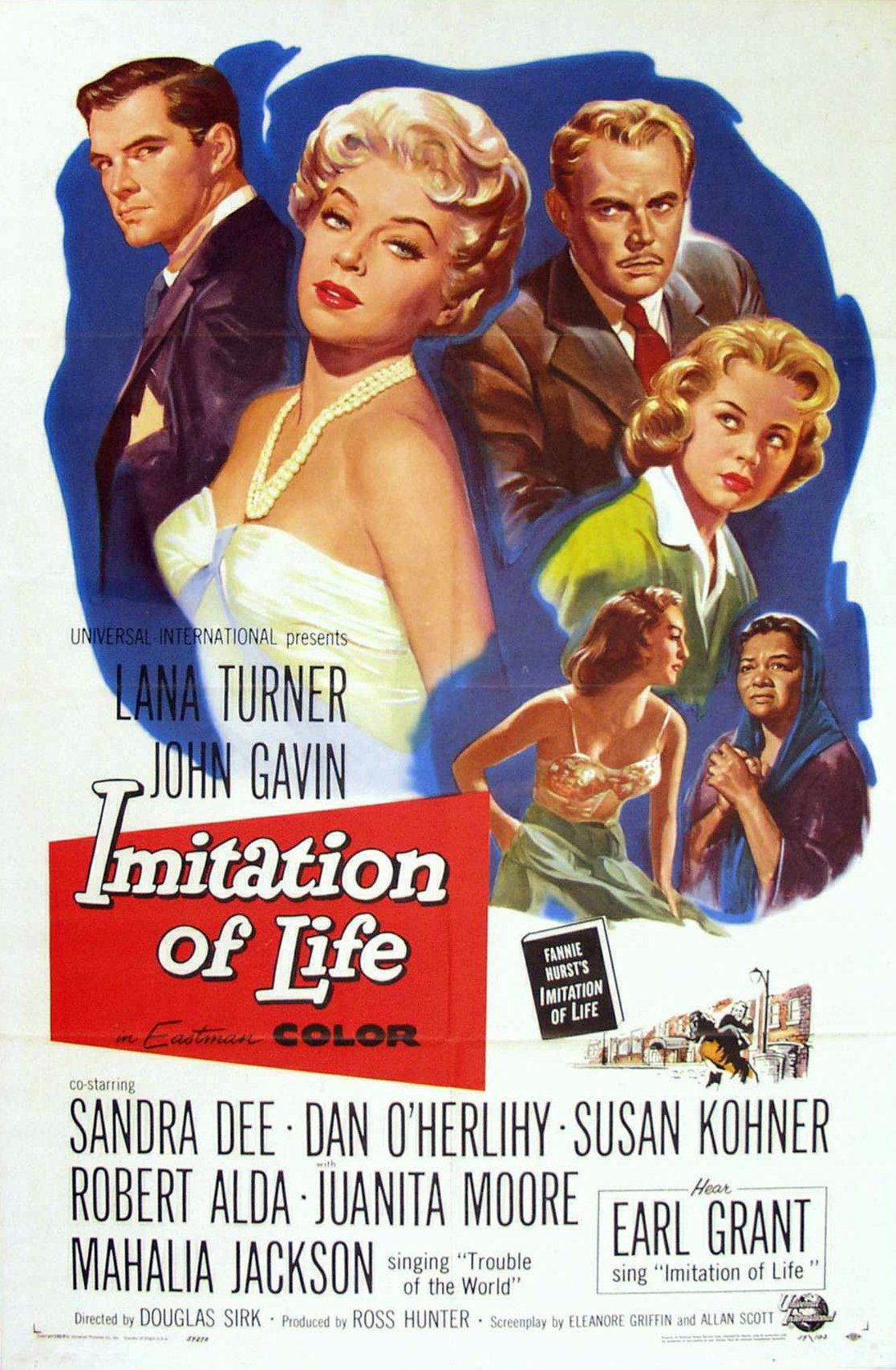
Imitation of Life is a 1959 American romantic drama film directed by Douglas Sirk. Released in 1959, it was produced by Ross Hunter and distributed by Universal Pictures. The screenplay adapts a popular novel and presents an interwoven tale of two mothers and their daughters, following careers, personal ambitions and the social pressures that shape their lives.
Image gallery
5 Images


Cast and production
The film features a principal cast that includes leading stars and notable supporting performances. Key credited performers are listed below:
- Lana Turner as one of the central mothers
- John Gavin in a romantic role
- Juanita Moore in a pivotal supporting part
- Susan Kohner as a daughter whose story explores race and identity
- Sandra Dee among the younger ensemble
The movie is based on a novel by Fannie Hurst and is a Technicolor remake of an earlier screen adaptation. Production emphasized polished visuals and carefully staged melodramatic sequences typical of Sirk's work.
Themes and narrative
At its core the story examines motherhood, ambition, friendship and the social boundaries of race and class in mid-20th-century America. One subplot, often remarked upon by critics, concerns a light-skinned Black character who attempts to pass as white, a narrative thread that foregrounds questions of identity, belonging and the costs of assimilation. Sirk's direction frames these themes with heightened emotion, vivid color palettes and a glossy domestic surface that contrasts with the characters' inner struggles.
Reception and legacy
Upon release the film drew wide public attention and prompted strong reactions from both popular and critical audiences. It has been reassessed over time for its visual style, performances and its frank portrayal of sensitive social issues. While contemporary viewers often debate its melodramatic tone and period attitudes, the picture is regularly discussed in surveys of American studio melodrama and is taught as an example of how mainstream cinema confronted race and gender in the 1950s.
Notable facts
Imitation of Life traces its origins to a 1930s novel and earlier screen version; the 1959 production expanded the story's scale and color. The film's combination of star casting, strong production values and controversial subject matter has kept it in public conversation, and it remains a frequent subject of film studies, retrospectives and reference works on Hollywood melodrama. For more information about the novel and earlier adaptation see source novel and prior film.
Related articles
Author
AlegsaOnline.com Imitation of Life (1959 film) Leandro Alegsa
URL: https://en.alegsaonline.com/art/46833