
In Old Arizona (1928 film)
1928 American Western directed by Irving Cummings, featuring Warner Baxter as the Cisco Kid. An early sound Western shot on location, it earned multiple Academy Award nominations and won Best Actor in 1930.
Overview
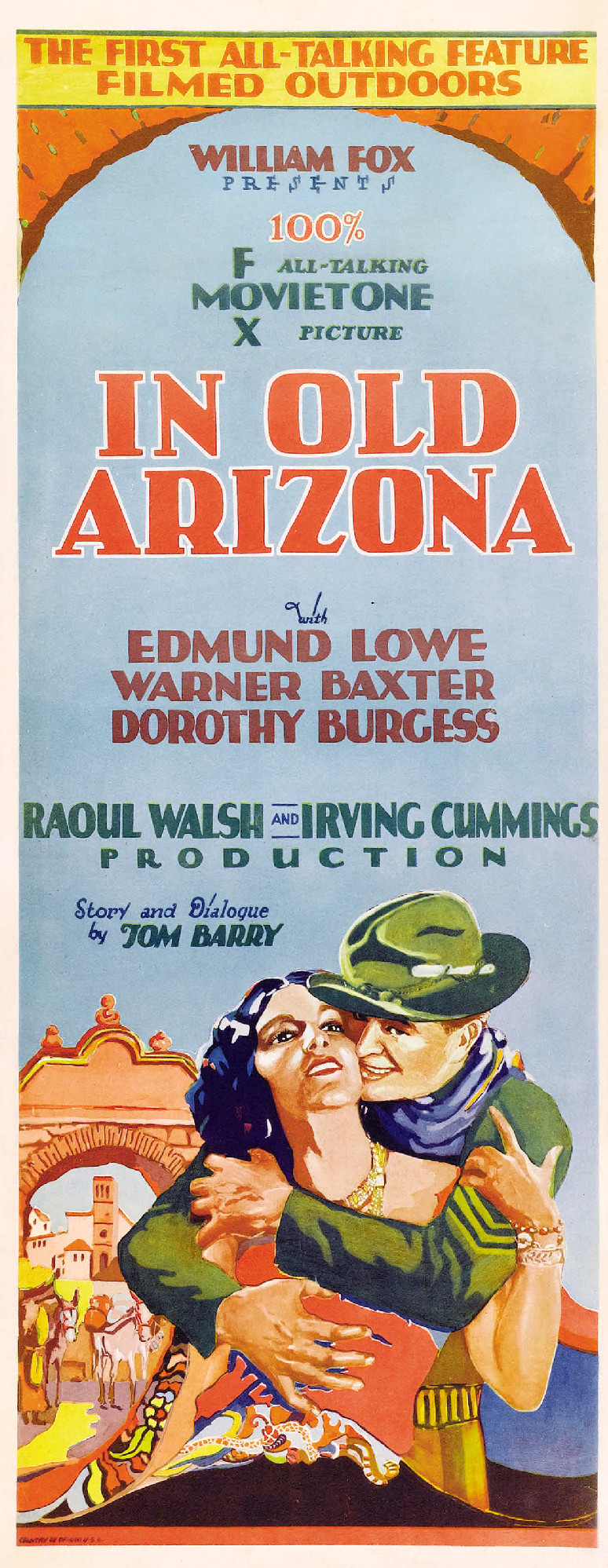
In Old Arizona is a 1928 American Western directed by Irving Cummings. The picture introduced mainstream audiences to a sound-era cinematic take on the borderland outlaw hero known as the Cisco Kid, and it played an important role in the transition from silent pictures to talking pictures in the Western genre. The film was produced by Fox Film Corporation, which later became part of 20th Century Fox.
Image gallery
2 Images
Key characteristics
The movie is notable for being one of the early Westerns to use synchronized sound while shooting significant material outdoors rather than on studio stages. Its blend of location photography, dialogue, music and ambient sound helped establish techniques for future talkies. The production emphasizes action, romance and the cultural crosscurrents of the American Southwest and northern Mexico.
Plot and themes
At its core the story follows the charismatic outlaw figure of the Cisco Kid, a roguish but sympathetic bandit operating in the borderlands. The narrative mixes pursuit and law enforcement tensions with a romantic subplot and elements of honor, loyalty and identity. While rooted in pulp and popular adventure traditions, the film also explores cultural encounters on the frontier.
Principal cast and crew
- Director: Irving Cummings
- Leading actor: Warner Baxter (as the Cisco Kid)
- Supporting cast includes Edmund Lowe and Dorothy Burgess
- Produced by: Fox Film Corporation (later part of 20th Century Fox)
Awards and reception
The film received critical attention on release and was nominated for multiple Academy Awards at the ceremony held in 1930. It earned five nominations in total, and Warner Baxter won the Academy Award for Best Actor for his portrayal of the Cisco Kid. Critics and historians often cite the film for its achievements during the industry’s early sound era.
Legacy and notable facts
In Old Arizona helped popularize the Cisco Kid character in cinema and established a model for later sound Westerns filmed on location. Its technical accomplishments and Baxter’s award-winning performance secured the picture a place in early Hollywood history, and it remains a referenced example when discussing the shift from silent filmmaking to the sound era.
Related articles
Author
AlegsaOnline.com In Old Arizona (1928 film) Leandro Alegsa
URL: https://en.alegsaonline.com/art/46942