
In the Realm of the Senses (1976) — film overview and controversies
A comprehensive overview of Nagisa Oshima's In the Realm of the Senses: its content, historical basis, production, censorship history, critical reception and cultural legacy.
Overview
In the Realm of the Senses is a feature film directed by Nagisa Oshima that first reached the public in the mid-1970s, appearing in some territories in 1976 and in others in 1977. The film is a dramatized, adult-oriented depiction set in 1930s Japan that explores an obsessive sexual relationship. Its frank depiction of sexual acts and intimacy was unprecedented for a mainstream art film of that era and remains central to how the work is discussed.
Image gallery
1 Image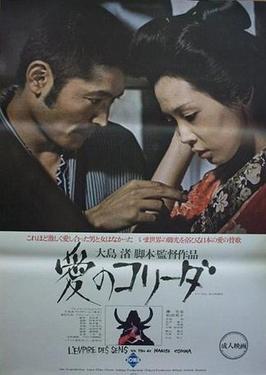
Subject matter and production
The story draws on the real-life case of Sada Abe, a 1930s incident that has entered popular and scholarly discussion as a complex mixture of eroticism, crime and social taboos. Oshima approached the material as both a psychological study and a provocation, using restrained period detail alongside intensely explicit scenes. The film was a co-production involving Japanese and European producers and was shot with an art-house sensibility rather than as exploitative pornography.
Historical basis
The connection to the Sada Abe incident gives the film a grounding in a notorious episode of modern Japanese history. Oshima and others have framed the narrative as a way to examine desire, power and modernity in interwar Japan rather than offer a literal reconstruction of events. For further context on release timing and production notes see release information and alternate release details.
Censorship, ratings and reception
Upon release the film generated intense controversy: it was banned or heavily edited in several countries and provoked legal and moral debates about the limits of cinematic representation. In the United States the work was associated with the X rating in an era when that label covered a broad range of adult films; when the Motion Picture Association introduced NC-17 in 1990 it supplanted the older X classification for adult-oriented art films. The censorship history is summarized by commentators as central to its legacy and ongoing interest; see discussions of the controversy here.
Themes, critical response and legacy
Critics and scholars have argued the film raises questions about obsession, consent, the line between artistic expression and pornography, and the cultural anxieties of its setting. While some praised its formal inventiveness and psychological intensity, others condemned its explicitness and moral implications. Commercial availability varied widely: theatrical showings were limited in many markets, and broader home video circulation did not occur until around the late 1980s and early 1990s. For background on the underlying case and cultural resonance consult related historical material.
Notable distinctions
- Often cited as a landmark in art-house cinema because of its frank sexual content and serious artistic intent.
- Provoked legal and cultural debates about censorship, obscenity law and film classification internationally.
- Remains studied for its intersections of biography, national history and cinematic form.
Related articles
Author
AlegsaOnline.com In the Realm of the Senses (1976) — film overview and controversies Leandro Alegsa
URL: https://en.alegsaonline.com/art/46959