
In a Lonely Place (1950 film)
1950 romantic drama with noir overtones directed by Nicholas Ray, starring Humphrey Bogart and Gloria Grahame. Adapted from Dorothy B. Hughes's novel, it explores suspicion, violence, and a fragile love.
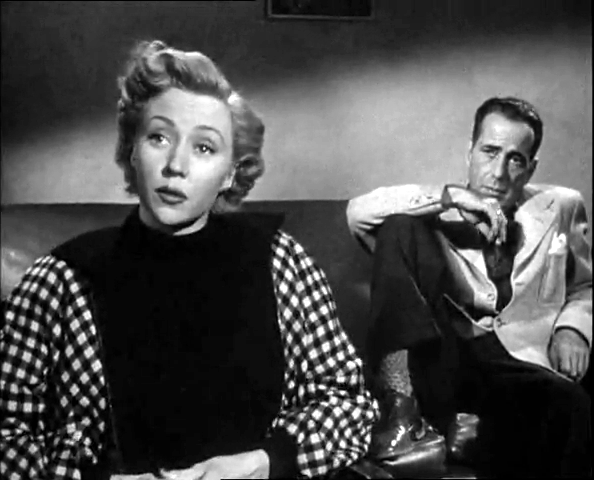
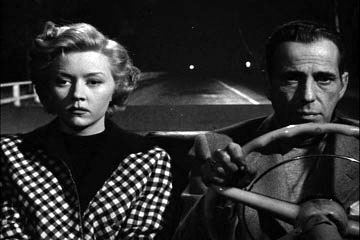
In a Lonely Place is a 1950 American romantic drama with strong film-noir elements, directed by Nicholas Ray and adapted from Dorothy B. Hughes's 1947 novel. The movie stars Humphrey Bogart and Gloria Grahame, supported by Frank Lovejoy and Martha Stewart, and was released by Columbia Pictures. Though often grouped with noir classics, the film places its emphasis on character psychology and a troubled relationship rather than conventional detective plotting.
Image gallery
6 Images



Synopsis
The story follows Dixon Steele, a temperamental Hollywood screenwriter whose volatile behavior increasingly alarms those close to him. He meets Laurel Gray, an attractive neighbor, and the two begin a tentative romance that promises stability. Their bond is strained, however, when a murder nearby draws police attention and public suspicion, exposing Dixon's past and the fragility of trust in intimate relationships. The film keeps the question of guilt and innocence deliberately ambiguous, making interpersonal tension its driving force.
Characters and performances
Humphrey Bogart plays a version of himself that subverts his usual tough-guy image: here he is moody, insecure and potentially dangerous. Gloria Grahame's Laurel is warm yet wary, providing a counterpoint to Dixon's inner turmoil. The supporting cast reinforces the atmosphere of suspicion. Critics and scholars often single out the chemistry between the leads and Bogart's quietly menacing performance as central to the film's enduring power.
Themes and style
Nicholas Ray employs intimate framing, shadowed interiors and restrained pacing to explore themes of alienation, masculinity and the social consequences of violence. Rather than relying on plot twists, the film builds suspense through character-driven scenes and silences. It blends romance and noir to ask how personal demons and public scrutiny can corrode love and reputation.
Production, adaptation and differences
The screenplay alters several aspects of Dorothy B. Hughes's novel, shifting emphasis from a straightforward thriller to a psychological study of its protagonist. Studio dynamics and the era's filmmaking conventions influenced casting and tone, while the film's pared-down approach left room for moral ambiguity. Columbia Pictures handled distribution during a period when studios often reshaped literary sources for the screen.
Reception and legacy
Initial reactions to the film were mixed, but over time it has been reappraised as one of the more sophisticated American films to blend romantic melodrama with noir sensibilities. Film historians note its influence on character-focused dramas that question heroic archetypes. For further reading and archival information see studio or director-focused resources and retrospectives that discuss its place in mid-20th-century American cinema.
- Genre: romantic drama with film-noir characteristics
- Notable for: Bogart's atypical role and director-driven psychological focus
- Adaptation: based on Dorothy B. Hughes's novel (1947), revised for screen
For biographies, production details and contemporary criticism consult resources on Nicholas Ray, the career of Humphrey Bogart, and Columbia Pictures histories via studio archives and film study collections.
Related articles
Author
AlegsaOnline.com In a Lonely Place (1950 film) Leandro Alegsa
URL: https://en.alegsaonline.com/art/46931