
Iceberg: formation, structure, types, hazards and ecological role
Large floating masses of freshwater ice that calve from glaciers or ice shelves; most of their volume lies underwater, they shape polar ecosystems and pose navigation hazards.
An iceberg is a large mass of freshwater ice that has broken away from a glacier or an ice shelf and floats in the ocean. Icebergs originate in polar and subpolar regions and range in size from small chunks a few metres across to immense tabular blocks stretching kilometres. Because the density of ice is lower than seawater, roughly nine tenths of an iceberg's volume is submerged; the visible portion above the surface can be misleading about the true size and shape beneath the waves. Floating ice such as an iceberg therefore presents both scientific interest and practical hazards.
Image gallery
10 Images

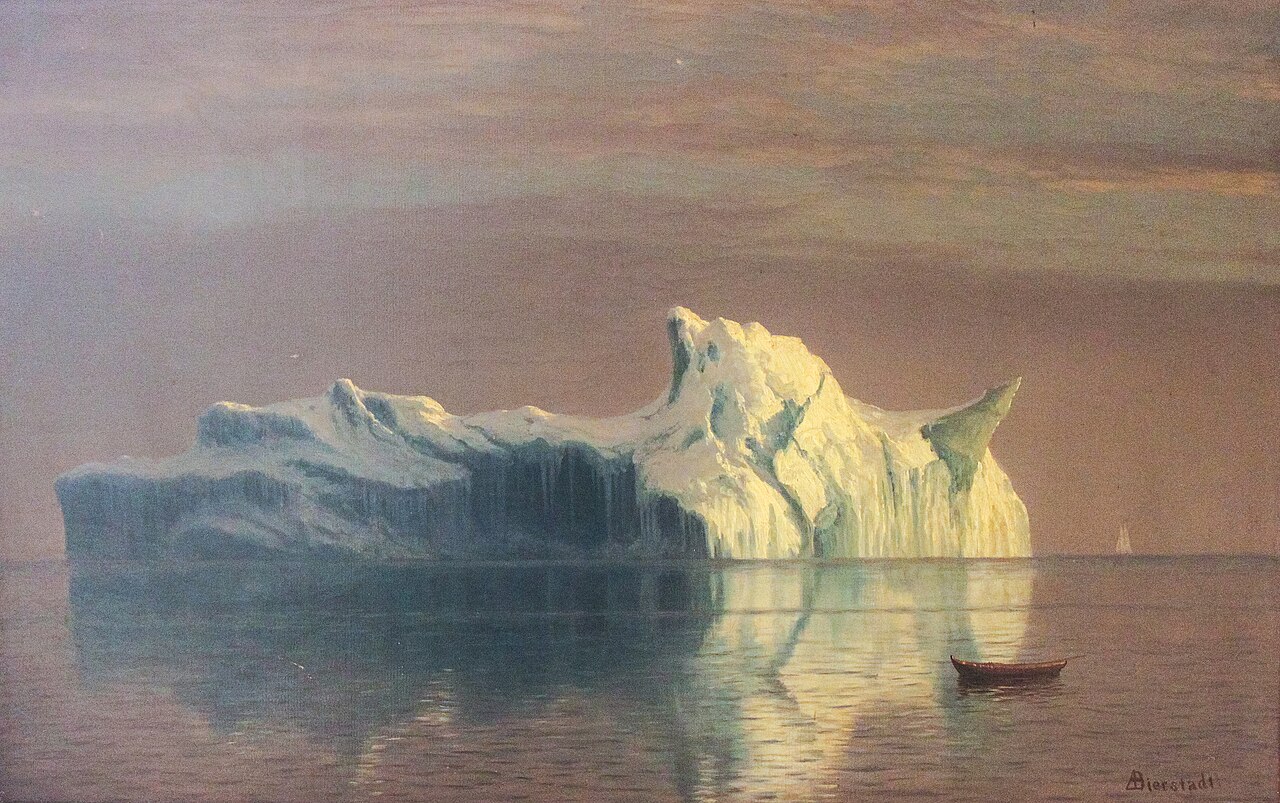


Formation and life cycle
Icebergs form when glacier ice flows to a coast and detaches in a process called calving. Snow accumulation over many years compacts into glacial ice, which slowly moves under gravity toward the sea. When the front of a glacier, or an ice shelf that extends over the ocean, becomes unstable it can fracture and release blocks of ice. Once afloat, icebergs are reshaped by waves, melt and mechanical break-up; lighter portions may break into smaller "bergies" and "growlers". They can drift for months or years, carried by currents and winds, gradually losing mass until they melt completely.
Characteristics and types
Icebergs vary in form and origin. Two broad categories are often used: tabular icebergs have flat tops and steep sides and are common where large ice shelves calve, while non-tabular icebergs are irregular or peaked and typically calve from mountain glaciers. Size descriptors include bergy bits and growlers for small fragments. Key physical traits are size, freeboard (height above water), underwater keel shape and internal structure, which may include layers from seasonal snow and trapped air bubbles that affect buoyancy and stability. For a basic reference see sea and marine ice resources.
Historical and geographical distribution
Icebergs are most abundant near Greenland in the North Atlantic and around Antarctica in the Southern Ocean, though they can be found in other high-latitude seas when conditions allow. The North Atlantic shipping lanes historically experienced iceberg hazards from Greenland-origin ice carried south by the Labrador Current; the 1912 sinking of the RMS Titanic after a collision with an iceberg led to coordinated monitoring efforts. Today, organizations and research services still track iceberg movements to warn ships and offshore installations. For regional information see resources on the Arctic and the Antarctic.
Importance and impacts
Icebergs influence climate, oceanography and ecology. As they melt they release cold freshwater, which can modify local salinity and stratification and affect circulation patterns and sea-ice formation. They transport minerals and nutrients that fertilize near-surface waters, sometimes enhancing local biological productivity and supporting food webs from microbes to larger fauna. On the negative side, icebergs pose collision risks to ships, oil platforms and fishing gear; modern monitoring combines aerial reconnaissance, ship reports and satellite imagery to reduce accidents. Historical and practical approaches to monitoring are summarized by agencies concerned with navigation safety and polar research. For background on ice sources, consult materials about glaciers and ice shelves.
Distinctive facts and human interaction
- Most of an iceberg's mass lies below the surface; the commonly cited ratio is about 90% submerged.
- Different shapes and sizes arise from the calving process, subsequent melting and wave erosion.
- Icebergs act as mobile freshwater reservoirs and can affect local ecosystems over the months they persist.
- Iceberg monitoring uses satellites, radar, aerial patrols and oceanographic models to forecast drift and decay.
Studying icebergs helps scientists understand glacier dynamics, polar ocean processes and climate change, while practical tracking protects lives and commerce. These large, often dramatic blocks of ice remain an important link between the land-based ice of glaciers and the open ocean environment.
Related articles
Author
AlegsaOnline.com Iceberg: formation, structure, types, hazards and ecological role Leandro Alegsa
URL: https://en.alegsaonline.com/art/46441