
Ice shelf
A large, thick plate of ice formed where a glacier or ice sheet reaches the sea and floats or rests on the coastline; key to ice‑sheet stability, ocean interactions, and sea‑level dynamics.
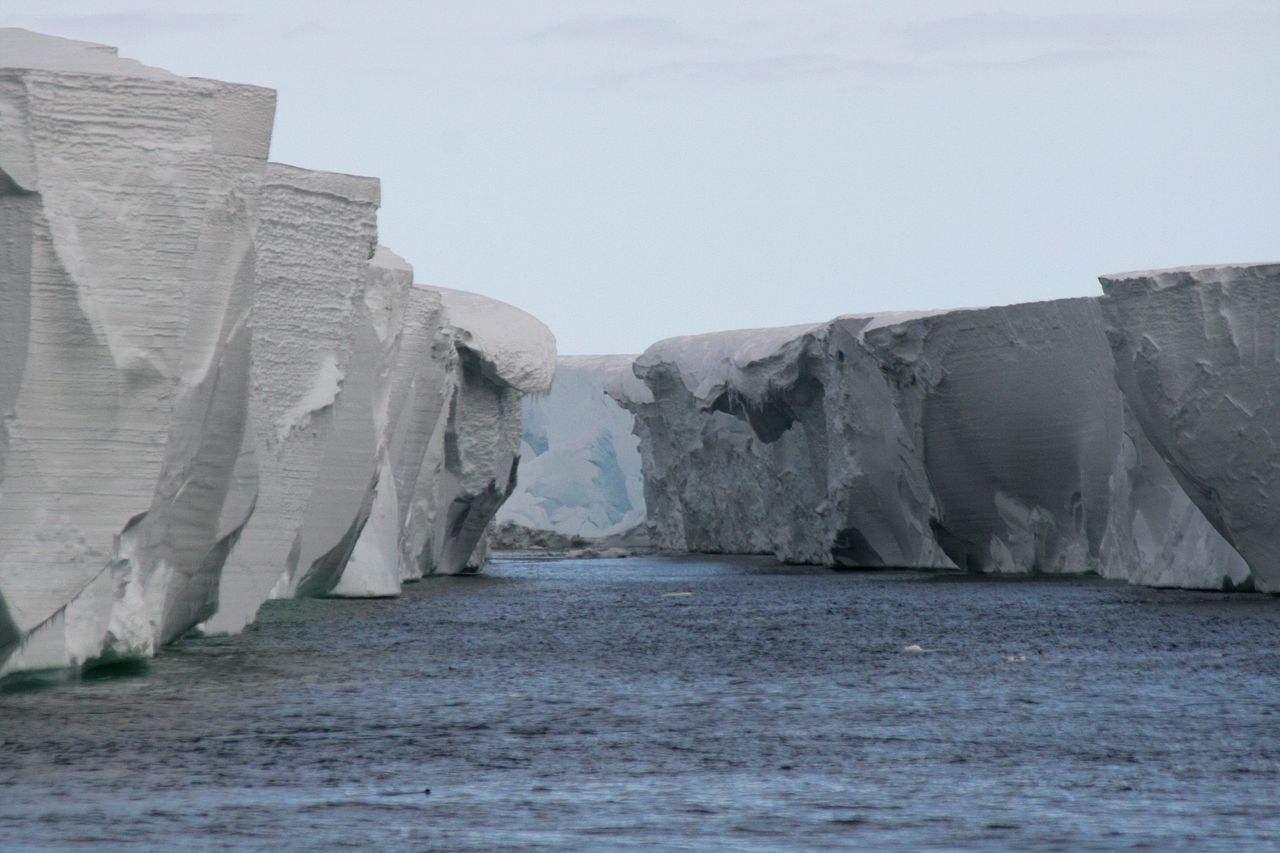
An ice shelf is a broad, relatively flat expanse of ice that forms where flowing continental ice reaches the coastline and spreads out over the ocean. It may be attached to the shore or float on seawater, and it commonly originates where a glacier or ice sheet flows seaward. Many shelves are very thick—often on the order of a hundred metres or more—and can extend for tens to hundreds of kilometres from the grounding line where the ice begins to float.
Image gallery
10 Images


Characteristics and structure
Ice shelves consist of ice derived from land ice rather than seasonal sea ice. The visible upper surface may show crevasses and melt ponds in summer; below the surface, the base can be sculpted by ocean-driven melting. Typical components include a floating tongue, the grounding zone where the shelf attaches to bedrock, and an outer front that calves to produce icebergs. The buoyancy and thickness profile vary with temperature, salinity of underlying water, and the history of snowfall and ice flow.
Formation, processes and behaviour
Ice shelves form when the outflow of a glacier or ice stream exceeds the rate at which the ice front loses mass by melting and calving. Important physical processes include basal melting by relatively warm ocean water, surface melting and refreezing, crevasse formation, and calving. Surface meltwater can collect in depressions and, in some cases, drive hydrofracture that opens cracks through the full thickness of the shelf. These processes control how and when parts of an ice shelf break away.
Importance and impacts
Ice shelves have an outsized influence on the behaviour of the ice sheet behind them. By providing backstress or "buttressing," they slow the flow of grounded ice into the ocean; when a shelf weakens or collapses, the supply of grounded ice can accelerate, with potential implications for future sea‑level rise. Ice shelves also mediate heat and salt exchange between the ocean and the ice sheet and affect local ecosystems by modifying ocean circulation beneath and around the shelf.
Distribution, examples and distinctions
The largest ice shelves occur around Antarctica, including large systems such as the Ross and Filchner–Ronne regions. Smaller shelves exist around Greenland and on some Arctic islands. Ice shelves differ from seasonal sea ice (which forms by freezing of ocean water) and from icebergs (detached pieces of ice); an ice shelf is primarily an extension of land ice. Ongoing observations by satellites, ships and field studies document changes in shelf extent and thickness.
- Examples: major Antarctic shelves like Ross and Filchner–Ronne.
- Threats: increased ocean heat, surface melting and structural weakening.
- Research links: glaciology overview, Antarctic studies.
Understanding ice shelves is central to predicting how polar ice will respond to climate change and how that response could affect global sea levels. Continued monitoring and improved models are required to reduce uncertainties about shelf stability and the pace of future changes.
Questions and answers
Q: What is an ice shelf?
A: An ice shelf is a large platform of ice that forms where a glacier flows down to a coastline.
Q: How thick is an ice shelf?
A: An ice shelf is usually very thick, usually 100 metres (330 ft) or more.
Q: Do all ice shelves float on the water?
A: Yes, some ice shelves float on the water.
Q: Are ice shelves that float usually thicker or thinner?
A: Ice shelves that float are usually much thinner.
Q: Where are the biggest areas of ice shelf located?
A: The biggest areas of ice shelf are in Antarctica.
Q: Why are ice shelves so thick?
A: Ice shelves are thick because they are formed by the accumulation of snow and ice over time.
Q: What happens to an ice shelf when it melts?
A: When an ice shelf melts, it can cause the sea level to rise, which can lead to flooding and other problems for coastal communities.
Related articles
Author
AlegsaOnline.com Ice shelf Leandro Alegsa
URL: https://en.alegsaonline.com/art/46435