
Ice cream sandwich
A frozen dessert consisting of ice cream placed between two cookies, biscuits or cake layers; many regional and commercial variations exist in flavor, size and texture.
An ice cream sandwich is a frozen confection made by placing a layer of ice cream between two outer layers—commonly cookies, biscuits or slices of soft cake—so the filling is "sandwiched" and can be eaten by hand. The central element is the ice cream itself, which may be single-flavor or a combination; a typical pairing is vanilla ice cream with darker outer layers, but almost any flavors can be used. For general information about ice cream, see ice cream.
Image gallery
3 Images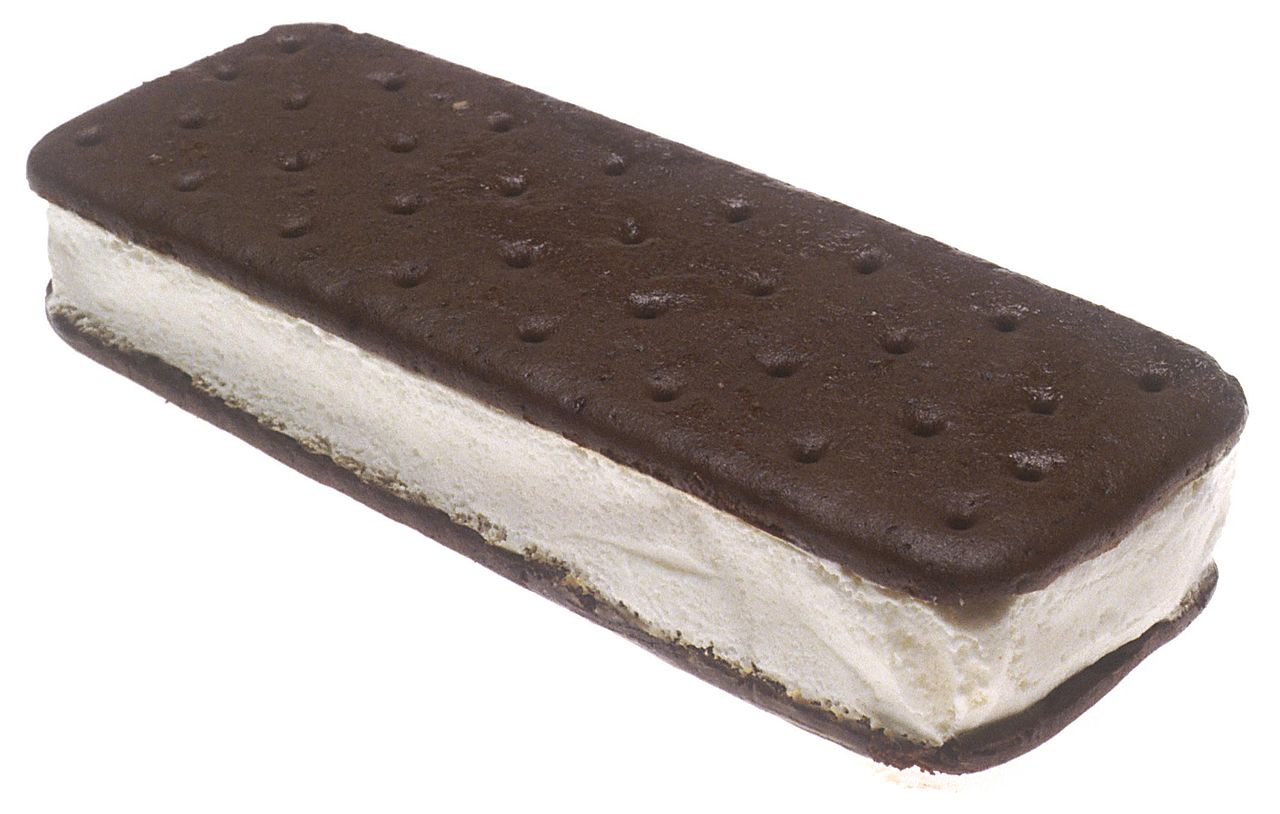


Components and characteristics
Typical parts are the filling and the enclosures. The outer pieces vary in texture from crisp wafers to chewy cookies or tender sheet cake; they influence how quickly the treat melts and the overall mouthfeel. Popular outer choices include chocolate-flavored cake and chocolate or vanilla cookies. See examples of common outer types at cookies and cake.
History and development
The exact origin of the ice cream sandwich is not tied to a single inventor. Variations appeared where frozen creams and baked goods were available and were popularized by street vendors and later by commercial manufacturers. Over the twentieth century, the form evolved from homemade novelties to mass-produced packaged products sold in supermarkets and by mobile vendors.
Variations and examples
- Classic: vanilla ice cream between two chocolate cake-like slabs or soft cookies—often labeled as a chocolate ice cream sandwich (chocolate cake pairings are common).
- Cookie sandwiches: ice cream between two cookies, sometimes rolled in nuts, sprinkles or chocolate chips.
- International forms: local ingredients and shapes create region-specific takes—wafers, mochi, or brownie-style outsides are among the many adaptations.
- Artisanal and diet versions: crafted with premium ingredients, non-dairy bases, or reduced-sugar formulations.
Serving, storage and notable facts
Ice cream sandwiches are served frozen and are sensitive to temperature: they soften quickly at room temperature, so prompt eating or cold storage is recommended. Commercially, individual wrapping helps preserve texture and hygiene. Because the outer layers affect melting rate and handling, makers choose outer materials to balance convenience and eating experience. The concept—encasing a soft filling between two firmer layers—also appears in other desserts, which is why the term "sandwich" is widely applied in culinary contexts.
Related articles
Author
AlegsaOnline.com Ice cream sandwich Leandro Alegsa
URL: https://en.alegsaonline.com/art/46421