
Humboldt penguin (Spheniscus humboldti)
A medium-sized South American penguin found along the coasts of Peru and Chile. Adapted to temperate waters, it nests in burrows and guano deposits and faces declines from habitat loss, climate events, and human activities.
Overview
The Humboldt penguin (Spheniscus humboldti) is a medium-sized seabird native to the west coast of South America. Recognizable by a white belly, a black band across the chest and a distinctive facial pattern, these penguins are adapted to a temperate marine environment influenced by the Humboldt Current. Wild estimates are small compared with many other penguin species—fewer than 10,000 individuals are thought to remain—and populations have experienced declines in the 20th and 21st centuries.
Image gallery
10 Images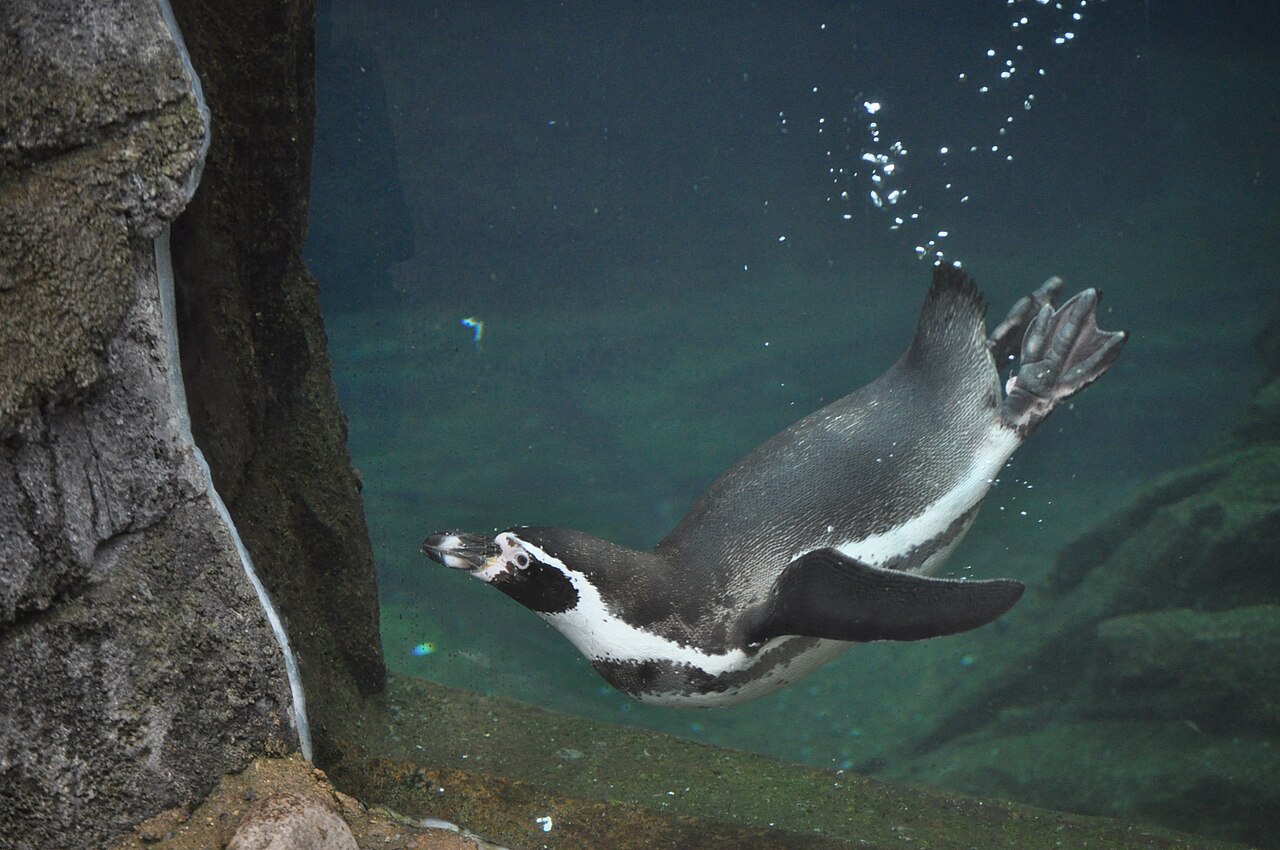


Appearance and adaptations
Adults typically range from medium to robust in build, with males often larger than females. Plumage helps with camouflage at sea: a pale underside makes them less visible to underwater predators from below, while darker backs blend with the ocean surface from above. The feathers are dense and waterproof, supported by a thick layer of down and strong muscles for sustained swimming. Like other seabirds, Humboldt penguins are salt-tolerant and can excrete excess salt through a specialized gland, allowing them to drink seawater.
Distribution and habitat
Humboldt penguins inhabit coastal areas of Chile and Peru, where the cold, nutrient-rich Humboldt Current supports abundant small schooling fish. They breed on rocky shores, islands and in coastal burrows. Many colonies use tunnels dug into guano deposits or natural crevices for nesting; historically, large guano banks provided ideal nesting substrate. These nesting choices offer protection from weather and predators but are vulnerable to disturbance.
Diet and behaviour
The diet consists mainly of small pelagic fish such as anchovies and sardines, supplemented by squid and crustaceans when available. Humboldt penguins forage by diving and swimming, often traveling tens of kilometres from their colonies in search of food, although most foraging takes place within a few days' range of nesting sites. They are social at sea and in colonies, forming pairs during the breeding season and exhibiting vocal and visual behaviours to maintain bonds.
Reproduction and lifecycle
Breeding pairs usually excavate burrows or occupy cavities in guano and rocky crevices where they lay one or two eggs. Both parents share incubation duties and care for the chicks after hatching. Chick survival varies with food availability and climatic conditions; strong El Niño events can sharply reduce food supplies and cause breeding failures. In the wild Humboldt penguins can live up to around 20 years under favorable conditions.
Human interactions, guano and conservation
The species takes its common name from the naturalist Alexander von Humboldt. For centuries local economies collected seabird excrement, known as guano, as a high-quality fertilizer; removal of guano altered nesting habitat and contributed to declines in some colonies. Today the main threats are habitat disturbance and loss, overfishing and competition for prey, climate variability (notably El Niño), introduced predators at breeding sites, and incidental catch in fisheries. Conservation measures include protected areas, guano-bank management that balances fertilizer use with nesting needs, predator control, fisheries regulation, and captive-breeding and reintroduction programs.
Notable facts
- Humboldt penguins are adapted to drink seawater using salt-excreting glands.
- They commonly nest in burrows dug into guano deposits or soft earth.
- Population trends are closely tied to local fish stocks and climate events.
Ongoing monitoring and coordinated conservation efforts in Chile and Peru are essential to stabilize and recover remaining colonies. Researchers, local communities and governments continue to work on habitat protection, sustainable fisheries and public awareness to reduce threats to this distinctive coastal penguin.
Related articles
Author
AlegsaOnline.com Humboldt penguin (Spheniscus humboldti) Leandro Alegsa
URL: https://en.alegsaonline.com/art/45696
Sources
- iucnredlist.org : Spheniscus mendiculus