
Humpback whale (Megaptera novaeangliae)
Large baleen whale known for long pectoral fins, acrobatic breaches, complex songs and long migrations between high-latitude feeding and low-latitude breeding grounds.
Overview
The humpback whale (Megaptera novaeangliae) is a large baleen whale found throughout the world's seas. Recognizable by its unusually long pectoral fins and a knobbly head covered with tubercles, the species is renowned for spectacular surface behaviour such as breaching and slapping the water. Adults commonly reach lengths up to about 15–16 metres and can weigh on the order of tens of tonnes.
Image gallery
10 Images


Physical characteristics
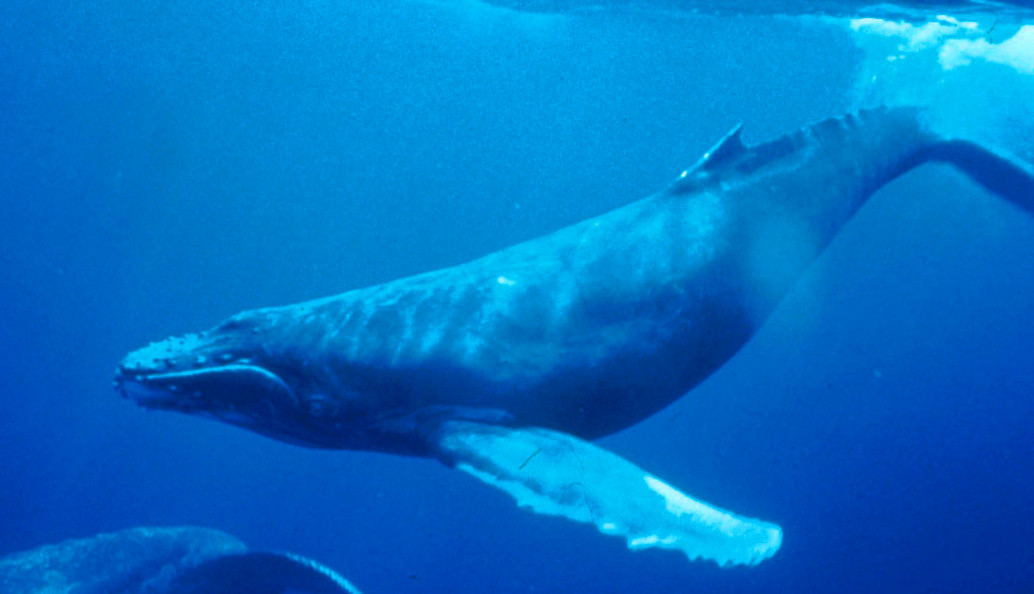
Humpbacks have baleen plates instead of teeth and use filter feeding to capture small prey. Their most distinctive feature is the pair of elongated pectoral fins — often more than one third of body length — which are covered by bumps and often highlighted in photographs; see long pectoral fins. The dorsal fin varies in shape between individuals, while the undersides and trailing edges of tail flukes display unique patterns used by researchers to identify animals.
Behavior, feeding and reproduction
These whales undertake long seasonal migrations between productive, high-latitude feeding areas and warmer, low-latitude breeding and calving grounds. Their diet consists mainly of krill and small schooling fish, and they employ techniques such as solitary lunges or cooperative bubble-net feeding to corral prey. Male humpbacks are famous for complex, repeating songs produced on or near breeding grounds; the function of these vocal displays is believed to relate to mating and social interactions.
Distribution and conservation
Humpback whales occur in every ocean, with distinct regional populations and migratory routes. Commercial whaling in the 19th and 20th centuries reduced numbers sharply, but international protection has allowed many populations to recover. Some stocks remain depleted or threatened by entanglement in fishing gear, ship strikes, noise pollution and changing prey availability due to climate change.
Human significance and study
Humpbacks are a focal species for whale-watching and marine research because of their visible behaviours and identifiable fluke patterns. Scientists study their songs, movement patterns and population trends to inform conservation. Cultural and economic values, together with active protection measures, have made humpbacks an important example of marine wildlife recovery efforts.
Notable facts
- Individual tail fluke markings allow photo-identification of whales across years.
- Bubble-net feeding is a cooperative hunting method seen in some populations.
- Humpbacks are capable of long-distance seasonal migrations between feeding and breeding areas.
Related articles
Author
AlegsaOnline.com Humpback whale (Megaptera novaeangliae) Leandro Alegsa
URL: https://en.alegsaonline.com/art/45717
Sources
- species.wikimedia.org : Megaptera novaeangliae
- departments.bucknell.edu : "Order Cetacea"
- google.com : Mammal Species of the World: A Taxonomic and Geographic Reference
- worldcat.org : 62265494
- fossilworks.org : "Fossilworks: Megaptera"